

What should a parent really ask on a first tour? The best questions to ask at infant daycare tour visits are the ones that show how care works hour by hour, not just what a brochure says. If you are comparing licensed infant care in Vaughan or nearby GTA communities, start with safety, staffing, sleep, feeding, communication, and how the room actually feels.
Quick List: 25 Questions to Ask at an Infant Daycare Tour
These 25 infant daycare tour questions give you a strong daycare tour checklist before you visit.
- Is the centre licensed in Ontario, and can I see the infant room?
- What age range does your infant program serve?
- What is your caregiver-to-infant ratio in this room?
- How is ratio maintained during breaks, lunch, staff absences, and opening or closing hours?
- Who is in the infant room each day, and what are their qualifications?
- Are staff in the room First Aid and CPR certified?
- Do staff have clean criminal record checks?
- How do you handle naps, and how are sleeping babies supervised?
- How do you follow a baby’s individual feeding and sleep schedule?
- How do you handle bottles, formula, breast milk, and starting solids?
- How are milk containers labeled, stored, warmed, and tracked?
- What do parents need to provide for diapers, wipes, creams, bottles, or extra clothing?
- What is your illness policy, and when would an infant need to stay home?
- How do you handle medication, allergies, reflux, or other infant-specific care instructions?
- How are diaper changes, handwashing, and cleaning handled through the day?
- How are parents contacted during an emergency or urgent incident?
- What security steps are used for drop-off, pickup, and authorized adults?
- How do you communicate with parents during the day?
- Will I receive updates on naps, feeds, diapers, and mood?
- What does the daily routine look like for infants?
- How do you support tummy time, sensory play, language exposure, and observation of development?
- How do caregivers comfort babies who are crying or struggling to settle?
- What is your philosophy for infant care, and how does the Montessori method look in the infant room?
- Is there any screen time or use of electronics in the infant classroom?
- What does enrolment involve, and how early should we ask about availability for infant spaces?
Start With Licensing, Ratios, and Staff Qualifications
Licensed care gives you a basic framework to verify on the tour. A licensed childcare centre in Ontario operates under provincial rules and inspections, while families should confirm a centre’s current licence status directly during the visit. At Cozy Time Montessori Academy, our Infant program serves children from 6 to 18 months .
The ratio is one of the first facts to confirm because it affects supervision all day. Our Infant room runs at 1:3 , and parents should ask how any centre protects that ratio during breaks, lunch coverage, staff illness, and the first and last hours of the day.
Staff credentials tell you whether the room is organized as professional childcare or informal minding. Our team includes Early Childhood Educators, certified Montessori teachers, and assistants , and parents should ask who is actually in the infant room each day rather than assuming every adult has the same role.
First Aid, CPR, and screening checks are non-negotiable questions for infant care. At our centre, staff are First Aid and CPR certified and have clean criminal record checks , and those are reasonable questions for infant care at any licensed Montessori daycare in Vaughan or the GTA.
Care continuity matters because infants rely on familiar adults and predictable responses. A tour should include a direct question about staff turnover, regular room assignments, and who steps in when a primary caregiver is absent, because a warm room still needs a stable staffing plan.
Questions to Ask About Infant Sleep and Safe Sleep Practices
Sleep questions should focus on supervision, routine, and how the space is set up. Ask where babies nap, who watches sleeping infants, whether the room stays calm during naps, and how the team follows a baby’s own sleep rhythm instead of forcing one group schedule.
The sleep area should look clean, organized, and easy to supervise. On your tour, look for a setup that is clearly prepared for infant rest, separate from busy movement where appropriate, with staff able to see and respond to babies without delay.
Daily sleep communication matters because naps affect the whole evening at home. Ask whether the centre shares nap start times, wake times, and how your baby’s sleep went, since a clear sleep log is more useful than a vague report that the baby “slept fine.”
Individual scheduling is especially important in the first year because infants do not all nap at the same time. A strong answer explains how staff observe each child, adapt the routine, and balance one baby’s sleep needs with the rest of the room.
Feeding, Bottles, Breast Milk, and Parent-Supplied Items
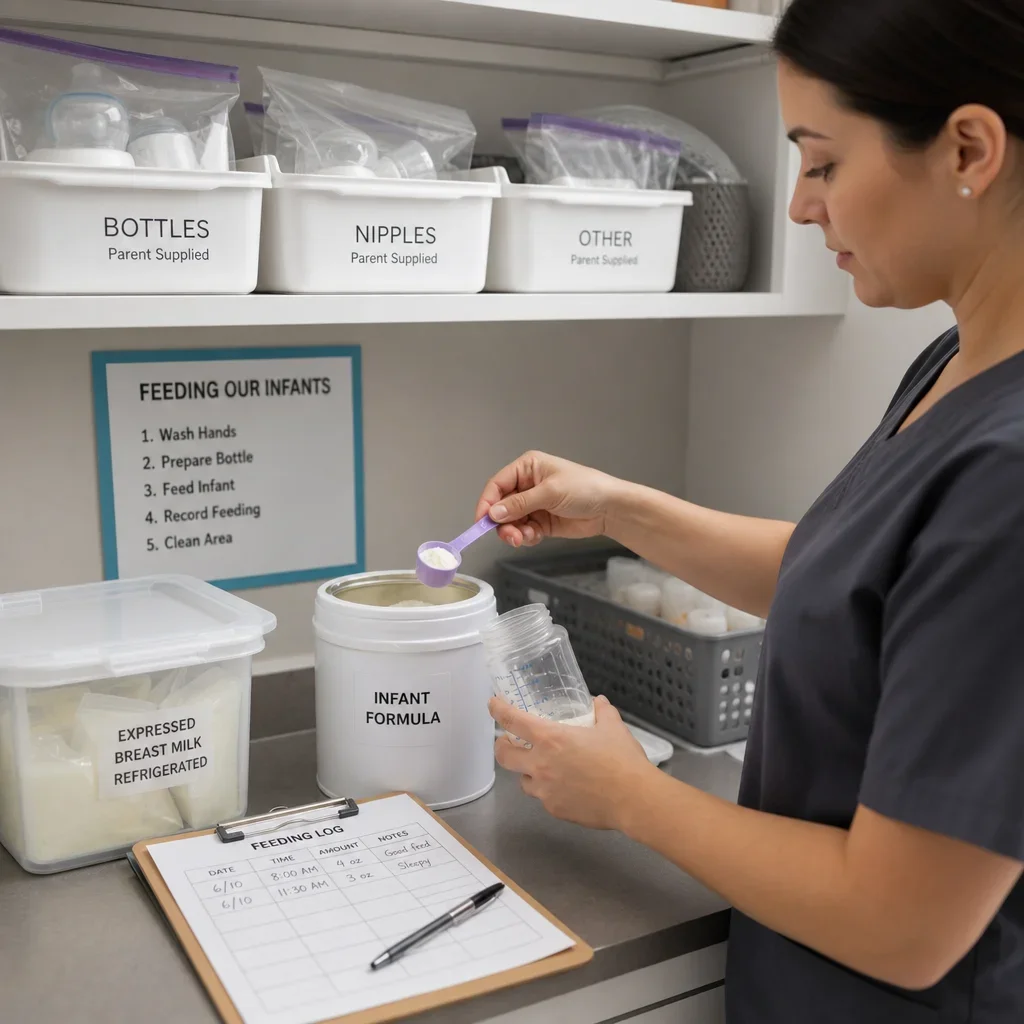
Feeding questions should cover the full chain from your instructions to the actual bottle in the room. Ask how bottles are prepared, how formula directions are followed, how expressed breast milk is labeled and stored, how bottles are warmed, and how staff record what your baby actually drank.
Breastfeeding logistics are worth asking in detail because this is where centres often sound general. A useful answer explains labeling, storage, handling, and how parents are told when milk is running low, rather than simply saying staff are “comfortable” with breast milk.
Individual feeding instructions should stay individualized as infants grow. Ask how the centre handles paced feeding, feeding cues, reflux instructions, allergy information, solids introduced by the family, and whether any feeding change requires parent direction first.
Parent-supplied items should be confirmed before enrolment because centres differ on what they provide. Our centre prepares meals on-site , but families should still ask exactly how infant feeding works by age and stage, and contact the centre to confirm what to bring for their child’s age group.
Clear communication around feeding reduces mistakes and helps families compare daycare tour questions fairly. Ask whether the daily report includes bottle times, amounts taken, solids offered, and any changes in appetite or feeding comfort that staff observed that day.
Health, Hygiene, Illness Policies, and Medication Questions
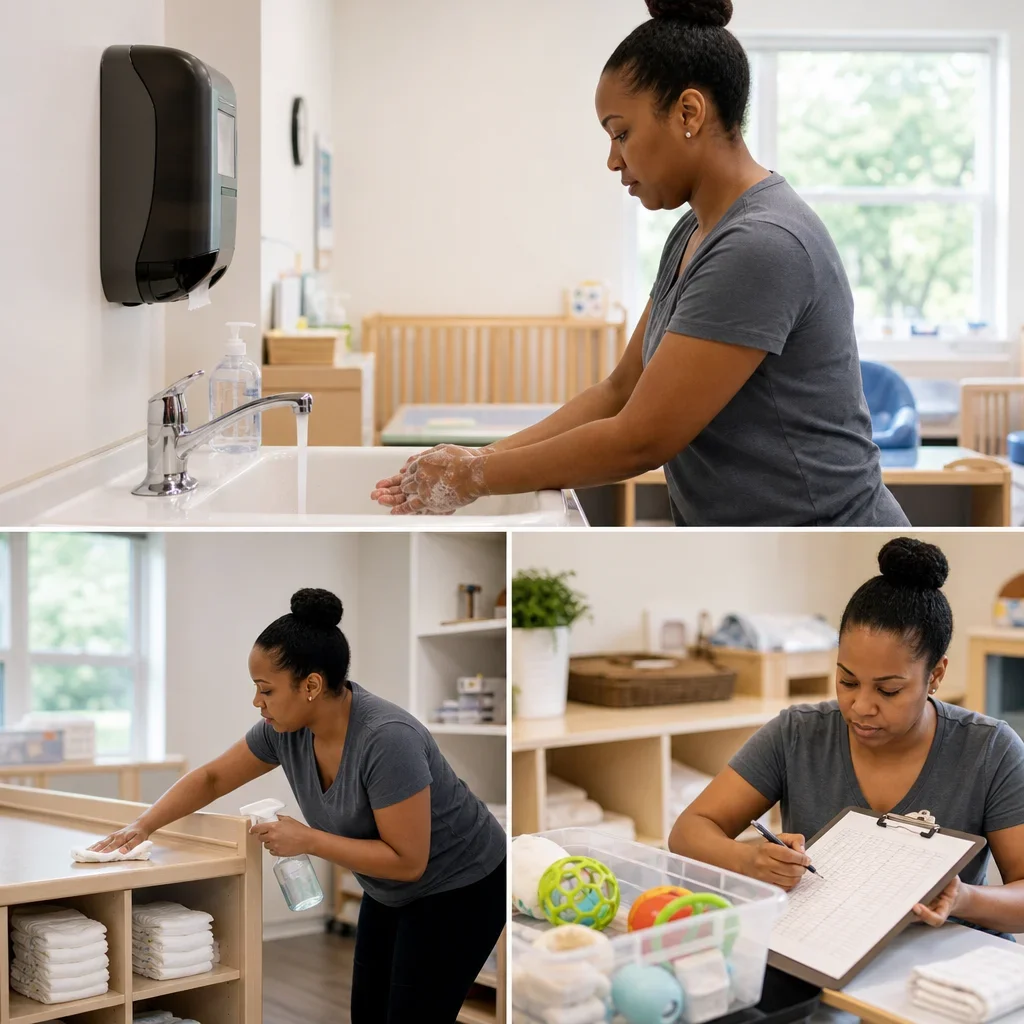
Health policy questions should tell you when a baby can attend and when a baby needs to stay home. Ask what symptoms lead to exclusion, how parents are called if a child becomes unwell during the day, how incidents are documented, and what the return-to-care process looks like at that centre.
Hygiene should be visible, not just described. During the tour, ask how diaper changes are handled, how handwashing is built into the routine, how feeding areas are cleaned, and how toys and shared surfaces are sanitized through the day.
Medication questions need specific answers because infant instructions can be detailed. Ask who can administer medication, how written consent works, how medication is stored, and how the centre documents the time and amount given.
Infant-specific medical needs should be discussed before the first day, not after. Ask how the centre handles allergies, eczema care instructions, reflux, feeding sensitivities, or other documented needs, and contact the centre directly for its current procedures rather than assuming every site follows the same process.
Documentation matters because parents need more than a verbal summary when something happens. A strong answer explains how illness concerns, accidents, unusual feeding issues, or skin concerns are recorded and shared with families the same day.
Security and Emergency Preparedness Questions

Security questions should cover exactly who can enter and who can leave with a child. Ask how entry is controlled, how visitors are managed, how authorized pickup adults are verified, and what happens if someone unknown arrives at pickup.
Emergency planning should include more than a general promise that staff are prepared. Ask how the centre handles fire, evacuation, lockdown, medical emergencies, and unexpected staff absence, and where emergency contact information is kept so it can be reached quickly.
Parent communication during urgent situations should be explained step by step. Ask who contacts families first, what method is used, and what kind of update parents can expect if there is an injury, illness, building issue, or wider emergency.
A calm answer is a good sign because emergency systems should already be organized. If a centre is vague about pickup security, emergency contact flow, or where key information is stored, that is worth following up on before enrolment.
Daily Routine, Parent Communication, and Developmental Support

A strong infant routine is organized around care needs, not rigid classroom timing. Ask what the day includes for feeds, naps, diaper changes, floor time, sensory play, music, language exposure, and outdoor time or fresh air when appropriate.
Parent communication should be frequent enough to make the day understandable. Ask whether updates are shared through an app, written report, or pickup conversation, and whether daily reports include naps, feeds, diapers, and your baby’s general mood.
Observation is the right word to listen for when a centre talks about development. In Montessori infant care, we observe each child, prepare the environment, and adapt routines and materials to the child’s stage, rather than pushing one activity plan across the whole room.
Montessori for infants is practical and simple, not academic. In a prepared environment, caregivers support movement, practical routines, sensory exploration, and respectful caregiving in ways that fit infant development, which is very different from just keeping babies occupied.
Emotional care should sound concrete, not sentimental. Ask how caregivers respond to crying, how they learn a baby’s cues, how they support attachment and comfort, and how they help a new child transition into group care at that child’s own pace.
Screen time is an easy question to miss on a daycare tour checklist, but it belongs on your list. Ask directly whether screens or background media are used in the infant room, because infant care should centre on direct supervision, conversation, movement, and hands-on interaction.
What to Look For During the Tour, Not Just What to Ask
The room itself should show you whether the answers are real. In a high-quality infant classroom, caregivers are usually down at the child’s level, speaking gently, making eye contact, and responding when a baby signals hunger, discomfort, or the need for comfort.
A good infant room often feels calm and organized rather than busy and overloaded. Look for uncluttered floors, age-appropriate materials, a clear place for feeding and diapering, and a setup that helps staff supervise every baby closely.
Caregiver warmth is visible in small moments. Watch whether staff pause to comfort a fussing child, narrate care routines, greet babies by name, and move with purpose rather than leaving infants waiting while adults talk to each other.
Noise level tells you a lot about the rhythm of care. An infant room does not need to be silent, but it should not feel chaotic, and the adults should sound more present than the room’s equipment or background noise.
Notes help you compare centres more accurately after the tour. Write down one strength, one concern, and one follow-up question for each visit, especially if you are comparing 2 to 3 centres .
Red Flags in an Infant Daycare Tour
Red flags usually show up as vague answers, not only obvious hazards. If a centre cannot clearly explain licensing, room staffing, ratio coverage, sleep supervision, illness handling, or pickup security, keep asking or keep looking.
A rushed tour can be a warning sign because infant care depends on details. If staff avoid the classroom, answer in broad slogans, or cannot tell you how the day actually works, that makes it hard to trust the care behind the presentation.
Disengaged caregiving is one of the clearest signs to watch for when learning how to spot a bad daycare. If adults stay standing in clusters, miss crying cues, speak sharply, or seem irritated by normal infant needs, that matters more than attractive decor.
Unsafe-looking sleep or feeding setups deserve immediate follow-up. If the nap area feels poorly supervised, bottles seem disorganized, or personal items do not look clearly tracked, ask for clarification before you rule a centre in or out.
Poor organization at pickup and drop-off can point to wider problems. A weak process for authorized adults, late-day ratio coverage, or parent communication is one of the practical red flags of daycare that families often notice only after enrolment.
One crying baby is not, by itself, proof of poor care. Look for the pattern instead: whether staff notice quickly, respond calmly, and comfort the child with confidence.
The overall tone of the room matters because infants need responsive adults. If the classroom feels tense, babies seem to wait too long for help, or staff talk about children as problems to manage, trust that reaction and compare another option.
Questions About Fees, Waitlists, Enrolment, and Start Dates
Practical questions save time because a strong tour still has to fit your family’s logistics. Ask what is included in tuition, whether meals or supplies are included, what extra fees may apply, and what the enrolment steps look like from tour to start date.
Exact pricing and policy details should come from the centre directly, not from assumptions online. If fees, deposits, withdrawal terms, or late pickup policies are not clearly published, ask the centre to confirm the current terms in writing.
Infant availability can be tight in Vaughan and across the GTA, so it helps to ask early about waitlists. Ask how the waitlist works, what information you need to join, how the centre handles preferred start dates, and whether your child’s age group currently has space.
Paperwork should feel organized before your child starts care. Ask what forms are needed for feeding instructions, emergency contacts, medical information, authorized pickup adults, and any infant routine notes staff should have on day one.
Questions About Transitioning a New Infant Into Daycare
Transition support should be part of the tour conversation because the first days matter for both parent and child. Ask whether the centre offers a settling-in process, how staff learn your baby’s cues, whether shorter first days are possible, and how updates are shared during the first week.
Every child settles at their own pace, so avoid any centre that promises a fixed adjustment timeline. A more realistic answer explains how staff observe, comfort, and adapt the routine while your baby gets used to new adults, sounds, and rhythms.
Family input helps caregivers start well from day one. Ask how you should share nap patterns, feeding preferences, soothing strategies, allergy information, and the small details that help staff support your infant calmly.
Comfort plans should be discussed early because policies differ by room and age. If you use a sleep routine, special bottle rhythm, or familiar comfort approach at home, ask what can be carried into care and what needs to be adapted in the classroom.
Printable Infant Daycare Tour Checklist and Comparison Notes
Use this simple daycare tour checklist to compare centres side by side.
| Checkpoint | Centre 1 | Centre 2 | Centre 3 |
|---|---|---|---|
| Licensed infant care confirmed | |||
| Infant age range fits my child | |||
| Ratio clearly explained | |||
| Ratio coverage during breaks explained | |||
| Staff qualifications explained | |||
| CPR/First Aid confirmed | |||
| Criminal record checks confirmed | |||
| Sleep supervision explained | |||
| Feeding process explained clearly | |||
| Breast milk and bottle handling explained | |||
| Illness and medication process explained | |||
| Pickup security explained | |||
| Emergency contact process explained | |||
| Daily reports include naps, feeds, diapers | |||
| Caregivers looked warm and responsive | |||
| Room felt calm, clean, and organized | |||
| Screen time policy answered directly | |||
| Transition support explained | |||
| Enrolment steps explained | |||
| One strength | |||
| One concern | |||
| One follow-up question |
This kind of comparison sheet helps you separate feelings from facts after a busy day of tours. If two centres both sound good, your notes on staffing clarity, caregiver warmth, room organization, and communication style often make the decision easier.
FAQ for Parents Touring Infant Daycare in Vaughan and Nearby Areas
What are the most important questions to ask at an infant daycare tour?
The first questions should cover licensing, infant ratio, staff qualifications, sleep supervision, feeding procedures, illness policy, parent communication, and pickup security. Those topics tell you how care works in real life, not just how the centre presents itself.
What are the red flags of daycare during a tour?
The clearest red flags are vague answers, weak ratio transparency, disengaged caregivers, rushed tours, unclear sleep or feeding processes, and poor pickup security. One busy moment is not enough to judge a room, but repeated lack of clarity is.
What should I ask about infant sleep at daycare?
Ask where babies sleep, how naps are supervised, how the room stays calm, how staff follow an individual schedule, and whether parents receive nap updates. The sleep space should also look organized and easy to supervise.
What should I ask about bottles, formula, and breast milk handling?
Ask how milk is labeled, stored, warmed, tracked, and matched to your baby’s feeding instructions. Also ask how staff communicate when supplies run low and how any feeding changes are approved.
How do I know if the caregiver-to-infant ratio is good?
Start by confirming the actual number used in the room and then ask how it is protected during the full day. At our centre, the Infant room ratio is 1:3 , and the follow-up question is just as important as the number itself: who covers breaks, lunches, and absences?
What should I look for in an infant classroom?
Look for responsive adults, calm supervision, organized feeding and diapering areas, clear routines, and babies who are being acknowledged and comforted. A polished room matters less than warm, steady caregiving.
How early should I join an infant daycare waitlist in Vaughan?
The best time is as soon as you start researching because infant spaces can fill early in the GTA. Contact the centre to confirm current availability and the next step for your child’s age group.
Should I bring my baby on a daycare tour?
Bringing your baby can help you picture the routine more clearly and lets you watch how staff respond naturally. If you prefer to tour alone first, that can also help you focus on your infant daycare tour questions and notes.
Can I tour the infant room before enrolling?
That is a good question to ask directly, because seeing the actual room matters. A classroom visit helps you assess supervision, setup, caregiver interaction, and whether the environment feels right for your family.
How do I compare two daycare tours fairly?
Use the same checklist for each visit and write your notes right away. Compare facts first, such as ratio, staffing clarity, sleep and feeding procedures, and communication, then compare the room feel and caregiver responsiveness.
The best next step is to visit and see the classroom. If you are comparing licensed Montessori daycare options in Vaughan, Bolton, or nearby GTA communities, bring your list, ask direct questions, and contact the centre to confirm availability for your child’s age group.