
What should a snack actually do for a busy toddler? Junior toddler snack ideas work best when they are easy to chew, served safely, and substantial enough to bridge the time between meals.
What makes a good junior toddler snack?
Healthy toddler snacks do not need special recipes or expensive packaged foods. A practical snack combines a soft fruit or vegetable, a grain, dairy, protein, or fat, depending on what your child can safely eat.
A filling snack usually includes more than plain crackers alone. Pair crackers with hummus, cheese, mashed beans, avocado, or thinly spread seed butter when appropriate for your family.
Snack texture matters as much as the ingredient itself. Children around 1–3 years old may need foods steamed, grated, mashed, finely chopped, or cut differently than an older child.
Active supervision is part of toddler-safe snacks, even with familiar foods. Toddlers should sit while eating rather than walk, ride in a stroller, or play with food in their mouths.
For home, daycare, and busy mornings, a short rotation works well. Keeping a few reliable produce, protein, dairy, and grain options available can reduce last-minute decisions.
Junior toddler snack ideas by age
Toddler snack ideas for a 1-year-old
Toddler snack ideas for a 1-year-old should focus on soft, mashable, or easily squished foods. Around 12 months , parents can offer soft banana pieces, ripe pear, yogurt, cottage cheese, avocado toast fingers, scrambled egg pieces, or steamed sweet potato.
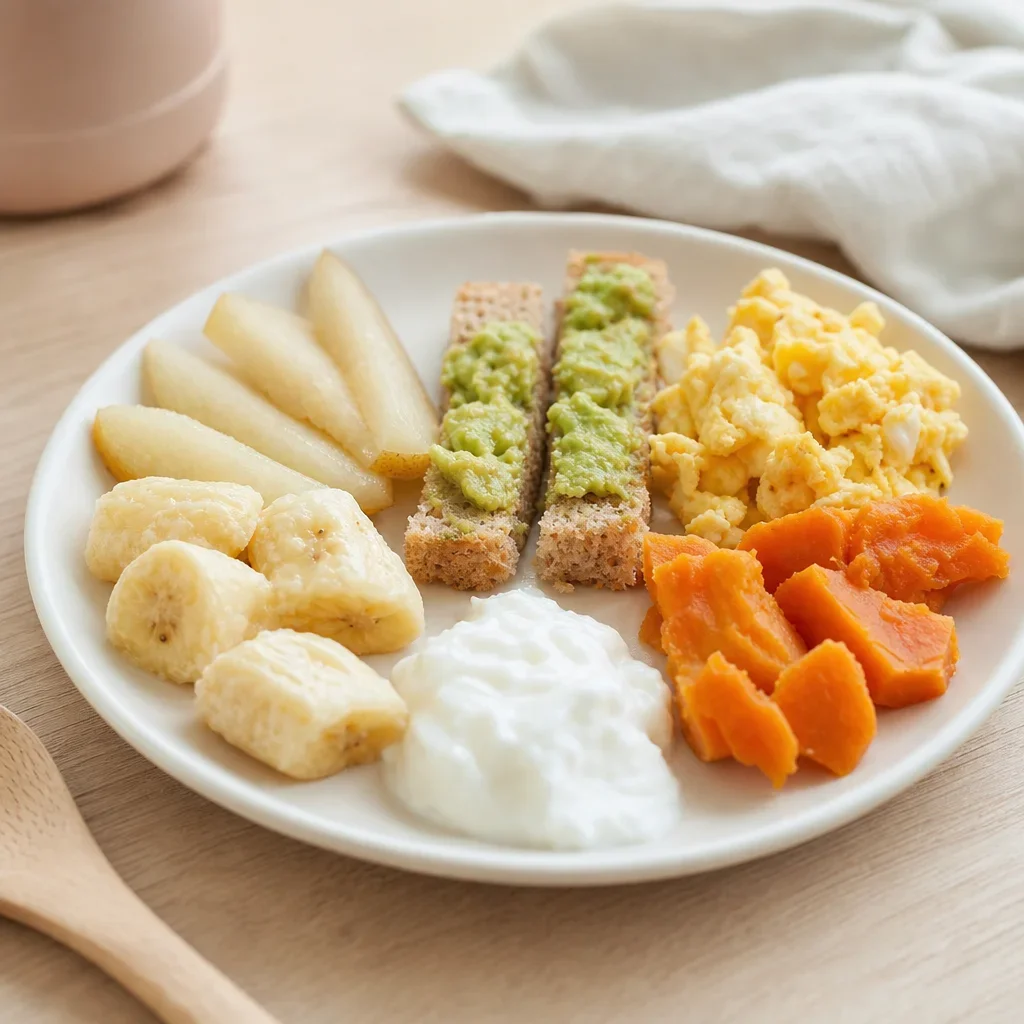
Junior toddler snack ideas for a 1-year-old can stay very simple. Soft fruit with plain yogurt, mashed beans on toast, or finely shredded chicken with avocado are small snack combinations that do not require a separate recipe.
Food preparation should match the individual child’s chewing and swallowing skills. If a child has known chewing, swallowing, or developmental concerns, families should follow advice from their pediatrician or trusted health authority.
Snack ideas around 18 months
Around 18 months , many families add more soft finger foods and separated snack components. A small plate might include steamed carrot sticks, hummus, soft crackers, ripe melon, and pieces of egg.
This age can be a useful time to offer familiar foods beside one less familiar option. For example, serve a preferred cracker with avocado, roasted sweet potato, or a small amount of yogurt dip without pressure to taste everything.
Toddler snack ideas for a 2-year-old
Toddler snack ideas for a 2-year-old can include simple snack plates with two or three components. Try yogurt with softened berries, whole grain toast with avocado, cheese with safely prepared apple, or a mini muffin with fruit.
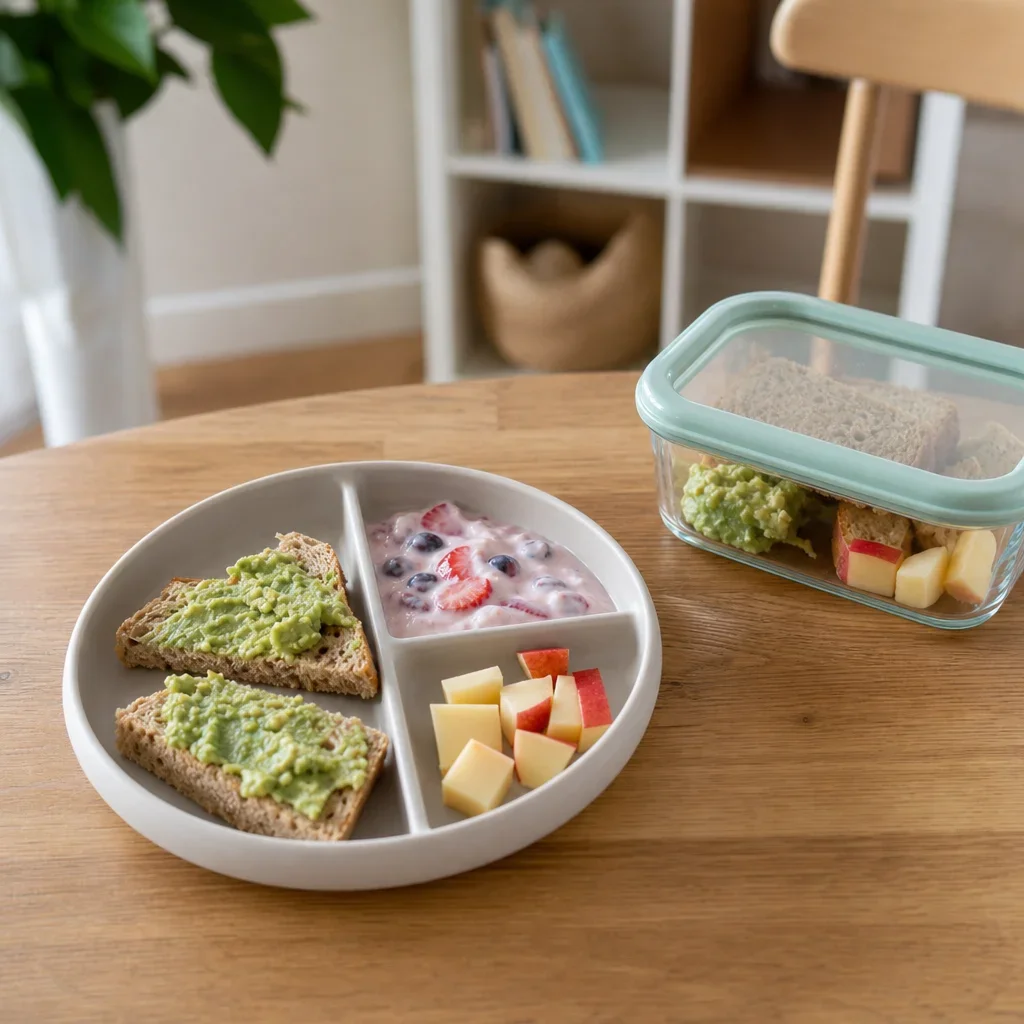
Junior toddler snack ideas for a 2-year-old can also use leftovers as mini-meals. Soft tofu cubes, shredded chicken, mashed lentils, roasted vegetables, or a small piece of omelette can travel well in a sealed container.
Children at 24 months still need choking-safe preparation for round, firm, sticky, and hard foods. Age alone does not make whole grapes, popcorn, nuts, or thick spoonfuls of nut butter safe.
Toddler snack ideas for a 3-year-old
Toddler snack ideas for a 3-year-old can include more independent snack assembly. A parent can offer soft fruit, cheese, whole grain crackers, hummus, and a child-sized spreader or fork.
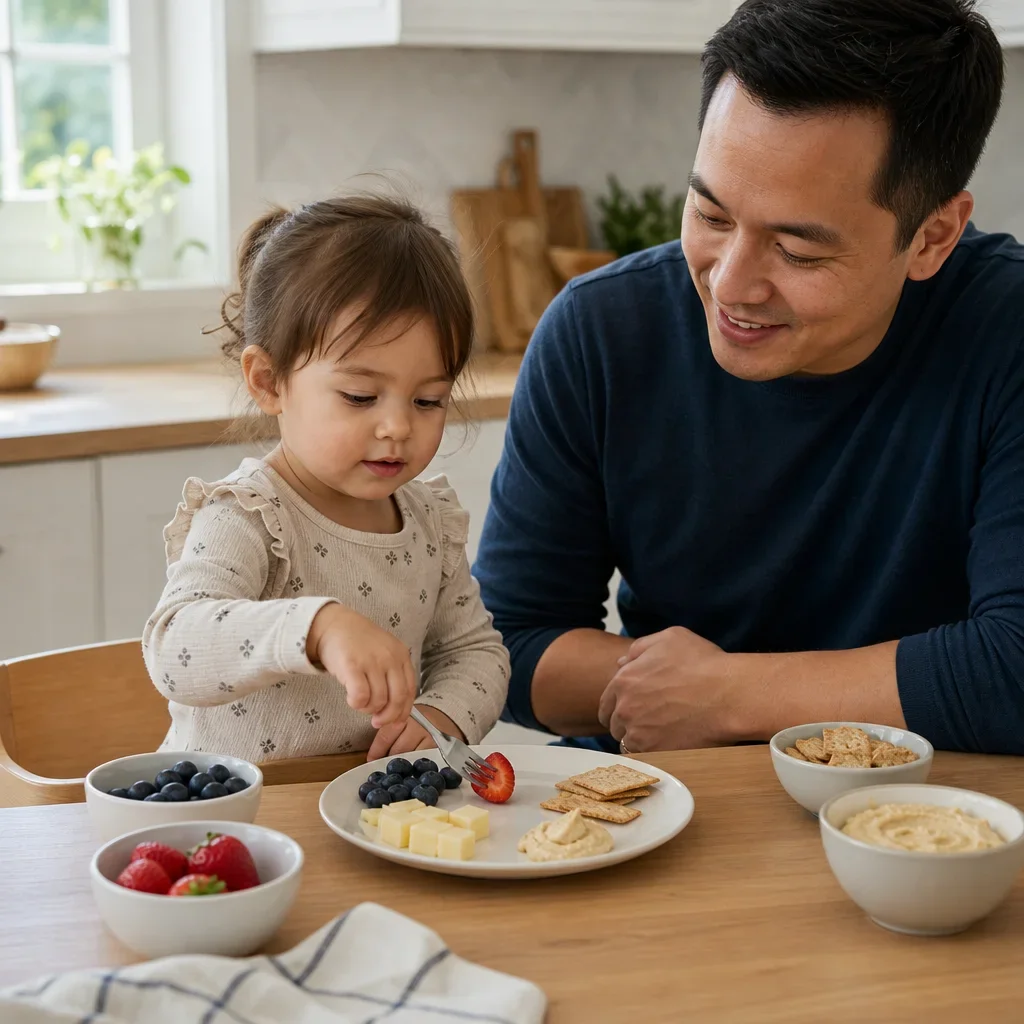
At 36 months , many children enjoy helping choose between two safe options. A simple choice such as pear or banana, or hummus or yogurt, keeps snack time manageable while giving the child a role.
Packable toddler snacks can become more varied at this age. Mini sandwiches, roasted sweet potato cubes, egg pieces, soft fruit, homemade muffins, and crackers with a dip container are practical options for daycare or outings.
A simple formula for filling toddler snacks
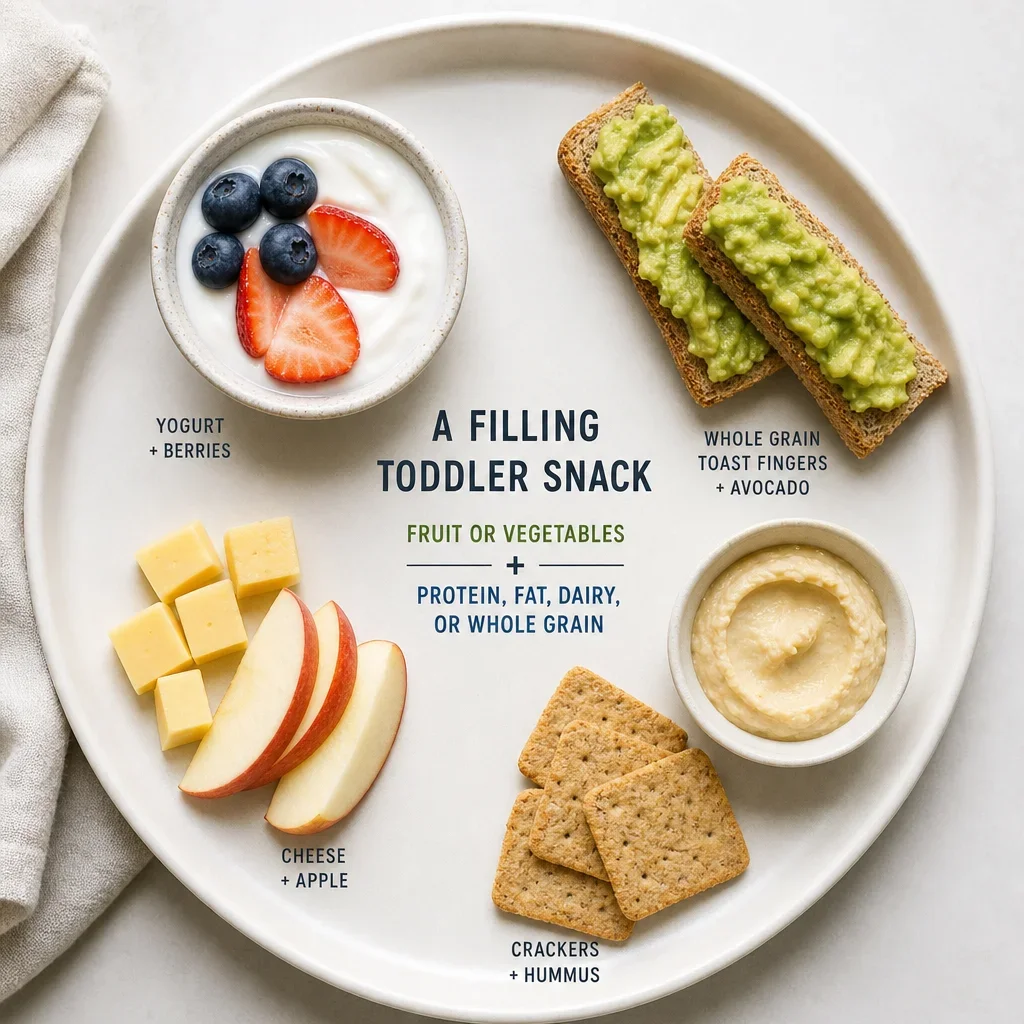
A balanced toddler snack can use two or three food groups. Combine fruit or vegetables with protein, fat, dairy, or a whole grain to make the snack more substantial.
Try these easy pairings:
- Plain yogurt with soft berries or ripe peach pieces.
- Whole grain toast fingers with avocado.
- Safely prepared apple with cheese.
- Whole grain crackers with hummus.
- Egg pieces with soft fruit.
- Cottage cheese with ripe pear or peaches.
- Mini muffin with milk, yogurt, or cheese.
- Mashed beans on toast with avocado.
A snack can be more satisfying when it includes a protein or fat source. Cheese, yogurt, egg, beans, hummus, avocado, tofu, and thinly spread seed butter can add substance beside fruit or grains.
Constant grazing can make it harder to tell whether a child is hungry for a meal. A predictable snack routine, with food served at a table or high chair, gives toddlers a clear eating opportunity without turning the whole day into snack time.
If the last snack was mostly carbohydrate, the next one can include more protein or fat. For example, offer crackers with hummus instead of crackers alone, or pair a fruit pouch with toast and yogurt.
Healthy toddler snacks by category
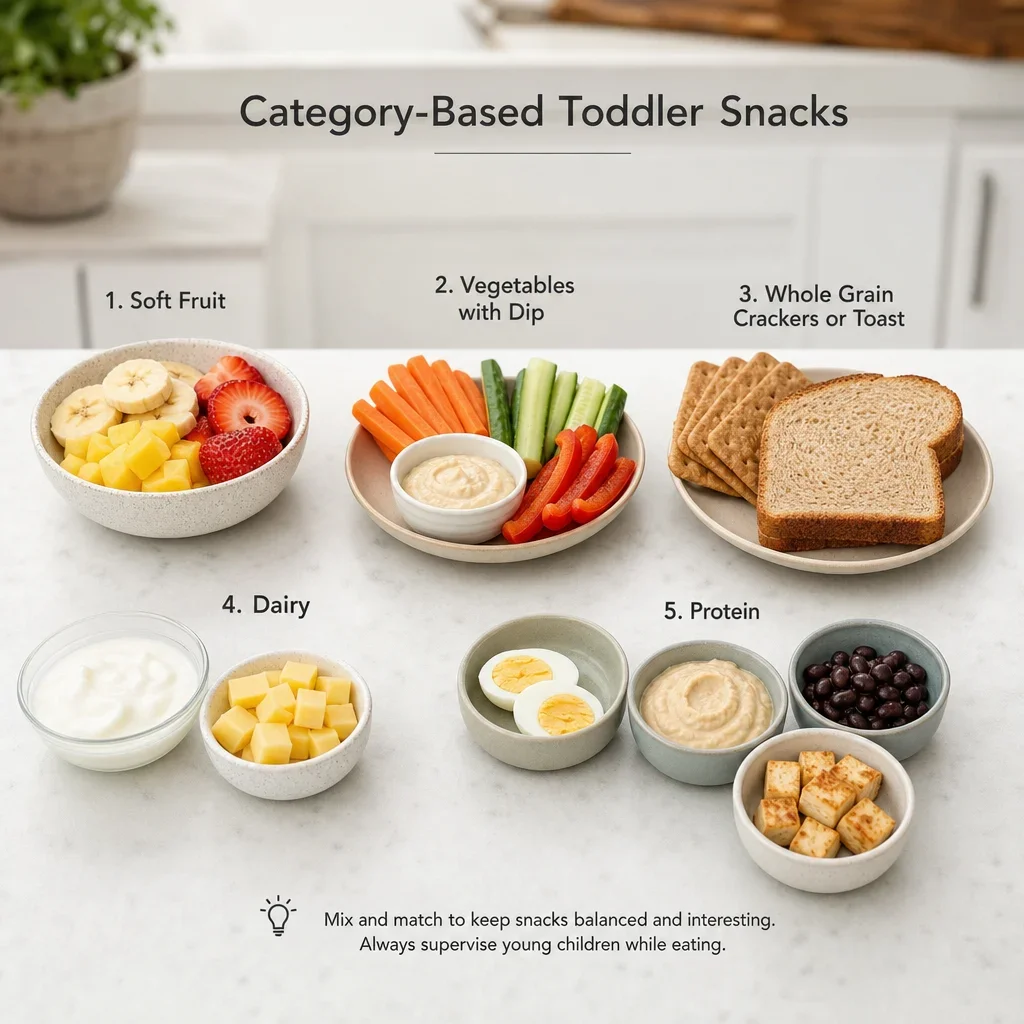
Fruit snacks for toddlers
Soft, ripe fruit is a simple base for toddler snack ideas. Banana, ripe pear, melon, peaches, mango, cooked apple, and berries prepared safely can work well.
Apples need extra preparation for young toddlers because raw chunks can be hard and slippery. Cook, grate, thinly slice, or soften apple before serving, based on your child’s eating skills.
Grapes and cherry tomatoes should be cut lengthwise into quarters for young children . Their round shape can block the airway if swallowed whole.
Vegetable snacks for toddlers
Vegetables can be served warm, roasted, steamed, mashed, or with a dip. Roasted sweet potato, steamed carrots, peas, avocado, soft broccoli florets, and cooked bell pepper strips are useful starting points.
Dips can make vegetables feel more familiar without needing a separate meal. Hummus, plain yogurt dip, mashed avocado, and bean dip can be served in a small amount beside soft vegetables.
Raw carrots need a texture adjustment for toddlers. Steam, roast, grate, or finely shred them instead of serving hard carrot coins or large raw sticks.
Whole grain snacks for toddlers
Whole grain options can add structure to a snack plate. Toast fingers, mini pancakes, oatmeal bites, homemade muffins, low-sugar cereal pieces, and whole grain crackers are practical choices.
Packaged products still need a label check. Parents should review ingredients, allergens, texture, and added sugars rather than assume every cereal bar or cracker suits a toddler.
Dairy snacks for toddlers
Dairy snacks can include plain yogurt, cheese, cottage cheese, milk served with a snack, or labneh where appropriate. Choose pieces and textures your child can manage safely.
Cheese should be cut into small, manageable pieces rather than thick cubes or large chunks. Grated cheese, thin slices, or small pieces can be easier to handle for younger toddlers.
Protein snacks for toddlers
Protein snacks for toddlers can come from egg, hummus, mashed beans, lentils, soft tofu, shredded chicken, yogurt, cottage cheese, and seed butter spread thinly. These foods can be paired with fruit, toast, or soft vegetables.
Nut and seed butters should be spread in a thin layer rather than offered in a thick spoonful. Sticky globs can be difficult for a toddler to move safely in the mouth.
Easy toddler snack board
A toddler snack board can be a small plate with three simple sections. Try soft pear pieces, whole grain crackers, and cheese, or roasted sweet potato, hummus, and egg pieces.
Separated foods can help some children feel more comfortable with a snack. There is no need to mix everything together when a child prefers to see each food clearly.
Toddler choking hazards and safer preparation
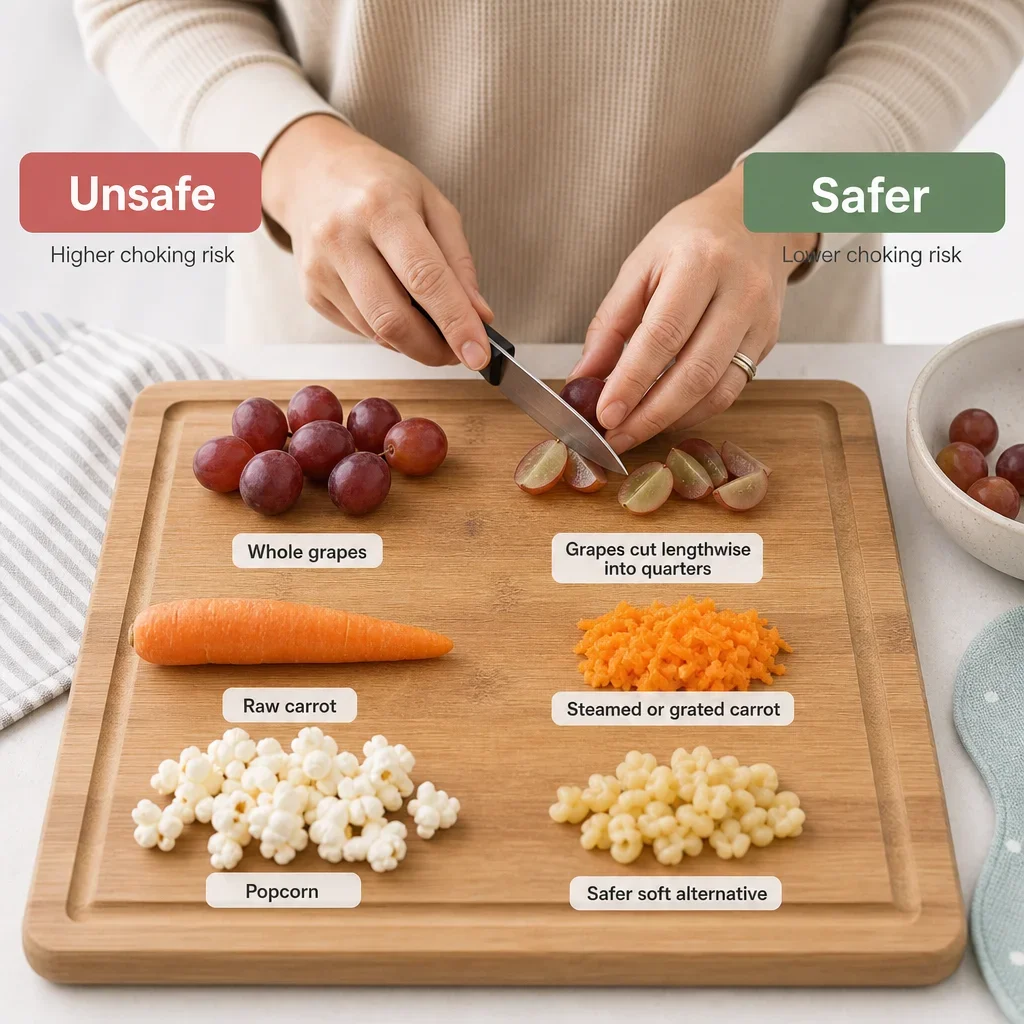
Toddler-safe snacks depend on preparation, posture, and supervision. Hard, round, sticky, slippery, or coin-shaped foods need special care for children in the toddler years.
| Food | Why it can be risky | Safer way to serve | Safer alternative |
|---|---|---|---|
| Grapes | Round and firm shape | Cut lengthwise into quarters | Soft berries or ripe pear |
| Cherry tomatoes | Round and slippery shape | Cut lengthwise into quarters | Soft cooked tomato pieces |
| Raw apple | Hard, crisp texture | Cook, grate, or slice very thinly | Unsweetened applesauce |
| Raw carrot | Hard texture | Steam, roast, grate, or finely shred | Roasted sweet potato |
| Popcorn | Dry, irregular pieces can be inhaled | Avoid for children under age 4 | Soft puffed grain products reviewed for texture |
| Whole nuts | Hard, round pieces | Avoid whole nuts for toddlers | Thinly spread nut or seed butter if appropriate |
| Nut or seed butter | Thick, sticky texture | Spread thinly on toast or crackers | Mashed avocado or hummus |
| Sausage or hot dog rounds | Round, coin-shaped pieces | Cut lengthwise into thin strips | Shredded chicken or soft beans |
| Hard candy | Hard and slippery | Avoid for toddlers | Soft fruit or yogurt |
| Large meat or cheese chunks | Dense pieces can be difficult to chew | Shred, grate, or cut into small pieces | Soft egg or mashed beans |
A child should be seated upright and actively supervised during snacks. This applies at home, in restaurants, during travel breaks, and in any daycare setting.
Families should seek individualized advice when a child has swallowing difficulties, known oral-motor concerns, or a history of choking. Snack lists cannot replace guidance from a child’s healthcare professional.
Easy no-cook and 5-minute junior toddler snack ideas
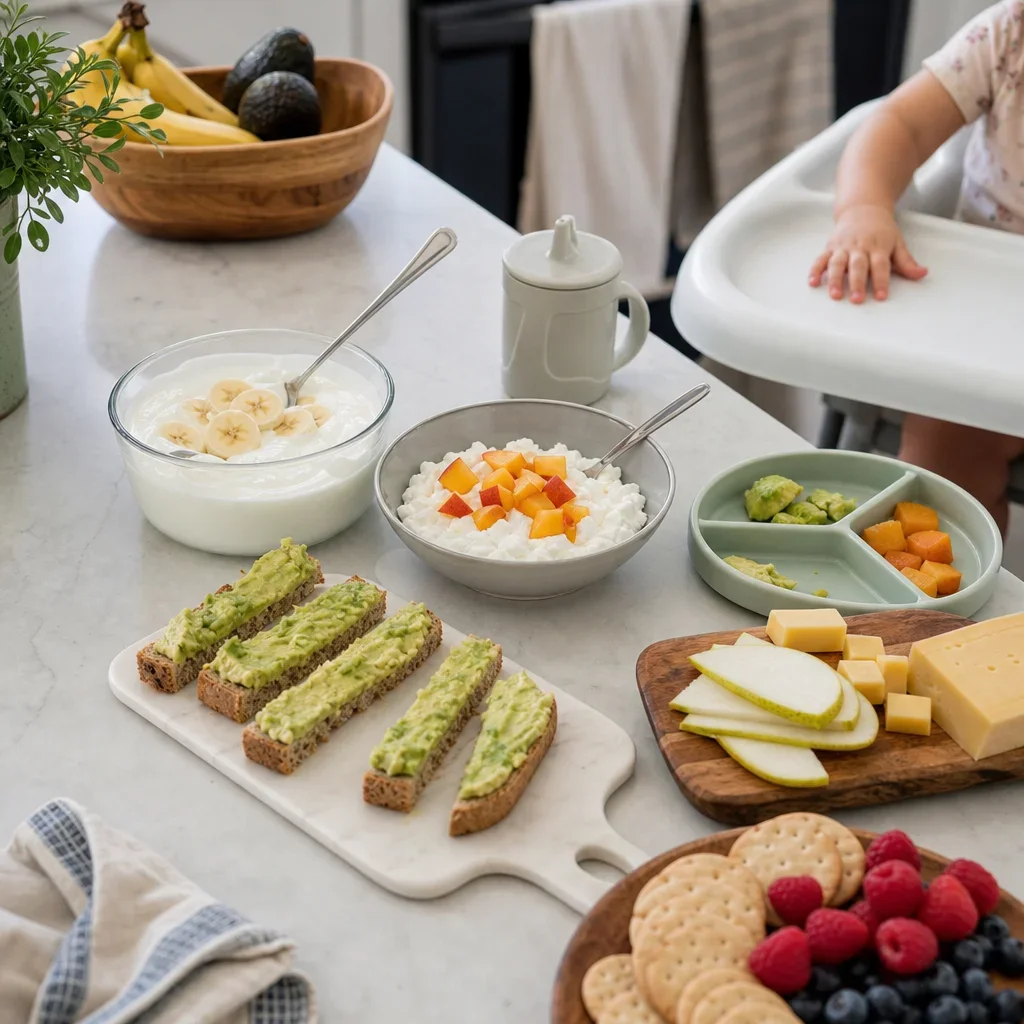
No-cook toddler snacks can be assembled in under 5 minutes when the ingredients are already washed, chilled, or prepared. Keep the focus on soft textures and simple pairings.
Quick ideas for home include:
- Plain yogurt with ripe banana or soft berries.
- Cottage cheese with peaches.
- Avocado toast fingers.
- Cheese with ripe pear.
- Hard-boiled egg pieces with melon.
- Hummus with leftover steamed vegetables.
- Banana rolled in a soft tortilla with thinly spread seed butter.
- A small snack board with crackers, soft fruit, and cheese.
- Frozen homemade muffin thawed with yogurt.
- Mashed beans on toast.
A weekly snack rotation can make mornings easier. Wash fruit, steam vegetables, prepare eggs, bake muffins, and portion crackers when there is more time.
Some foods work better at home than on the go. Yogurt, hummus, and cottage cheese need a cold pack, while muffins, soft fruit, crackers, and roasted sweet potato are usually easier for travel.
Packable toddler snack ideas for daycare, outings, and the car
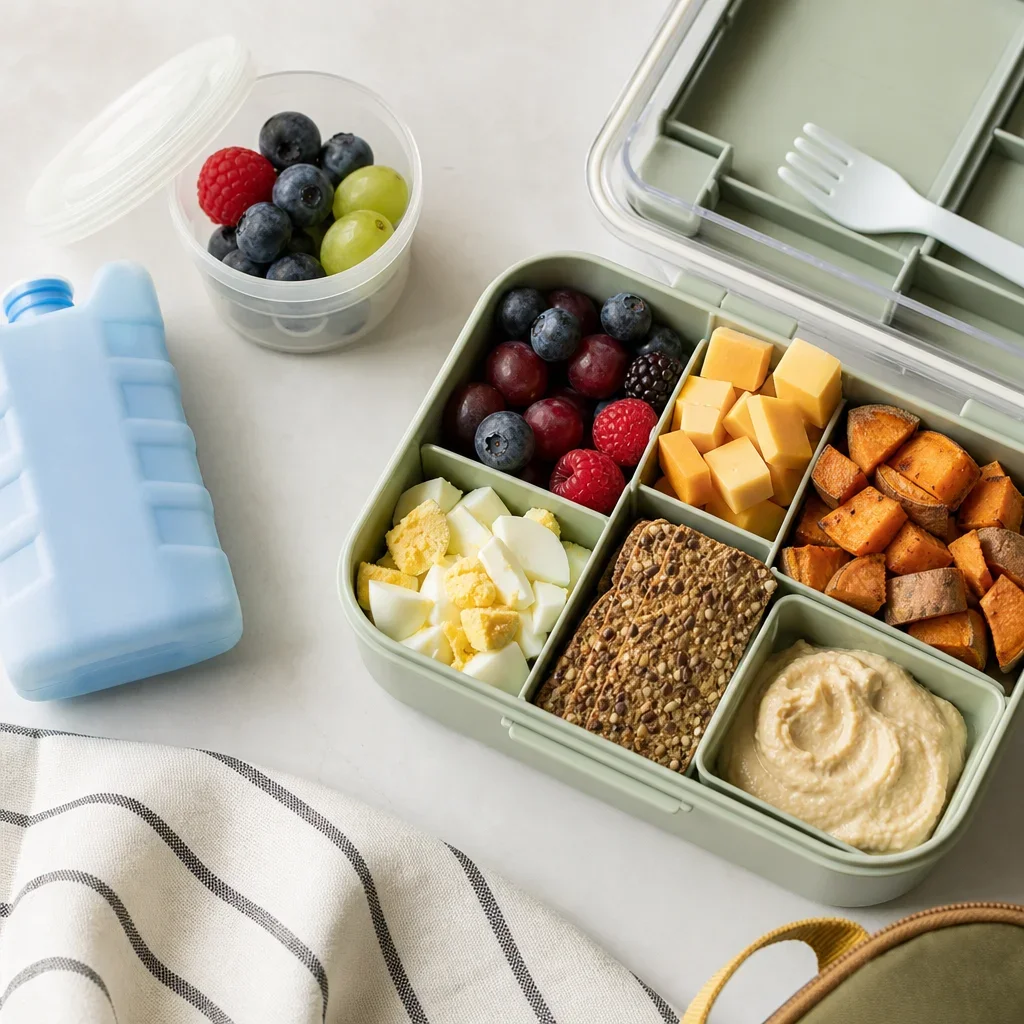
Toddler snack ideas for daycare should be easy for staff to serve and easy for children to eat while seated. Sealed containers with prepared fruit, soft vegetables, egg pieces, muffins, or crackers can help keep food organized.
Packable toddler snacks can include roasted sweet potato cubes, mini muffins, soft fruit, cheese prepared safely, shredded chicken, egg pieces, whole grain crackers, and hummus in a small container. Use an ice pack when a snack needs refrigeration.
Parents should check the daycare’s allergy policy before packing nut or seed products. Food rules differ by centre, classroom, and the needs of enrolled children.
A yogurt pouch can be convenient for travel, but it does not need to be the only snack option. Pair it with toast fingers, fruit, cheese, or another substantial food when practical.
Culturally familiar foods can make excellent daycare snacks. Soft lentil patties, rice and bean bites, vegetable pancakes, homemade savoury muffins, soft flatbread with hummus, and shredded chicken can all fit into a toddler lunch container when prepared safely.
Snack ideas for picky toddlers or children who only want crackers and pouches
A child who prefers crackers or pouches is not automatically a bad eater. Food preferences can be strong in the toddler years, and calm repetition is usually more useful than pressure.
Keep one familiar food and add one nourishing side. Serve crackers with cheese or hummus, a pouch with toast and yogurt, or dry cereal with fruit and milk.
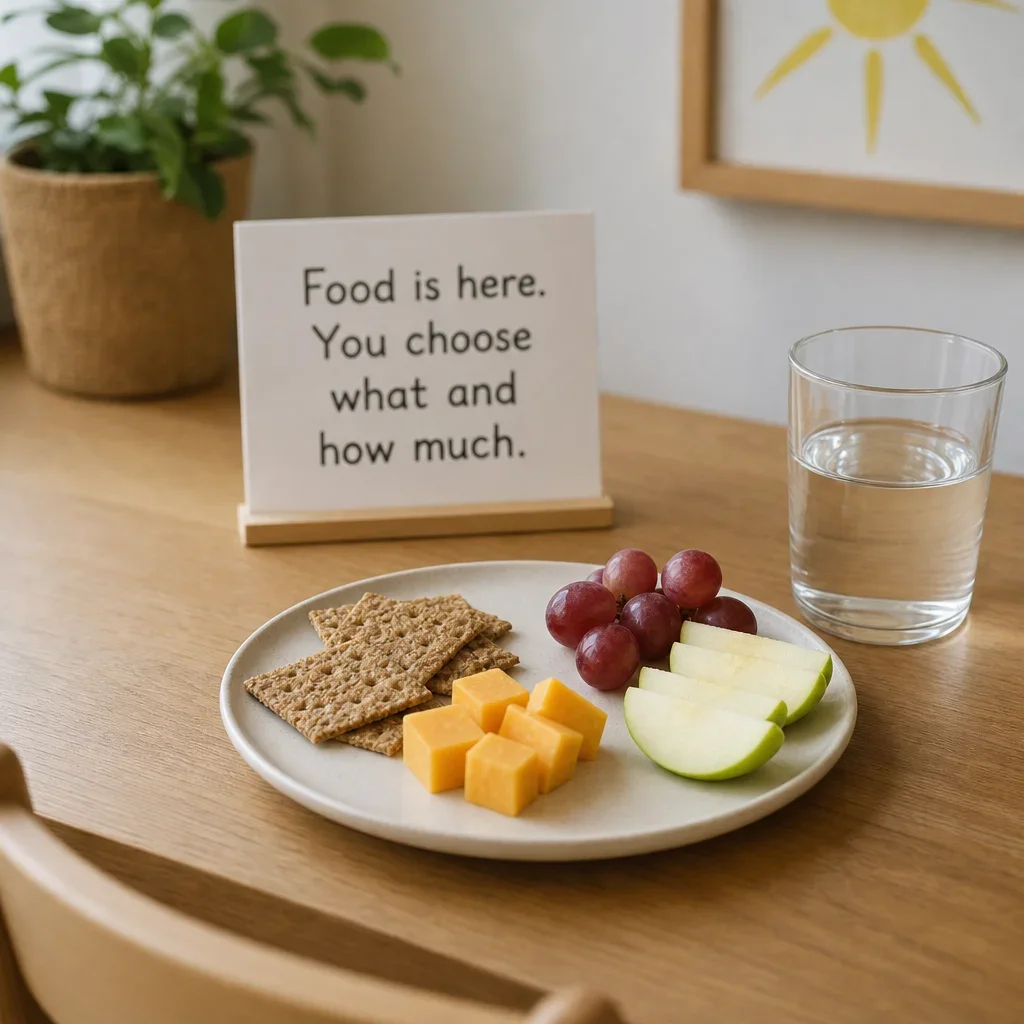
Predictable snack times can reduce all-day grazing. Offer the snack, allow the child to decide what and how much to eat from the foods provided, then move on to the next planned meal or snack opportunity.
Sensory-sensitive children may prefer smooth textures, separated foods, familiar colours, or consistent presentation. A small plate of preferred foods beside one new item can feel less overwhelming than a mixed dish.
Avoid turning snack time into a negotiation. Parents can continue offering a food in different safe forms, such as cooked apple, grated apple, or applesauce, without requiring a taste.
Parents with concerns about growth, swallowing, pain while eating, or very limited food intake should speak with their pediatrician or a qualified feeding professional. Those concerns need guidance beyond a general snack guide.
Allergy-aware and dietary-option toddler snacks
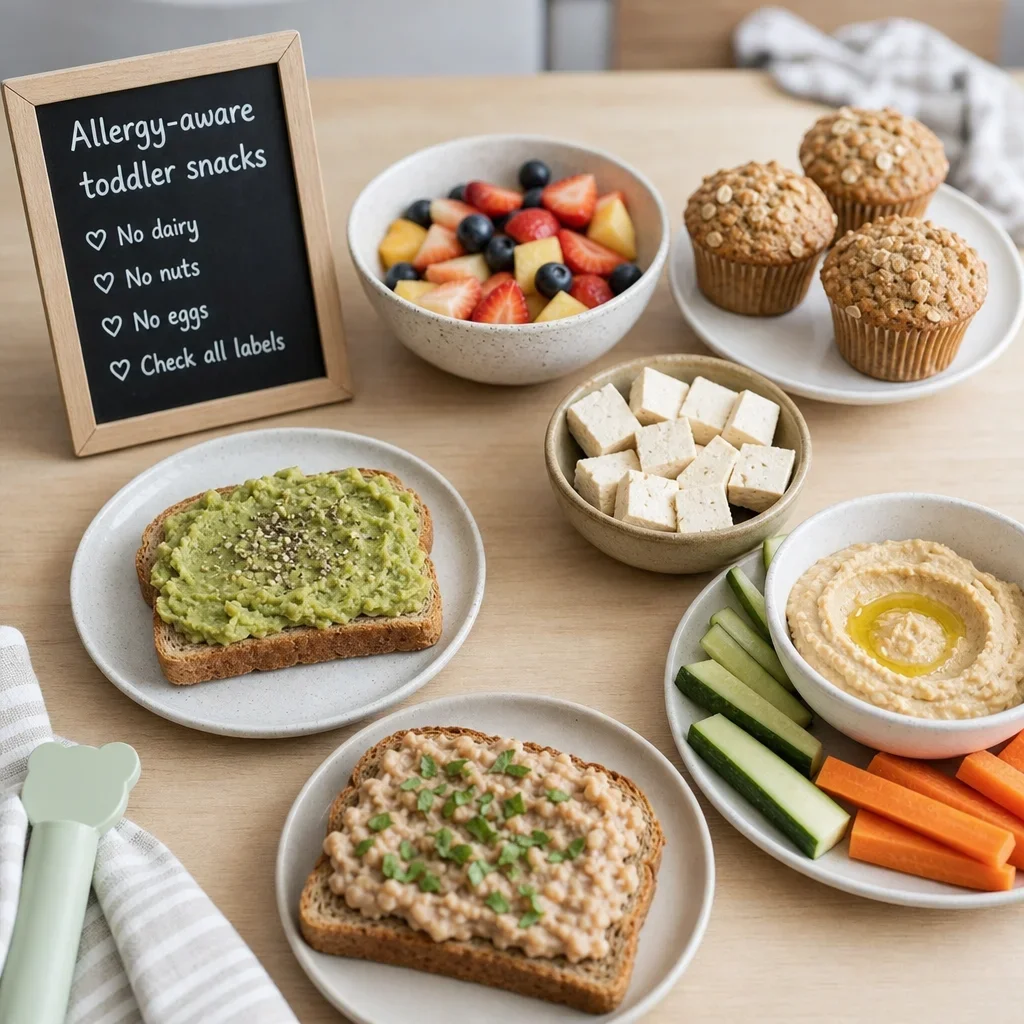
Allergen-aware toddler snacks need label review and family-specific planning. A snack that works for one child may not be suitable for another child’s allergy, cultural diet, or daycare policy.
Nut-free toddler snack ideas can include hummus, mashed beans, avocado toast, yogurt, cheese, egg, soft fruit, roasted vegetables, and seed butter only where permitted. Confirm whether seed products are allowed before packing them for childcare.
Dairy-free snack options can include avocado toast, hummus with soft vegetables, soft tofu cubes, mashed beans on toast, fruit, oat-based muffins, and dairy-free yogurt products that suit your child’s dietary needs.
Egg-free snack ideas can include hummus, bean dip, avocado, tofu, fruit with thinly spread seed butter, roasted sweet potato, and muffins made without egg. Check ingredient labels for packaged foods and baking ingredients.
Gluten-free snack ideas can include soft fruit, yogurt, cheese, egg, hummus, beans, roasted vegetables, rice-based foods, and gluten-free baked goods that are soft and safely prepared.
How many snacks toddlers need and when to serve them
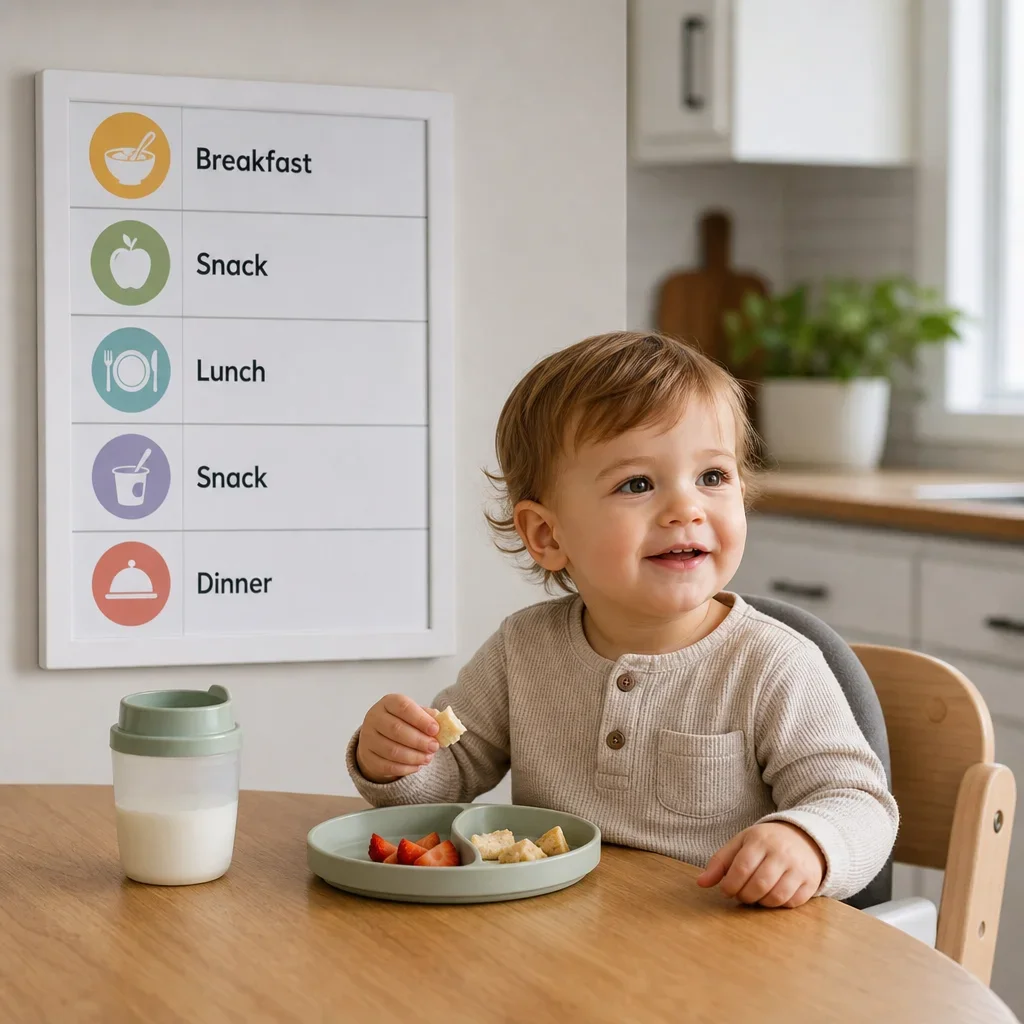
Many toddlers follow a rhythm of 3 meals and 2–3 snacks each day . Appetite can still shift with age, activity, illness, growth, sleep, and how much a child ate earlier.
A snack generally works best when it leaves room for the next meal. Serving food too close to lunch or dinner can reduce appetite for that meal, especially when snacks are large or offered continuously.
A predictable schedule can help children recognize eating times. Families do not need to force hunger or insist on a fixed amount of food at every snack.
If a child seems hungry shortly after every snack, look first at the snack composition. Adding yogurt, cheese, egg, beans, avocado, or hummus may be more useful than relying only on crackers, puffs, or fruit.
If a child appears constantly hungry alongside growth concerns, families should discuss the full picture with their healthcare provider. A snack schedule alone cannot explain an individual child’s appetite.
Portion guidance for junior toddler snacks
Junior toddler snack portions are usually smaller than meal portions. Start with a few pieces, a small bowl, half a slice of toast, or a small container, then offer more if your child remains hungry.
Portions should reflect the child’s age, appetite, activity, and the timing of the next meal. A child may eat more at one snack and very little at another without that meaning anything is wrong.
A snack plate does not need to be full to be balanced. A few soft fruit pieces, a small serving of yogurt, and one toast finger can be enough for one eating opportunity.
Parents can decide which foods to offer and when. Children can decide whether to eat and how much from the food available, within the boundaries of safe preparation and supervision.
A Montessori-inspired approach to snack time
Montessori snack ideas focus on practical life, which means everyday tasks children can take part in. At home, this may include carrying a small plate, using a child-sized spoon, wiping a spill, or choosing between two safe foods.
A toddler can help wash a soft fruit, place crackers in a bowl, or bring a napkin to the table. These tasks support participation in the routine without making snack time into a lesson.
Simple tools can make independence more manageable. A low cup, small plate, child-sized fork, and easy-to-open container allow a toddler to practise within safe adult supervision.
At Cozy Time Montessori Academy, practical life is part of our Montessori-based approach. In our licensed Vaughan and Bolton programs, we adapt routines to the child’s age group and supervise eating closely.
Sample toddler snack plan and shopping list
This sample is an example only, not a required meal plan. It shows how two snack moments can include different food groups without complicated preparation.
Morning snack: Plain yogurt with soft berries, plus a toast finger.
Afternoon snack: Roasted sweet potato cubes with hummus, plus ripe pear pieces.
A practical toddler snack shopping list can include:
- Produce: bananas, ripe pears, berries, melon, peaches, avocado, sweet potatoes, carrots, broccoli, peas.
- Dairy: plain yogurt, cheese, cottage cheese, milk where suitable.
- Proteins: eggs, hummus, beans, lentils, tofu, shredded chicken, seed butter if permitted.
- Grains: whole grain bread, crackers, oats, mini muffin ingredients, soft tortillas.
- Freezer staples: homemade muffins, cooked vegetables, shredded chicken, mini pancakes, prepared beans.
Weekly prep can keep snack choices realistic. Wash fruit, cook vegetables, bake a batch of muffins, prepare eggs, and store safe leftovers for quick mini-meals.
FAQ: common toddler snack questions
Healthy snack options for toddlers
Healthy toddler snacks can include soft fruit, yogurt, cheese, avocado toast, egg pieces, hummus, mashed beans, roasted vegetables, and whole grain crackers. Pairing two food groups often creates a more filling snack than a single packaged item.
Good snack ideas for a 1-year-old
A 1-year-old can be offered soft banana, ripe pear, yogurt, cottage cheese, avocado toast fingers, cooked apple, mashed beans, scrambled egg, and steamed sweet potato. Preparation should match the child’s individual eating skills.
Good snack ideas for a 2-year-old
A 2-year-old can enjoy simple snack plates such as yogurt with fruit, toast with avocado, crackers with hummus, egg with melon, or cheese with safely prepared apple. Round, hard, sticky, and firm foods still need safe preparation.
Best toddler snack ideas for daycare
The best toddler snack ideas for daycare are portable, easy to serve, and suitable for the centre’s food rules. Soft fruit, mini muffins, roasted vegetables, egg pieces, cheese, crackers, and hummus can work well when packed safely and stored at the right temperature.
Making toddler snacks safer
Safer toddler snacks use age-appropriate textures and active supervision. Cut grapes and cherry tomatoes lengthwise into quarters , soften raw produce, avoid whole nuts and hard candy , and spread nut or seed butter thinly.
Snacks that keep toddlers full between meals
Snacks that include protein, fat, dairy, or whole grains tend to offer more substance than crackers alone. Examples include yogurt with fruit, egg with toast, crackers with hummus, or cheese with prepared apple.
When toddlers only want crackers, pouches, or snacks
Keep a familiar food and add one complementary food without pressure. Crackers can sit beside hummus or cheese, while a pouch can be paired with toast, yogurt, or egg pieces.
Typical snack frequency for toddlers
A common daily rhythm is 3 meals and 2–3 snacks . Families can adjust the timing based on appetite, activity, childcare routines, and the time of the next meal.
Parents choosing a daycare also want to know how food routines work outside the home. Cozy Time Montessori Academy provides on-site meals and Montessori-based daily care for children from 6 months to 6 years . Contact the centre to learn about current toddler program availability or book a tour in Vaughan or Bolton to see how snack and meal routines are supervised.