
The Montessori curriculum is a child-centered early-education method emphasizing independence, hands-on learning, and respect for each child’s developmental pace. Founded by Dr. Maria Montessori, it uses purpose-designed materials, a prepared environment, and careful observation so children pursue interests and build lasting skills. Below we outline core principles, main curriculum areas, benefits, and how the program adapts by age.
Further reading explores Maria Montessori’s foundational theories and how they shape modern early childhood practice.
Maria Montessori: Theory and Holistic Development in Early Childhood
This review examines Maria Montessori’s work (1870–1952) and her central ideas about holistic development in the early years (0–5). It highlights Montessori concepts such as learning through purposeful activity, the prepared environment, close observation, and the role of parents, while also comparing these views with other early years theorists. The paper traces Montessori’s influence on current practice, including how her ideas have shaped England’s Early Years Foundation Stage (EYFS) statutory framework. The author concludes by reflecting on how these perspectives will inform their own future teaching practice.
The Influences From Montessori to the Early Years Children, 2020
This article explains Montessori’s guiding principles, typical subject areas, and common outcomes for children in Montessori settings, giving a practical view of classroom life and developmental support.
What Are the Core Principles of the Montessori Curriculum?
Montessori rests on child-led learning, respect for the child, and a prepared environment. Together they encourage curiosity, practice independence, and support purposeful exploration.
How Does Child-Led Learning Shape Montessori Education?
Child-led learning centers children’s interests and choices. Rather than fixed adult-led lessons, children select materials that match developmental needs, building ownership, intrinsic motivation, and sustained concentration.
What Role Do Montessori Teaching Materials Play in Development?
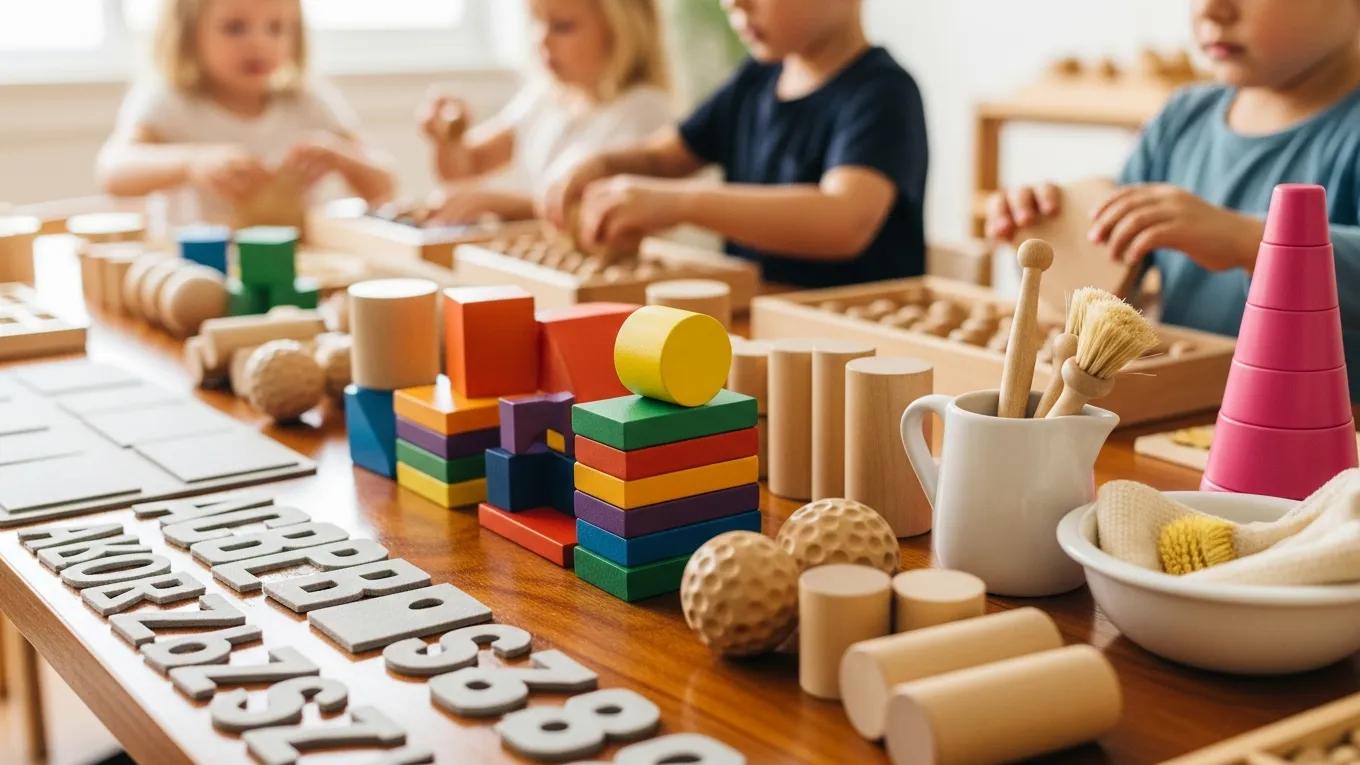
Montessori materials make abstract ideas tangible. Many are self-correcting, giving immediate feedback. These tactile tools strengthen fine motor skills, refine senses, and help children move from concrete experience to abstract thinking through repeated practice.
Which Curriculum Areas Are Included in Montessori Early Childhood Education?
A Montessori classroom includes practical life, sensorial work, language, mathematics, and cultural studies—each supporting development and the whole-child approach.
What Activities Are Involved in Practical Life and Sensorial Learning?
Practical life tasks teach everyday skills (pouring, dressing, cleaning), building coordination, independence, and focus. Sensorial work refines discrimination of size, color, texture, and sound, improving observation and categorization.
Research shows that hands-on Montessori practices support fine motor development and socio-emotional growth in young children.
Montessori Practices and Toddler Motor & Socio-Emotional Development
This qualitative study in Sri Lanka interviewed 25 teachers and 25 parents to explore how Montessori practical life, sensory tasks, outdoor learning, and art-oriented activities affect toddler development. Participants reported improvements in manual dexterity, coordination, and hand control, alongside gains in socio-emotional skills. Teachers valued learner-centered strategies and reflective practice, while parents noted personalized attention and emotional growth. The findings suggest that applying Montessori principles in dynamic learning spaces meets diverse learner needs.
How Are Language, Math, and Cultural Studies Integrated?
Language, math, and cultural studies are integrated using storytelling, manipulatives, and real materials. This approach reveals connections between ideas and supports transfer of learning across contexts.
What Are the Benefits of Montessori Education for Young Children?
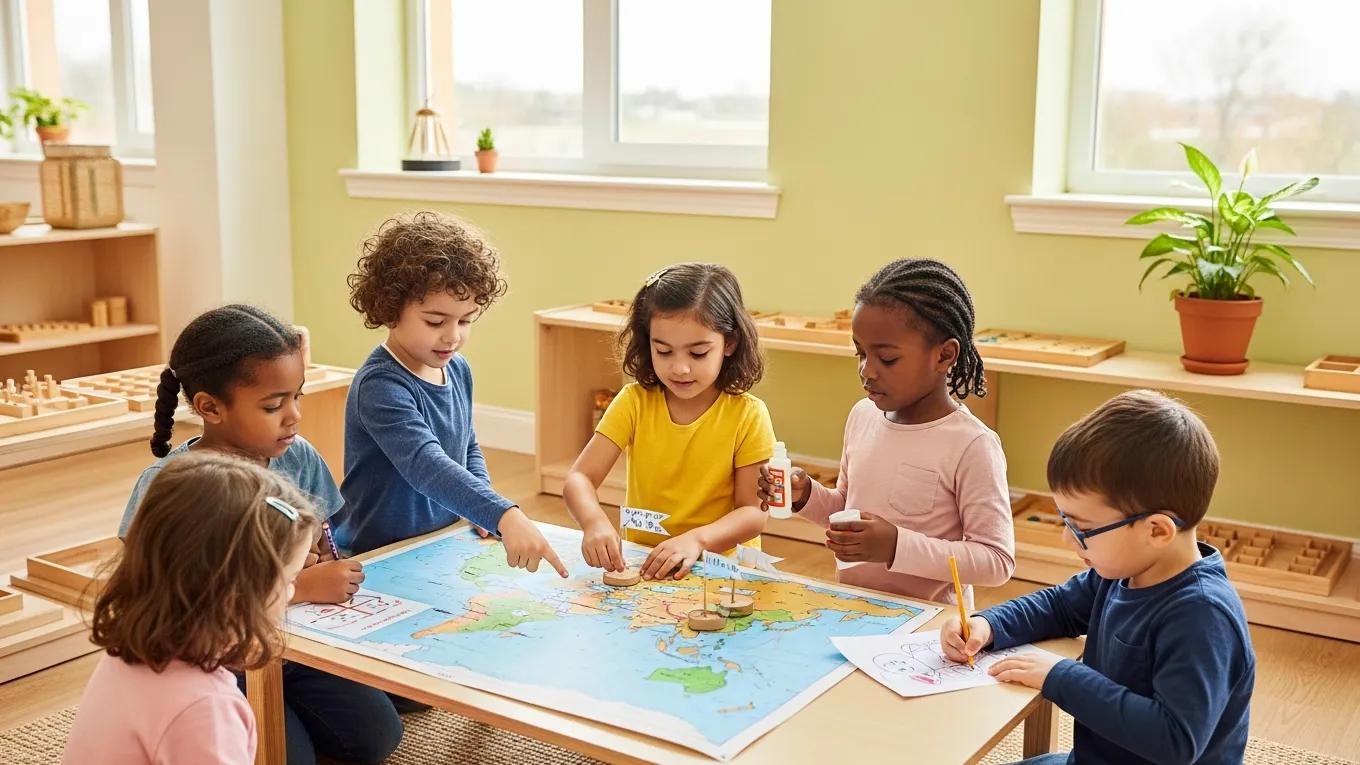
Montessori supports independence, social-emotional skills, and a foundation for academic and creative growth. Emphasizing choice and concentration, children develop confidence, persistence, and thoughtful learning habits.
How Does Montessori Curriculum Foster Independence and Social-Emotional Growth?
Giving real responsibilities and problem-solving opportunities fosters self-reliance and self-regulation. Children practice decision-making, impulse control, and cooperation while working alongside peers.
What Outcomes Can Parents Expect from Montessori Programs?
Parents often report greater independence, focus, and social skills. Research frequently shows Montessori students performing well in creativity, problem-solving, and certain academic areas compared with traditional peers; programs emphasize individualized learning.
A comparative study highlights several cognitive and social-emotional advantages among Montessori students relative to traditional schooling.
Montessori vs. Traditional Education: Cognitive and Social-Emotional Findings
This mixed-methods study compared Montessori and traditional schooling with 500 students aged 6–12. Quantitative assessments and interviews with teachers, parents, and students showed Montessori learners scoring higher on measures such as processing speed, working memory, and perceptual reasoning. Montessori students also tended to outperform peers in mathematics and language arts, while social-emotional measures—like behavioral self-control and social competence—were stronger in Montessori settings.
For families exploring enrollment, Cozytime offers a nurturing program aligned with Montessori principles.
How Is Montessori Curriculum Tailored to Different Age Groups?
Montessori adapts to developmental stages: materials, expectations, and teacher roles shift so tasks remain age-appropriate and motivating.
What Learning Goals Are Set for Infants to Toddlers?
Infant and toddler goals focus on movement, sensory awareness, secure relationships, and routines that support later learning.
How Does Curriculum Adapt for Preschoolers?
Preschoolers gain increased independence, longer projects, deeper problem-solving, and collaborative work to extend thinking and social skills before school transitions.
Each Montessori curriculum area contributes in distinct ways.
| Curriculum Area | Focus | Benefits |
|---|---|---|
| Practical Life | Everyday skills and routine | Builds independence, coordination, and fine motor control |
| Sensorial | Refining the senses | Improves observation, classification, and cognitive organization |
| Language | Communication and literacy | Supports vocabulary, reading readiness, and expressive skills |
| Mathematics | Concrete to abstract number sense | Develops foundational math thinking through manipulatives |
| Cultural Studies | World knowledge and empathy | Fosters global awareness and appreciation for diversity |
The table summarizes each area’s role in development.
In short, Montessori is a coherent, child-centered approach prioritizing independence, deep engagement, and holistic development. Knowing its principles and practices helps families and educators support children.
Nutrition also matters for early learning; see our nutrition requirements for food and meal standards.
To see these ideas in practice, visit the school philosophy page.
Frequently Asked Questions
What age groups benefit most from the Montessori curriculum?
Supports children from infancy through early elementary; activities and expectations are tailored by stage.
How does the Montessori method support children with different learning styles?
Varied materials and sensory experiences allow different learning styles; teachers observe and guide each child’s pace.
What role do parents play in the Montessori education process?
Parents are partners: home routines that encourage independence reinforce classroom learning, and schools invite parents to workshops and observations.
Are there specific training requirements for Montessori educators?
Yes. Montessori teachers typically complete specialized training in child development, Montessori philosophy, and materials; certification and ongoing professional development are common.
How does the Montessori curriculum address social-emotional development?
Montessori fosters self-regulation, empathy, and collaboration through choice, meaningful work, and mixed-age interactions where children practice emotional control and conflict resolution.
What are some common misconceptions about Montessori education?
Common myths: Montessori lacks structure (it is structured), downplays academics (it includes rich academic content), or suits only certain children (its individualized approach fits diverse learners).