

Early childhood development covers the physical, cognitive, social, and emotional changes children experience from birth to about eight years old. These years set the groundwork for learning, behavior, and later well-being. Knowing developmental stages helps parents and educators encourage curiosity, resilience, and healthy growth. This article outlines the main stages, how Montessori supports development, the role of nutrition, and tips for choosing an early education program.
What Are the Main Stages of Early Childhood Development?
Early childhood can be described in stages with distinct milestones. Recognizing them helps adults provide the right play, conversation, and interaction to match a child’s growing abilities.
How Do Cognitive Skills Develop from 6 Months to 6 Years?
Cognitive development moves quickly between 6 months and 6 years. Around six months, babies begin to recognize familiar faces and respond to their names. By two years, toddlers follow simple directions and start pretend play, showing memory and imagination. By age six, many children can solve basic problems, grasp elementary math ideas, and communicate more clearly. Regular, responsive interaction and playful challenges support this progression.
What Social and Emotional Growth Occurs During Early Childhood?
Social and emotional skills grow alongside cognitive skills. Infants typically form strong attachments by about one year. By age three, children begin cooperative play and learn to share and negotiate. By six, most have improved emotional control and a better understanding of social behavior. These abilities—expressing feelings, understanding others, and building friendships—are critical for long-term well-being.
How Does the Montessori Method Support Early Childhood Development?
The Montessori approach centers the child: prepared environments invite curiosity, materials support hands-on discovery, and adults guide rather than direct. This lets children work at their own pace while practicing independence and concentration. Learn more about our school philosophy.
What Are the Benefits of Montessori Childcare for Young Children?
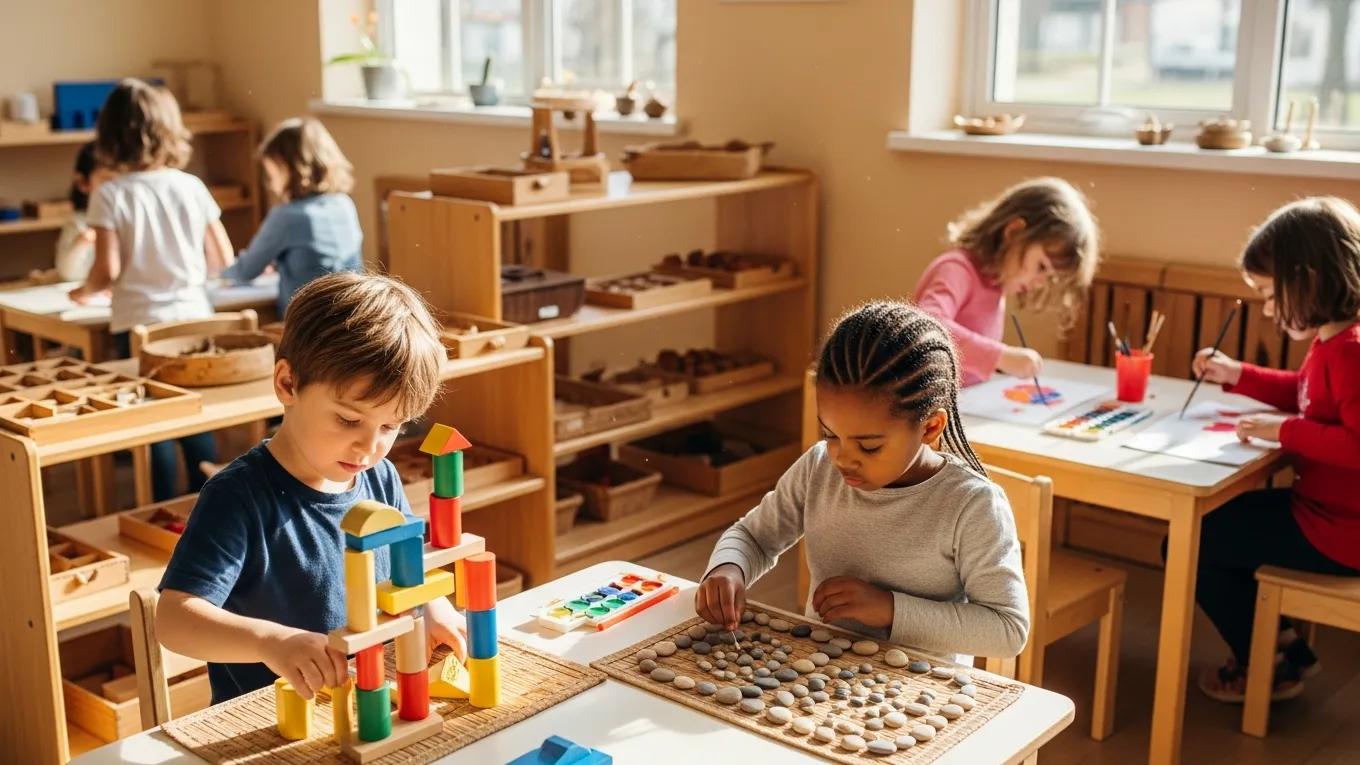
Montessori childcare supports whole-child development in several practical ways:
- Holistic growth: Montessori materials and routines nurture thinking, social skills, emotions, and motor development through purposeful play and everyday tasks.
- Stronger learning outcomes: Research often finds Montessori students perform well on academic and problem-solving measures thanks to self-directed practice and deep engagement.
- Greater independence: Classrooms encourage choice and responsibility, helping children build confidence and self-regulation.
Research supports these benefits for cognitive and social-emotional development.
Montessori vs. Traditional Education: Cognitive & Social-Emotional Benefits
This mixed-methods study compared Montessori and traditional classrooms to measure impacts on thinking skills, school achievement, and social-emotional development. The researchers studied 500 students aged 6 to 12 using standardized tests and interviews with teachers, parents, and students. Findings showed Montessori students scored higher on measures of cognitive processing—especially processing speed, working memory, and perceptual reasoning—and tended to do better in mathematics and language arts. No significant difference appeared for science achievement. The study also found stronger social competence and behavioral self-control among Montessori students.
A comparative study of Montessori and traditional education approaches: Cognitive development and academic achievement, V Rizqi, 2024
How Does Montessori Encourage Child Independence and Learning?
Classrooms are arranged so children can move easily, choose activities, and repeat tasks until they feel mastery. Materials are accessible and teach concepts through doing, which builds decision-making and sustained attention. Teachers act as guides—observing, offering subtle support, and stepping back so children learn from practice. Discover more about our curriculum.
Evidence shows this approach cultivates independent learning behaviors in young children.
Montessori Pedagogy for Independent Learning in Early Childhood
This descriptive case study examined Montessori practices at PAUD Montessori Futura Indonesia to see how daily routines and classroom design promote independent learning. Observations showed children frequently selected activities on their own, required minimal direct instruction, and practiced tasks independently. Educators intentionally arranged materials and planned activities to encourage autonomy, and age-grouping helped older children take on responsibility while mentoring younger peers. The findings highlight practical ways Montessori environments foster independence and suggest meaningful implications for early childhood practice.
Fostering independent learning in early childhood: A case study on montessori pedagogy at PAUD Montessori Futura Indonesia, M Qadafi, 2023
What Role Does Nutrition Play in Early Childhood Development?
Good nutrition is essential for growth and brain development. A balanced diet provides the vitamins and minerals children need for physical growth and to support attention, memory, and emotional regulation.
Which Nutrition Standards Support Healthy Physical Growth?
Guidance for young children emphasizes a variety of whole foods—fruits, vegetables, whole grains, lean proteins, and dairy or fortified alternatives. Nutrients like iron support cognitive development, while calcium and vitamin D are important for bones. For specific recommendations, see nutrition requirements.
How Does Proper Nutrition Enhance Cognitive and Social Development?

Children who eat consistently nutritious meals tend to have steadier attention, clearer thinking, and more positive social interactions at school. Nutritional gaps can slow development and affect behavior, so regular access to balanced meals and snacks supports learning and social skills during these formative years.
How Can Parents Choose the Right Early Childhood Education Program?
Choosing a program matters. Look for settings that match a child’s needs, offer supportive relationships, and provide developmentally appropriate learning experiences.
What Should Parents Look for in Early Childhood Education Programs?
When evaluating programs, consider these core factors:
- Accreditation: Verify the program meets recognized quality standards and licensing requirements.
- Curriculum quality: Look for a balanced, developmentally appropriate curriculum that supports thinking, social skills, and emotional growth.
- Teacher qualifications: Skilled educators trained in early childhood development who receive ongoing professional learning are essential to strong outcomes.
The quality of educators, supported by ongoing professional development, is a key factor in delivering high-quality early childhood education.
Professional Development for High-Quality Early Childhood Education
This review examines how in-service professional development affects teachers’ practice and children’s learning. While well-designed professional learning can improve interactions and outcomes, not all PD is equally effective—making it a challenge for centers to choose the best options. The paper summarizes research on what features make PD work, offers guidance for selecting programs that meet teachers’ and children’s needs, and recommends building ongoing professional learning communities to sustain improvement within early childhood centers.
Guidelines for selecting professional development for early childhood teachers, RE Schachter, 2019
How Does Enrollment Work at Cozy Time Montessori Academy?
Enrollment at Cozy Time Montessori Academy is simple and welcoming. Families can check availability and learn application steps on the academy’s website. Cozy Time offers Montessori-based programs for children from 6 months to 6 years and encourages visits so parents can meet teachers, see the classroom, and decide whether the program fits their child and family.
Frequently Asked Questions
What are the key indicators of healthy early childhood development?
Look for steady physical growth, age-appropriate language and problem-solving, and growing social skills like sharing and taking turns. Regular well-child visits and developmental screenings help track progress. If you notice consistent delays or regression, early evaluation can make a big difference.
How can parents support their child’s emotional development?
Create a warm, predictable environment where your child feels safe expressing feelings. Name emotions, model calm responses, validate feelings, and use stories or role-play to practice empathy. Consistent routines and attentive caregiving give children the security they need to develop emotional skills.
What role do play and exploration have in early childhood learning?
Play is the primary way young children learn. Through imaginative and hands-on play they test ideas, practice social roles, and solve problems. Outdoor play, sensory activities, and open-ended materials encourage curiosity, creativity, and foundational thinking skills.
How can parents ensure their child receives a balanced diet?
Offer a variety of foods from all food groups, limit sugary snacks, and make meals colorful and appealing. Involve children in meal prep to build interest in new foods. If you have concerns about intake or weight, consult your pediatrician or a nutrition specialist.
What are the signs that a child may need additional support in their development?
Warning signs include delays in speech or motor milestones, trouble interacting with peers, difficulty following simple directions, or behavior markedly different from age expectations. If you’re worried, discuss it with your child’s doctor or an early childhood specialist—early intervention offers the best chance to address needs.
How does the Montessori method differ from traditional education?
Montessori emphasizes child-led exploration, hands-on materials, and mixed-age groups, so children learn by choosing meaningful activities and working at their own pace. Traditional classrooms often follow a set schedule and direct instruction. Montessori prioritizes independence, self-regulation, and deep engagement through practical learning experiences.