
Parents often ask if a toddler program can really support pre casa emotional development without being too strict or too academic. It can, when the program is built around licensed care, clear routines, close supervision, and a real Montessori toddler program rather than simple group minding.
What Is a Pre-Casa Montessori Program?
A Pre-Casa Montessori program is the stage between infant care and the Casa program Montessori families usually know best. At Cozy Time Montessori Academy, we serve children from 6 months to 6 years through Infant, Pre-Casa, and Casa programs.
Pre-Casa means a toddler classroom built for children who are no longer infants but are not yet in the Montessori Casa age group. Program names can vary by school, so the better question is how the classroom is prepared, who teaches in it, and what age range the centre accepts; for our exact Pre-Casa entry and transition ages, the best next step is to contact the centre to confirm current placement by age group.
Casa is the Montessori term many parents use for the preschool-aged classroom that follows toddler care. At Cozy Time, Casa runs at a 1:8 ratio, while Pre-Casa runs at a 1:5 ratio, which reflects the younger age and closer support toddlers need.
Parents searching Montessori Vaughan, Montessori Thornhill, or Woodbridge Montessori options are usually comparing labels that sound similar. The useful difference is that a licensed Montessori Pre-Casa classroom combines toddler care, supervision, daily routines, and a real curriculum under regulated ratios rather than informal babysitting.
How Pre-Casa Supports Emotional Development Day by Day
Pre-Casa emotional development means toddlers practise managing feelings inside ordinary parts of the day. In a Montessori Pre-Casa room, that includes waiting for a turn, hearing a limit, choosing work, asking for help, joining a snack routine, and recovering after disappointment.
Emotional growth is supported by order, repetition, and choice within limits. A prepared Montessori environment stays consistent, child-sized, and predictable, which helps toddlers understand where to go, what to do, and what happens next.
Self-regulation is taught through adult response, not through pressure. Our educators observe, name feelings plainly, model calm language, and redirect a child toward purposeful activity instead of expecting instant self-control.
Concentration supports social and emotional development in early childhood because a focused toddler is practising patience, effort, and recovery from small mistakes. In Montessori, uninterrupted work periods are part of the method, and that steady practice matters as much as the material itself.
Progress is usually visible in behaviour, not in slogans. Parents may notice smoother drop-offs, longer periods of engagement, more use of simple words, or fewer impulsive reactions over time, but every child settles at their own pace and no single timeline fits all children.
Examples of Emotional Growth Parents May Notice
Younger toddlers often show growth by moving from immediate crying or grabbing toward simpler communication. That can look like reaching for an educator, handing over a cup for help, or beginning to wait briefly during a transition.
Older toddlers in Pre-Casa often begin showing frustration tolerance in small, observable ways. They may try again after a spill, accept help after first resisting it, or return to an activity after being upset.
Early preschoolers approaching the Casa program may show more social awareness in group settings. That can look like noticing another child’s turn, following a familiar routine with less prompting, or using a short phrase instead of pushing.
Normal emotional development for a 4 year old falls within a wide range and is not perfectly linear. Some children recover quickly after disappointment, while others still need frequent co-regulation, and both patterns need to be understood in context by family, educators, and health professionals when concerns are significant.
Examples of emotional development in preschool are usually easiest to see in routine moments. Useful signs include calming faster after a limit, using words more often than crying, accepting short waits, showing empathy after a peer is upset, and separating more smoothly at drop-off.
How Montessori Builds Independence, Confidence, and Self-Regulation
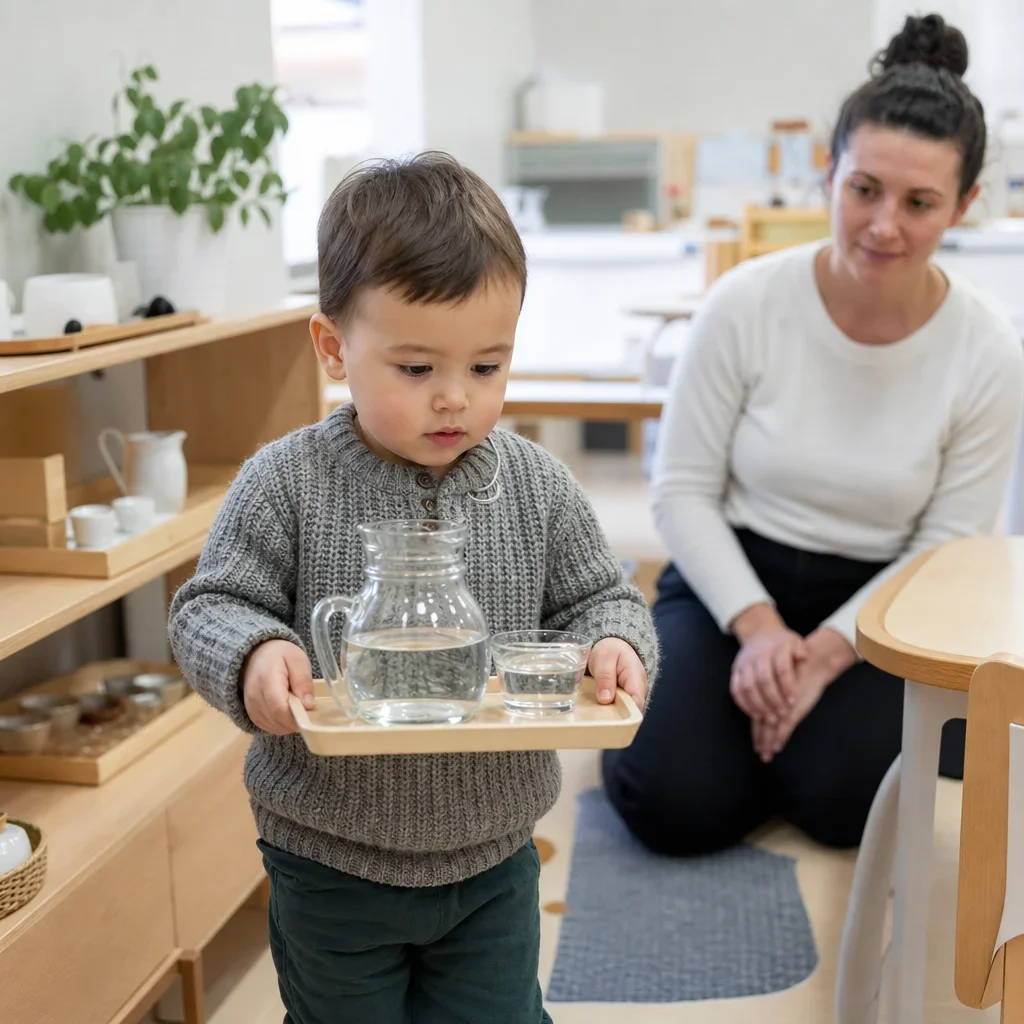
Montessori independence for toddlers starts with an environment they can use successfully. Low shelves, child-sized tools, consistent placement, and simple choices allow a toddler to participate without waiting for an adult to do every step.
Independence in Montessori does not mean children are left alone. It means guided independence with supervision, observation, and help offered at the point a child needs it.
Practical life activities are a major part of how confidence is built. Carrying a tray, wiping a spill, washing hands, helping at mealtime, and putting materials back in place all give toddlers repeated practice in doing real tasks from start to finish.
Self-directed learning contributes to emotional growth because it reduces unnecessary power struggles. When a child can choose between appropriate activities inside clear limits, the adult still leads the environment, but the child has room to act with agency.
Confidence grows from competence, not praise alone. When toddlers repeat manageable tasks in a Montessori toddler program, they experience effort, error, correction, and completion in a calm cycle.
Grace and Courtesy: The Montessori Lessons Behind Social-Emotional Skills
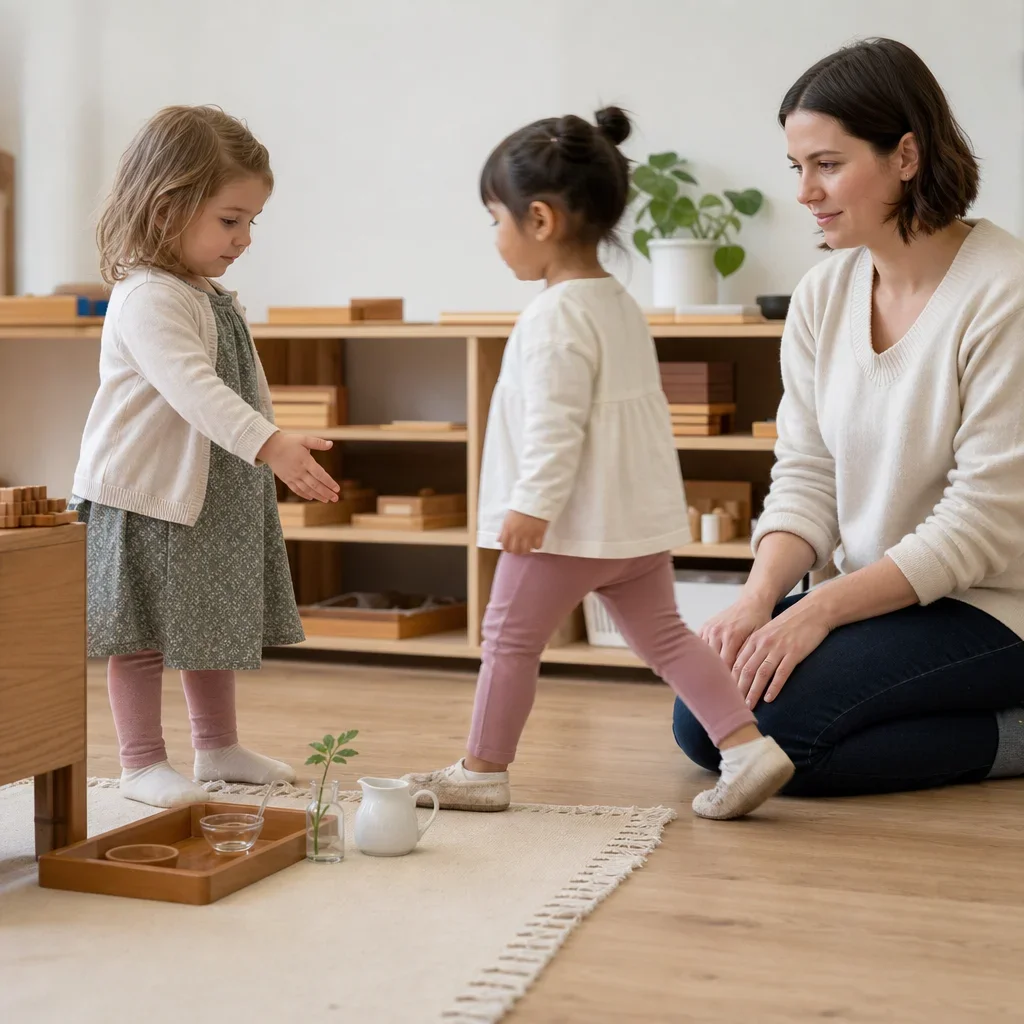
Grace and courtesy Montessori lessons are short, direct demonstrations of respectful social behaviour. In plain terms, they teach children how to live with other people in a shared classroom.
These lessons can include greeting others, waiting, offering space, carrying materials around a classmate’s work, using an indoor voice, saying please and thank you, and asking to join instead of interrupting. The point is not perfect manners; the point is repeatable social structure.
Social-emotional intelligence grows when children see the same respectful behaviour modelled again and again. In Montessori toddler emotional development, adults teach these skills through demonstration, repetition, and gentle redirection rather than punishment-heavy reactions.
Conflict resolution begins with simple language. Toddlers may be shown how to say stop, ask for a turn, offer an item back, or seek educator help before conflict escalates.
Empathy is supported through practice in noticing others. A child learns that another person is using a material, needs space, or feels upset, and that awareness becomes part of everyday classroom life.
Support for Separation Anxiety, Tantrums, Frustration, and Conflict
Pre-Casa can support separation anxiety by making drop-off predictable and brief. Toddlers usually cope better when the handoff is consistent, the adult response is calm, and the next activity is clear.
Tantrums are handled through regulation, supervision, and limits. Educators stay nearby, keep language simple, protect safety, and help the child transition back to the routine when ready.
Frustration tolerance is built through manageable challenge. Montessori materials and practical tasks are designed so toddlers can attempt real work, meet difficulty, and receive support without the adult taking over too quickly.
Parents may also see extra clinginess, tiredness, or stronger reactions at home during a new childcare transition. That does not automatically mean the program is the wrong fit; it often means the child is adjusting to a new routine, though persistent or intense distress deserves a closer conversation.
Some patterns need more discussion than a general blog can give. If a child cannot engage safely, shows distress that does not ease with support, or has concerns already being followed by professionals, the right next step is to speak directly with the educators and the child’s healthcare team.
Why Routine, Order, and the Prepared Environment Matter Emotionally
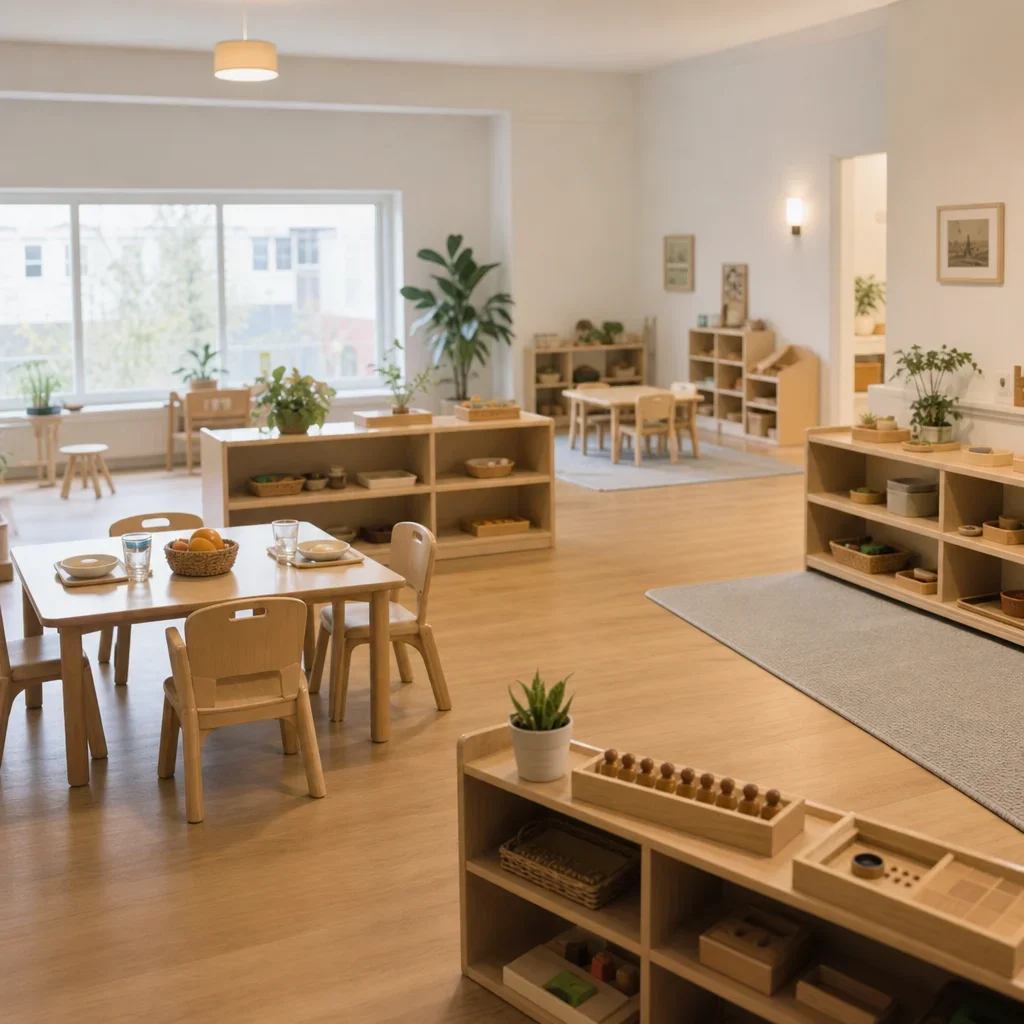
Routine supports emotional safety because toddlers can predict the sequence of the day. Arrival, work time, meals, outdoor play, rest, and pickup become landmarks that reduce uncertainty.
Order matters in Montessori because the environment carries part of the teaching. When materials are consistent, reachable, and returned to the same place, children spend less energy managing chaos and more energy participating.
A prepared environment is intentionally organized for independence and supervision. That means the room is set up so toddlers can move, choose, and practise self-care while adults can still observe and support closely.
Transitions are smoother when the environment does not overwhelm the child. Fewer unnecessary distractions, clear limits, and calm movement help toddlers shift from one part of the day to the next.
Pre-Casa Curriculum Areas and the Skills They Build
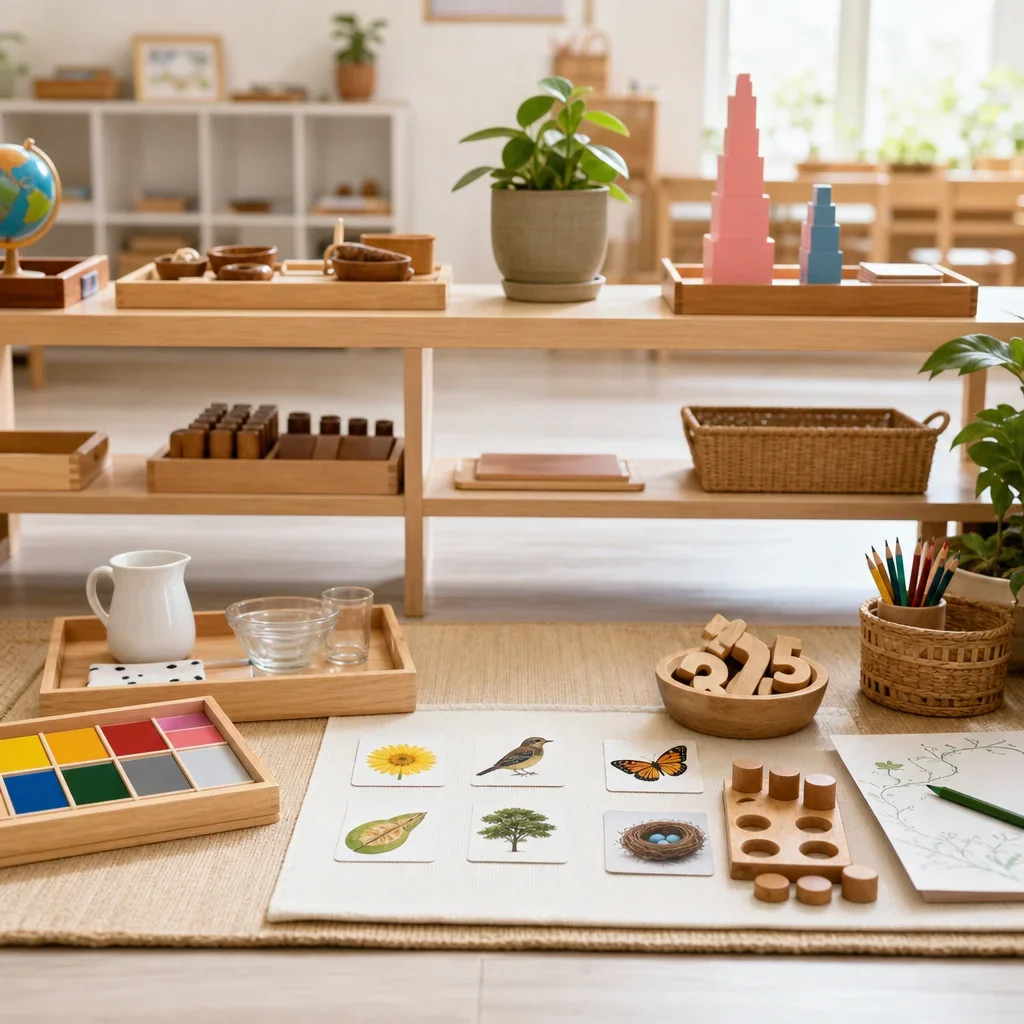
The main areas of learning in Pre-Casa include practical life, sensorial work, language, early math foundations, cultural exploration, creative arts, movement, and social learning. Each area supports both classroom participation and emotional steadiness in a different way.
Practical life is especially important in a Montessori toddler program. These activities build care-of-self and care-of-environment habits while also supporting focus, patience, sequencing, and recovery after mistakes.
Sensorial work helps toddlers classify and explore the world through the senses. Sorting, matching, grading, and comparing give children structured experiences with attention and order.
Language work supports emotional expression by giving names to objects, actions, and simple feelings. A child who can label more of what they need often has more tools for communication during stress.
Early math in Pre-Casa is concrete and hands-on rather than abstract seatwork. Toddlers are first building order, sequence, and attention, which are foundational habits for later classroom learning.
Meals and care routines are also part of learning, not interruptions from learning. We prepare meals on-site, and those moments can support independence, social practice, and self-care within the daily routine.
A Typical Pre-Casa Day
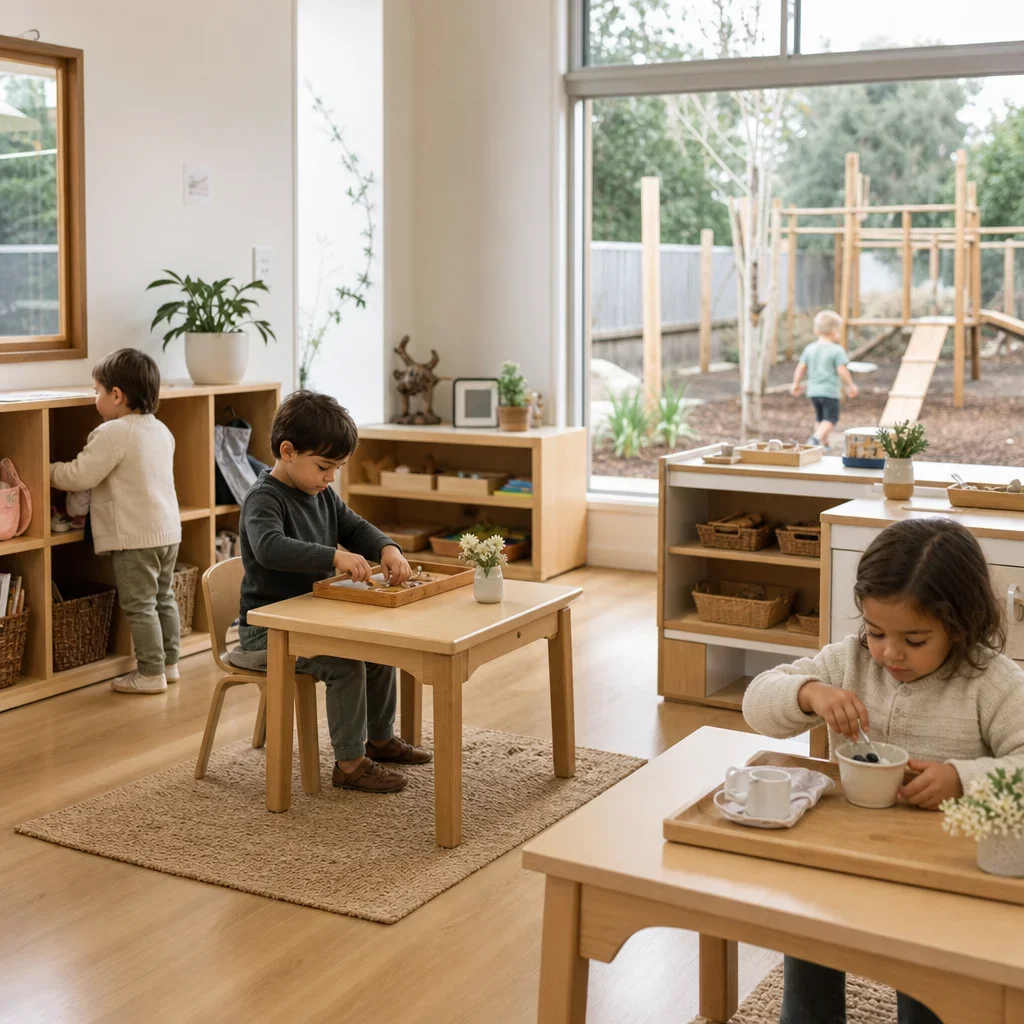
A typical Pre-Casa day follows a consistent flow rather than a rigid script. The exact schedule is not specified here, but the daily structure usually includes arrival, classroom settling, Montessori work time, meals or snacks, outdoor play, rest, care routines, and pickup transitions.
Arrival is designed to help the child move from home to school with as little confusion as possible. A calm handoff, familiar educator, and clear next step often matter more than a long goodbye.
Work time gives toddlers the chance to choose from prepared activities at their level. This is where a great deal of Montessori toddler emotional development happens because concentration, waiting, repetition, and help-seeking are all being practised in real time.
Meals and snacks support routine and social learning. Toddlers practise sitting, serving in simple ways when developmentally appropriate, using utensils, and participating in a shared table rhythm.
Outdoor time and movement help toddlers reset their bodies and attention. A strong day for this age group includes chances to move, not only chances to sit.
Rest, diapering, toileting, and pickup are still core parts of care in Pre-Casa. A quality licensed program treats these moments as supervised, respectful care routines, not as side tasks.
Program Details Parents Compare Before Enrolling

Licensed childcare matters because ratios, supervision, and staffing are regulated. At Cozy Time, the Infant ratio is 1:3, Pre-Casa is 1:5, and Casa is 1:8.
These ratios matter directly to emotional support. A toddler who is separating, frustrated, or learning a new routine needs prompt adult response, and lower ratios make that support more realistic.
Our staff include certified Montessori teachers, ECEs, and assistants. That means families are choosing a program with actual early childhood credentials and a defined teaching approach, not unlicensed minding.
Staff are also First Aid and CPR certified with clean criminal record checks. Those are baseline trust factors parents should confirm in any childcare setting.
We offer full-day care and prepare meals on-site. For exact menu details, allergy procedures, nap structure, and classroom-specific care routines, contact the centre so we can share the current program information.
Potty training should be discussed directly, not assumed from a blog post. A child’s readiness with diapering or toileting is part of placement planning, and the centre can explain how that is handled for the child’s age group.
Pre-Casa vs Daycare vs Preschool vs Casa
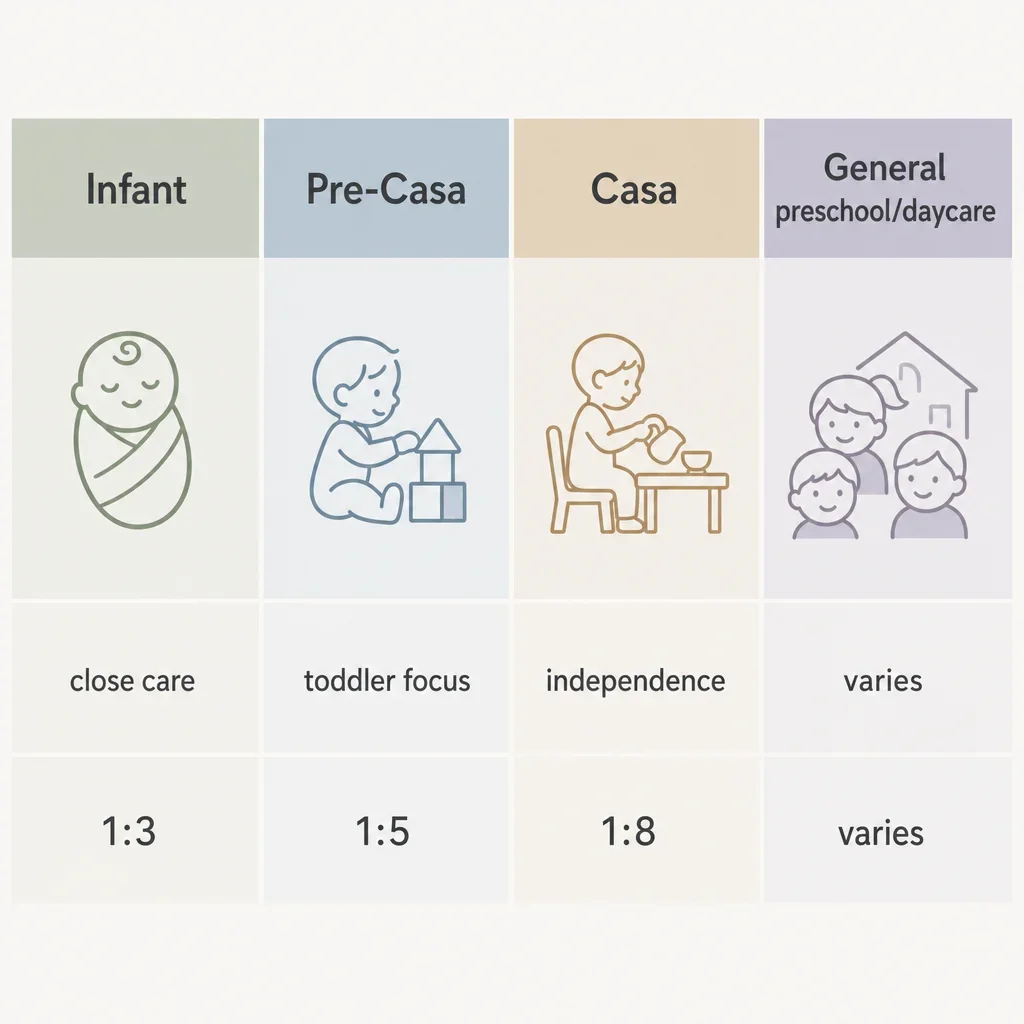
Pre-Casa sits between infant care and the Casa classroom in both age and expectations. It is usually the bridge from highly hands-on toddler care toward the greater independence of the Montessori Casa meaning families often hear on tours.
Traditional daycare can offer warm care and routine, but Pre-Casa vs daycare is usually a question of curriculum structure, prepared environment, and how independence is taught. A licensed Montessori setting uses a defined method, trained staff, and intentional materials alongside care routines.
Pre-Casa vs preschool is often about developmental fit. Preschool programs may expect longer group participation, while a toddler-focused Pre-Casa room is built more carefully around movement, short demonstrations, repetition, and practical life work.
Casa means the Montessori children’s house, which is the preschool classroom that follows toddler stages. At Cozy Time, Casa operates at a 1:8 ratio and follows after Pre-Casa based on the child’s age and readiness for that program.
One criticism of Montessori is that it can look too independent or too structured. In practice, good Montessori is structured in the environment and flexible in the adult’s observation, which means children have freedom within limits and support when they need it.
| Program | Main age focus | Ratio at Cozy Time | Main classroom emphasis |
|---|---|---|---|
| Infant | 6 months to younger toddler stage | 1:3 | close care, routine, secure transitions |
| Pre-Casa | toddler stage before Casa | 1:5 | practical life, movement, language, emotional regulation |
| Casa | preschool stage to age 6 | 1:8 | multi-step work, greater independence, broader Montessori curriculum |
| General preschool/daycare model | varies by school | varies by provider | group routine and care approach depend on the program |
Is My Child Ready for Pre-Casa?
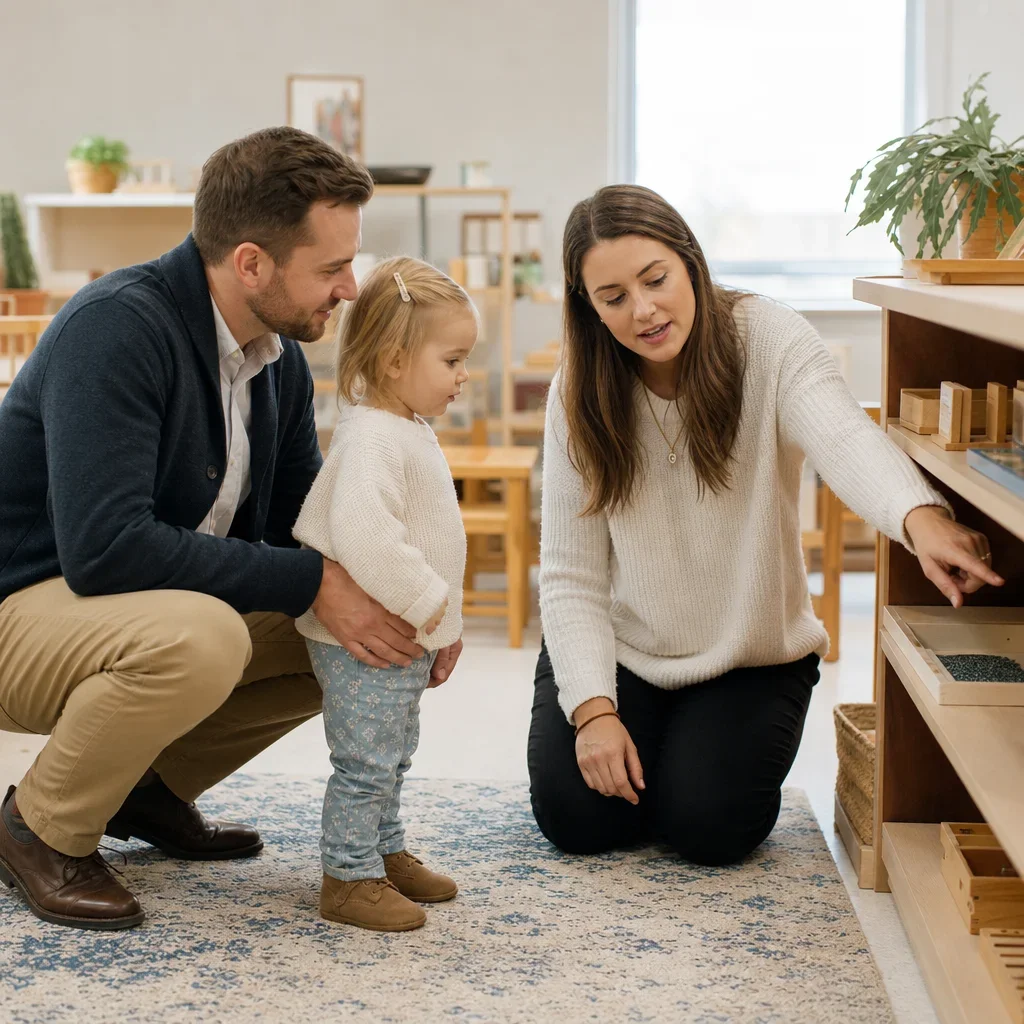
A child does not need a perfect temperament to begin Pre-Casa. Readiness is usually about whether the program matches the child’s age, daily rhythm, mobility, interest in imitation, and growing ability to participate in routine with support.
Good signs for Montessori toddler readiness include curiosity about real tasks, interest in other children, tolerance for short transitions, and an emerging wish to do simple things independently. None of these need to be polished skills.
Children do not need to arrive emotionally settled on day one. Many toddlers cry, resist separation, or need extra support during the first stage of adjustment, and that is still within a normal settling process.
Some signs call for a fuller conversation before or during enrolment. Ongoing distress that stays intense, major difficulty engaging safely in group care, or concerns already identified by professionals should be discussed directly with the centre and the child’s own supports.
The best way to judge fit is to visit the classroom and ask specific questions. Watch how adults speak to children, how transitions are handled, and whether the room feels organized enough for a toddler to succeed.
Readiness checklist
- interested in movement and exploration
- beginning to imitate adult routines
- able to participate in simple care tasks with support
- curious about objects, shelves, and purposeful activity
- starting to tolerate short waits or brief limits
- benefits from predictable routines
- may still need diapers or help with toileting, depending on program expectations
What Parents Should Look for on a Tour
A strong Pre-Casa room should show regulated care first and pedagogy second. Look for licensing, visible supervision, age-appropriate ratios, and educators who can explain the purpose behind the materials and the routine.
Parents should ask who is in the classroom each day. At Cozy Time, staffing includes ECEs, certified Montessori teachers, and assistants, which is a meaningful difference between licensed Montessori care and casual babysitting.
The environment should be prepared for toddlers, not adapted as an afterthought. Child-sized furniture, reachable materials, order on the shelves, and calm transitions are concrete signs that the program understands this age group.
Questions about meals, naps, diapering, pickup, and settling-in are not small questions. They are daily care questions, and daily care is where trust is built.
How Parents Can Reinforce Emotional Development at Home
Home support works best when it is simple and repeatable. Consistent meal, sleep, and departure routines give toddlers the same kind of predictability they rely on in a Montessori classroom.
Naming feelings in short language helps without over-talking the moment. Phrases such as sad, mad, waiting, help, all done, and try again are often more useful than long explanations.
Limited choices support cooperation better than open-ended negotiation. Two acceptable options, such as blue cup or green cup, coat first or shoes first, give a toddler structure and agency at the same time.
Practical tasks at home reinforce Montessori independence for toddlers. Carrying a napkin, putting laundry in a basket, wiping a small spill, or helping set the table all build participation and confidence.
Books, songs, and modelling also matter. A toddler learns emotional habits by hearing calm language, watching adults repair small conflicts, and seeing the same routines repeated across home and school.
Why Families in Vaughan and Across the GTA Consider Cozy Time
Families looking for Montessori Vaughan, Montessori Thornhill, or Woodbridge Montessori options are usually balancing three concerns at once: trust, daily logistics, and fit for a very young child. Licensed care with clear ratios and trained staff answers those concerns more concretely than marketing language does.
Cozy Time Montessori Academy operates in Vaughan and Bolton, with two locations, and serves families across the GTA who are looking for licensed Montessori-based childcare from 6 months to 6 years. That includes parents comparing infant care, a Montessori toddler program, and the Casa program under one centre.
Our hours are 7:00 AM to 6:30 PM, which matters for working families planning realistic drop-off and pickup routines. Availability can change by age group, so contact the centre to confirm current openings or waitlist timing.
The real next step is to see the classroom. If you are trying to judge your child’s Pre-Casa emotional development, book a tour, meet the educators, and talk with us about your child’s routine, temperament, and age group before you decide.
FAQ
What is a Pre-Casa Montessori program?
A Pre-Casa Montessori program is the toddler stage between infant care and Casa. It focuses on routine, practical life, language, movement, and early social-emotional skills in a prepared environment.
What is the meaning of Casa in Montessori?
Casa means the children’s house. It is the Montessori classroom that usually follows toddler care and includes preschool-aged children.
What age is Pre-Casa in Montessori?
The exact age range can vary by school. At Cozy Time, the precise Pre-Casa placement range is not specified here, so the centre can confirm current entry and transition ages for your child.
How does Pre-Casa support emotional development?
It supports emotional development through predictable routines, guided independence, grace and courtesy lessons, calm adult modelling, and daily practice with waiting, choosing, asking for help, and recovering from frustration.
What is an example of emotional development in preschool?
A simple example is a child using words more often than crying, calming faster after disappointment, or waiting briefly for a turn during a routine.
How is Pre-Casa different from daycare or preschool?
Pre-Casa combines licensed care with a defined Montessori method. The differences are usually seen in the prepared environment, staff training, ratio, and the way independence and routine are taught.
How does Montessori help with independence and confidence?
It gives children real, manageable tasks in a child-sized environment. Confidence grows as toddlers repeat those tasks and begin completing more steps with support.
Can Pre-Casa help with separation anxiety?
A good Pre-Casa program can support separation by keeping drop-off consistent, calm, and predictable. It cannot promise the same timeline for every child.
Does a child need to be potty trained for Pre-Casa?
Do not assume that from a general article. Contact the centre directly to ask how diapering, toileting, and readiness are handled for the age group you need.
What should parents look for in a Montessori toddler program?
Look for licensing, age-appropriate ratios, trained staff, a prepared classroom, calm transitions, clear routines, and educators who can explain how the day works.
How does Pre-Casa prepare children for Casa?
It builds the habits that make the next stage manageable: routine, concentration, practical life skills, language, simple social problem-solving, and greater comfort working in a shared classroom.
How can parents support social and emotional development at home?
Keep routines steady, name feelings simply, offer limited choices, involve your child in practical tasks, and stay consistent with calm boundaries.