
Junior toddler vs preschool is mainly a question of care needs, routine tolerance, and classroom readiness. Toddler programs commonly serve children from about 18 months to 3 years, while preschool programs commonly serve children from about 3 to 5 years. Age is a useful starting point, but it is not the only placement factor.
Junior Toddler vs Preschool at a Glance
A junior toddler room provides closer caregiving support, while a preschool room supports more independent participation in a shared routine. The difference between toddler school and preschool usually appears in toileting, communication, peer play, rest needs, and the amount of adult help needed throughout the day.
| Area | Junior toddler / toddler room | Preschool room |
|---|---|---|
| Typical age | About 18 months to 3 years. | About 3 to 5 years. |
| Daily focus | Care routines, movement, early communication, and self-help practice. | Group routines, longer activities, peer interaction, and growing independence. |
| Play style | Parallel play, where children play beside one another. | More cooperative play, where children begin sharing ideas and roles. |
| Communication | Gestures, single words, short phrases, and adult interpretation may be common. | Children may use longer phrases to ask for help, join play, and express needs. |
| Toileting | Children may still be in diapers or learning toileting routines. | Washroom independence may be expected differently by each centre. |
| Adult support | Frequent help with meals, transitions, dressing, and regulation. | Support remains available, with more chances to practise classroom responsibilities. |
| Rest needs | Rest routines may be a central part of the day. | Rest may still be offered, but children can often manage a more structured flow. |
At Cozy Time Montessori Academy, children move through Infant, Pre-Casa, and Casa programs rather than a single universal toddler-to-preschool label. We serve children from 6 months to 6 years. Our Infant ratio is 1:3, Pre-Casa ratio is 1:5, and Casa ratio is 1:8. Placement should be discussed with the centre because current availability, age, and classroom readiness all matter.
What Age Is Junior Toddler vs Preschool?
Toddler is a broad developmental label, not one fixed daycare category. It commonly covers children from about 18 months to 3 years. A preschooler commonly refers to a child from about 3 to 5 years. Centres may use junior toddler, toddler, preschool, Pre-Casa, Casa, or pre-K differently.
A 2-year-old can attend a more school-like early learning program when the centre’s age group and support model fit. Some children at age 2 need a toddler room with closer care routines, while others may be ready for a more structured Pre-Casa environment. The centre should explain its own placement criteria before enrolment.
Ontario families also need to separate childcare room names from school-system names. Junior kindergarten is a school term, while preschool can describe a childcare or early learning program. Ontario school boards set their own entry processes and eligibility details.
Developmental Differences Between Toddlers and Preschoolers
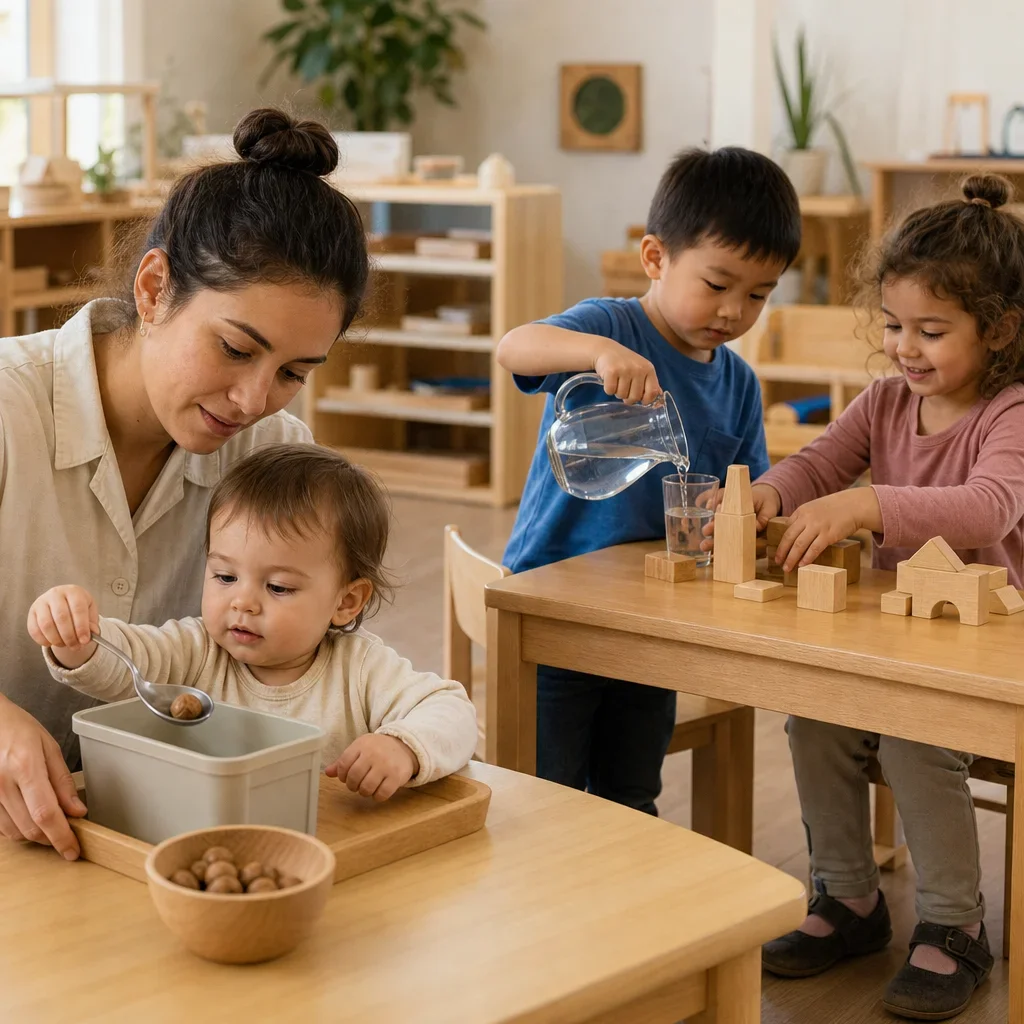
Toddlers are usually learning how to manage big feelings with adult support. Preschoolers may be able to wait briefly, use more words during frustration, and return to an activity after a transition. These are classroom observations, not pass-or-fail requirements.
Language needs are often different across the two settings. A toddler may communicate through gestures, single words, short phrases, or bringing an adult to what they need. A preschooler may be more able to communicate basic needs, follow a simple one- or two-step direction, and use words during peer play.
Play also changes in a visible way. Parallel play means children play beside each other with similar materials. Cooperative play means children begin planning, sharing roles, and responding to another child’s ideas. Both forms of play are appropriate in early childhood classrooms.
Fine-motor and self-help work also become more central with age. Toddlers may practise holding a spoon, washing hands, placing toys away, and helping with dressing. Preschool classrooms can offer more opportunities to pour, fasten, carry materials, prepare a work area, and care for shared classroom spaces.
Toddler School vs Preschool: Daily Routine and Expectations
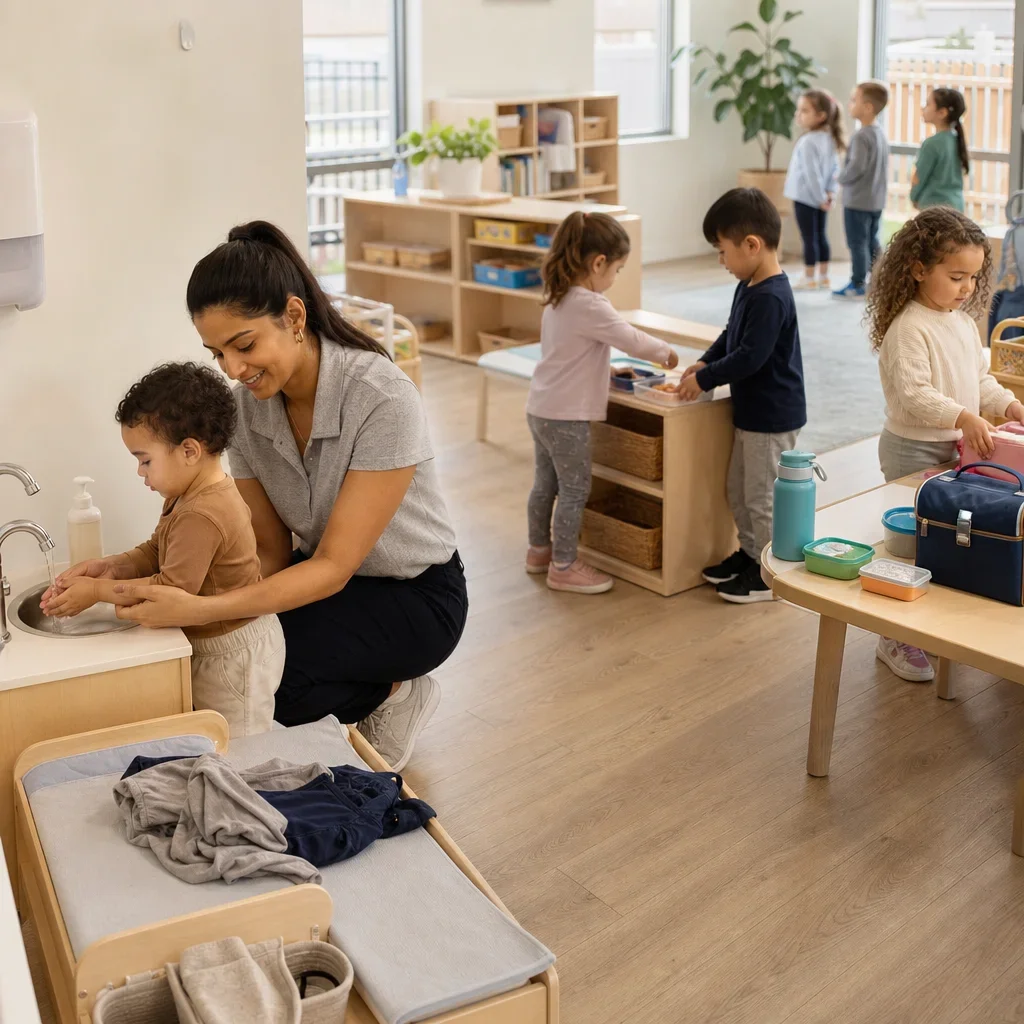
Toddler school usually centres on care routines as much as activities. Meals, rest, diapering or toileting, handwashing, dressing, and transitions require frequent adult support. A toddler room should have enough staffing and a realistic routine for these care needs.
Preschool classrooms usually have a more predictable group flow. Children may join short group gatherings, choose activities, help clean up, move between indoor and outdoor routines, and practise eating with greater independence. The routine should still allow educators to respond to individual needs.
A daycare room transition works best when families understand the practical changes. Ask whether the new room has a different rest routine, meal routine, washroom expectation, group schedule, or transition plan. A child does not need to manage every part of the new day independently before a move.
At Cozy Time, we prepare meals on-site. Families should contact the centre for classroom-specific information about rest, meals, snacks, and toileting support, because those daily details affect whether Pre-Casa or Casa is the better fit.
Montessori Toddler vs Preschool: Pre-Casa and Casa
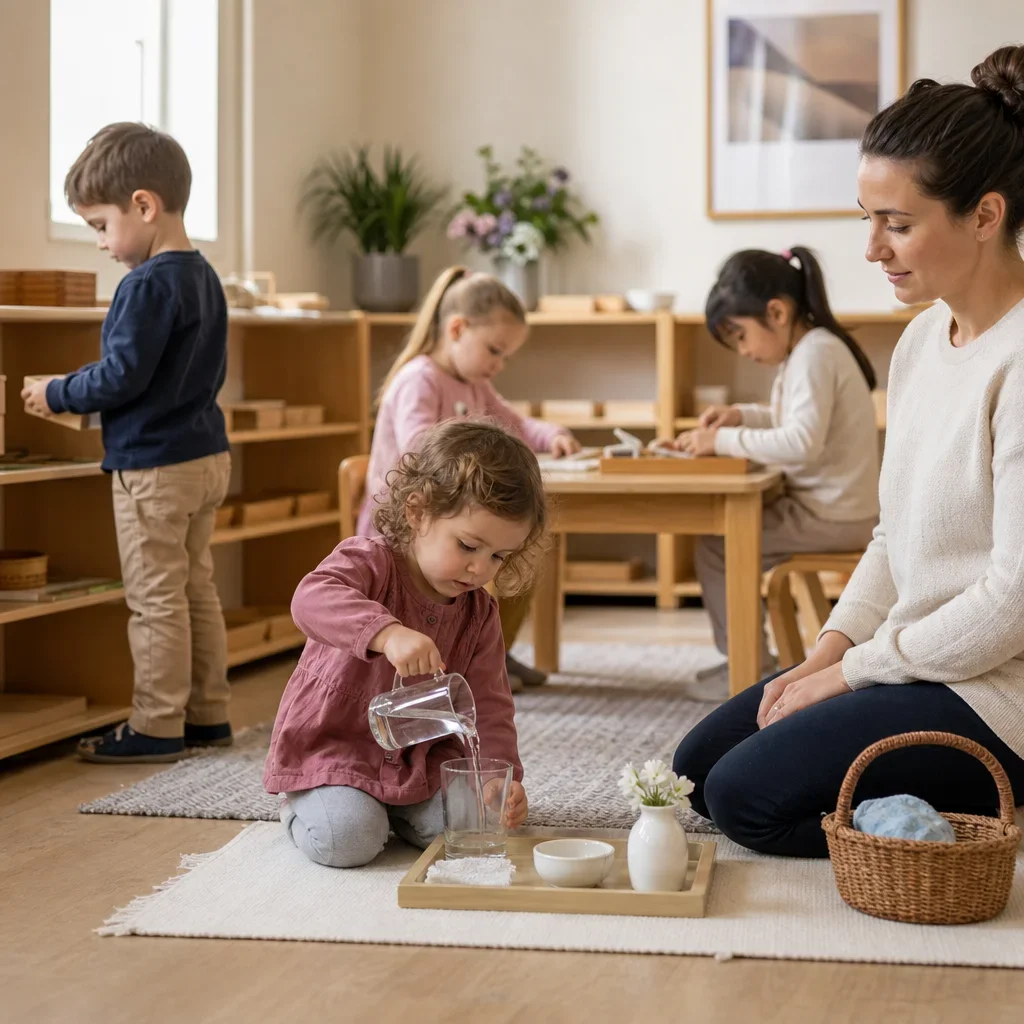
The Montessori method is a hands-on approach that gives children purposeful choices within an organized classroom. Montessori is not simply an academic program. It uses prepared materials, consistent routines, practical life activities, movement, language experiences, and respectful adult guidance.
A Montessori toddler or Pre-Casa environment often emphasizes practical life. Practical life means real tasks adapted for young children, such as carrying, pouring, wiping, handwashing, putting materials away, and participating in care routines. These activities let educators observe how a child approaches movement, concentration, and independence.
A Casa classroom is commonly Montessori’s preschool-aged environment. Casa means “house” in Italian and describes a classroom community where children work with materials, make choices, care for their space, and participate with peers. Cozy Time’s Casa ratio is 1:8.
A multi-age classroom includes children at different stages within the same learning community. Older children may model routines, while younger children observe and participate at their own level. Educators still supervise, guide, and adapt activities to the child in front of them.
How to Tell If Your Child Is Ready for Preschool
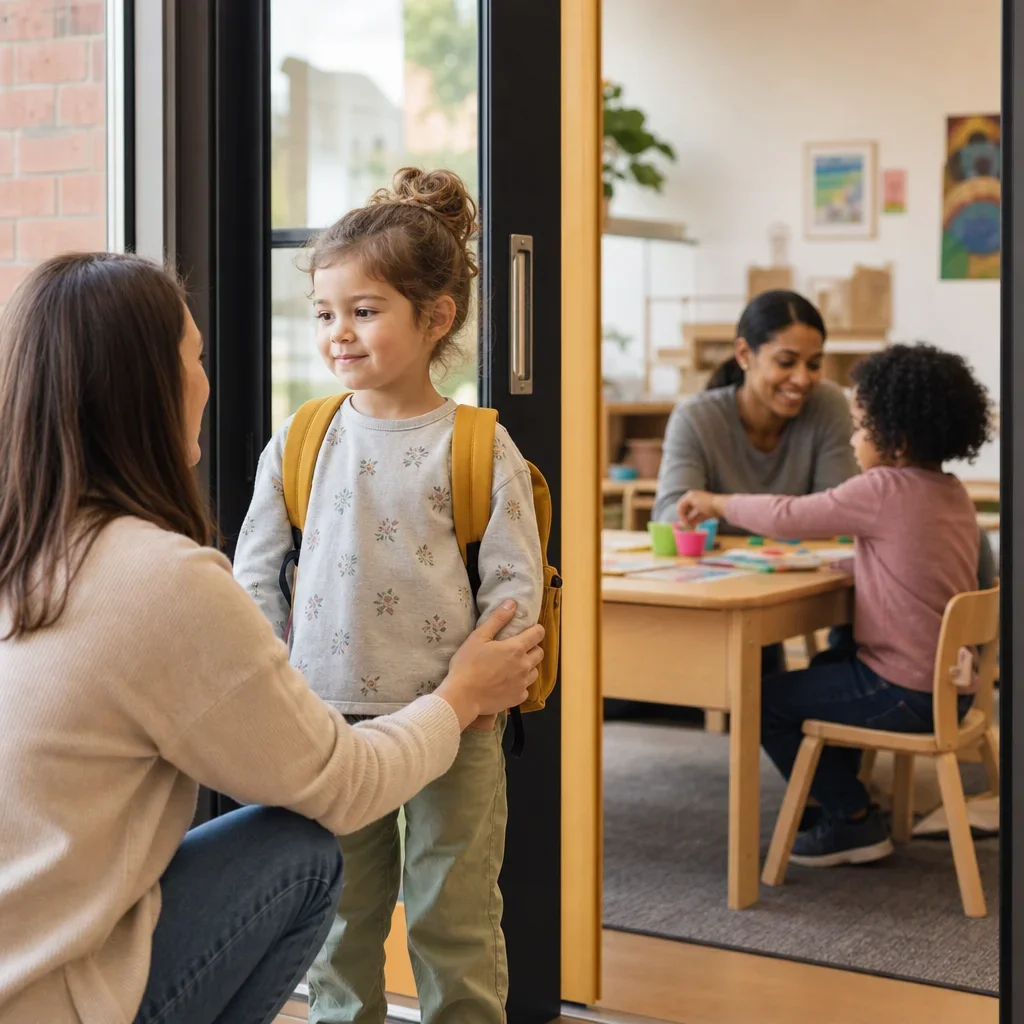
Preschool readiness means a child can begin participating in a classroom routine with support. It does not mean a child must be fully independent, perfectly social, or free from separation tears. Every child settles at their own pace.
Useful readiness signs include the ability to:
- Separate from a parent with calm support from an educator.
- Communicate basic needs through words, gestures, pictures, or other familiar methods.
- Follow a simple one- or two-step direction with support.
- Show interest in materials, other children, or familiar routines.
- Accept adult help during meals, dressing, toileting, or emotional moments.
- Move through transitions with preparation and reassurance.
- Spend brief periods engaged in an activity or shared routine.
Social readiness does not require a child to have close friends already. A child can be ready to join preschool if they are beginning to notice peers, tolerate being near other children, and accept educator support during play. Educators can help children enter group experiences gradually.
Communication readiness also does not require clear speech. A child needs a workable way to express comfort needs, hunger, pain, help, or distress to adults. Families should explain their child’s communication style during a tour or intake conversation.
Signs Your Child May Not Be Ready Yet
A smaller-group setting or a slower transition may help when separation distress remains intense through each attempt and the child cannot be comforted by familiar support strategies. This is not a label or diagnosis. It is useful information for planning a placement that matches the child’s current needs.
A child may need more support when transitions consistently lead to overwhelming distress, when basic needs cannot yet be communicated in any familiar way, or when behaviour creates an immediate safety concern for the child or others. One difficult behaviour does not automatically mean a child cannot attend preschool.
Sensory sensitivities, speech differences, developmental differences, and emotional regulation needs deserve a direct conversation with the centre. Parents can ask what classroom supports are available and whether a gradual transition is possible. Families should also speak with their child’s health or developmental professionals when they need individualized guidance.
The next step is usually to gather information rather than rush a decision. Observe how your child manages short separations, group settings, meals, toileting, noise, and transitions. Then discuss those observations with educators who can explain the classroom environment clearly.
Does My Child Need to Be Potty-Trained for Preschool?
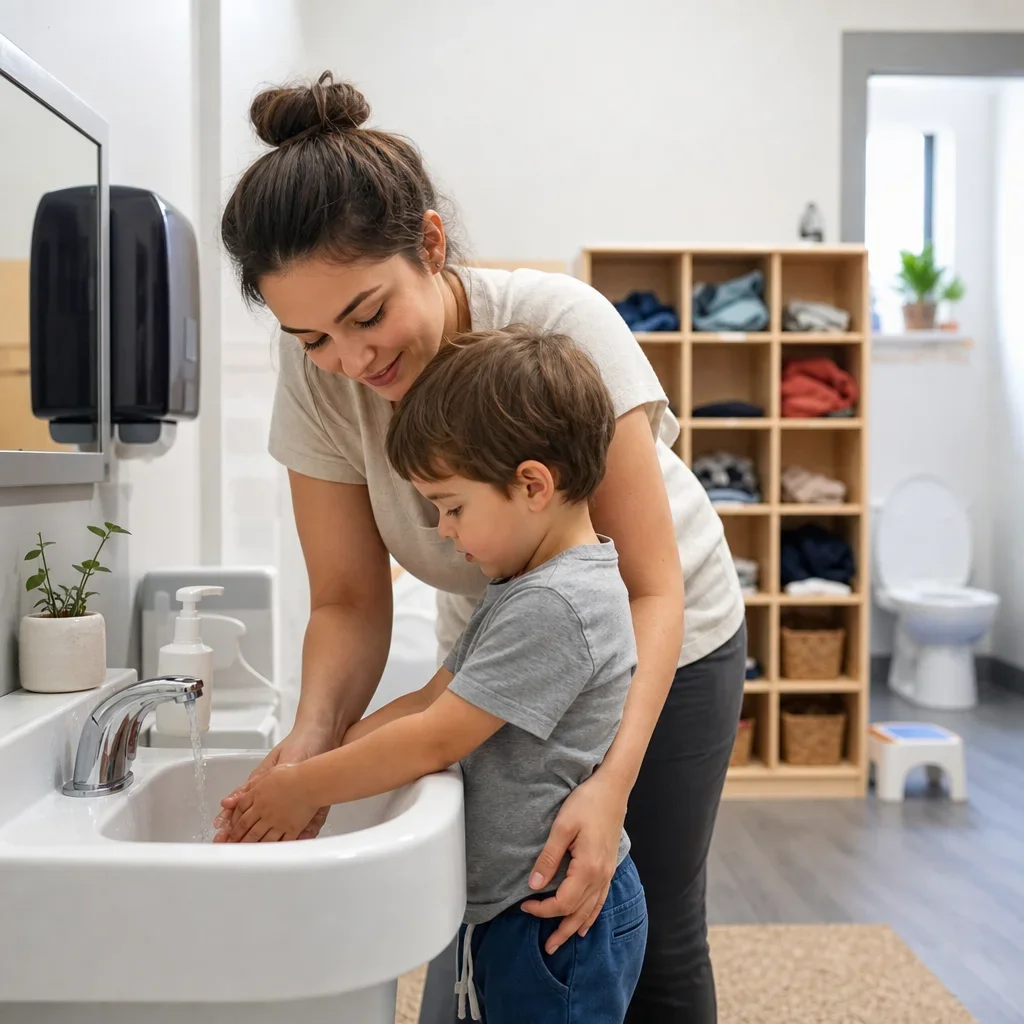
Potty training for preschool depends on the centre and the classroom. Some programs support children who are still learning, while other classrooms expect more washroom independence because of their routine and staffing structure. Families should never assume the policy from a website or another centre applies everywhere.
Toileting expectations affect practical parts of the day. Children may need help recognizing body signals, changing clothing, washing hands, managing fasteners, or asking for the washroom. Ask directly about diapers, accidents, spare clothing, educator support, and the centre’s expectations before enrolling.
A child who is not toilet-trained is not automatically unready for group care. The important question is whether the classroom’s care model can support the child safely and respectfully. Contact Cozy Time for its current toileting expectations in Pre-Casa and Casa.
Choosing a Toddler Room or Preschool Room Near the Age Cutoff

Age alone should not decide a daycare room transition. A child close to a program cutoff may fit better in a toddler room if they need substantial care support, or in a preschool-style room if they can participate comfortably in the daily rhythm. The best decision combines age, available space, routine tolerance, communication, toileting progress, rest needs, and response to separation.
Late-born and early-born children do not need identical pathways. One child may be ready for a new group routine near a birthday, while another may benefit from more time in a familiar environment. A placement conversation should focus on what the child does now, not on whether they match another child’s timeline.
One transition can suit a child who adapts well to new educators and routines. Two smaller transitions can suit a child who needs time to build familiarity before entering a larger or more structured classroom. The centre can explain whether visits, gradual starts, or other transition supports are available.
For Vaughan and Bolton families, a classroom visit is more useful than comparing room names online. You can observe the materials, meal space, rest area, educator interactions, and the pace of transitions. The best next step is to visit and see the classroom.
Preschool vs Pre-K vs Junior Kindergarten
Preschool is a broad term for early learning before school entry. It may describe a daycare preschool room, a Montessori Casa program, or a part-time community program. The curriculum, hours, ratios, and admission requirements can differ widely.
Pre-K is not always the same as preschool. In some regions, pre-K means the year before kindergarten. In other settings, it is a marketing label for an older preschool group. GTA parents should ask what age group, schedule, and learning approach a centre means when it uses pre-K.
Junior kindergarten is different from childcare preschool because it belongs to the school system. Ontario school boards publish their own registration and entry information. Families deciding between pre-K and junior kindergarten should confirm local school details directly rather than rely on United States-based preschool guidance.
A 4-year-old may fit a preschool, Casa, pre-K, or junior kindergarten pathway depending on school eligibility, family schedule, the child’s current care needs, and the available program. A centre can explain its classroom fit, but public-school entry questions should be confirmed with the relevant school board.
Questions to Ask a Daycare or Preschool Before You Enrol
A licensed Montessori daycare should answer direct questions about staffing, ratios, curriculum, daily care, and communication. Licensed care is different from informal childminding because it operates within a regulated framework and should be able to explain how classrooms are staffed and supervised.
Bring this list when you visit a toddler school or preschool:
- What are the educator qualifications in this classroom?
- What is the class ratio and how many children are enrolled?
- What does the daily routine look like from arrival through pickup?
- How does the program support separation and room transitions?
- What does the curriculum look like in practice?
- How are practical life, creative arts, outdoor time, and free choice included?
- What are the rest and nap arrangements?
- What are the toileting and spare-clothing expectations?
- How are meals prepared and communicated to families?
- How do educators share daily information, concerns, and progress with parents?
- How are children supported when they have speech differences or sensory sensitivities?
- What safety processes can the centre share for pickups, illness, medications, and emergencies?
At Cozy Time, our staff includes certified Montessori teachers, Early Childhood Educators, and assistants. All staff are First Aid/CPR certified and have clean criminal record checks. Families can ask how these roles work together in the specific classroom their child may join.
How Cozy Time Supports Early Learning Stages
Cozy Time Montessori Academy is a licensed childcare centre in Vaughan with a second location in Bolton. We provide Montessori-based early learning for children from 6 months to 6 years. Our program pathway includes Infant, Pre-Casa, and Casa.
Our ratios reflect the changing care needs across early childhood. Infant care is staffed at 1:3, Pre-Casa at 1:5, and Casa at 1:8. Ratios matter because younger children need closer supervision during feeding, rest, movement, care routines, and transitions.
We use Montessori materials and practical-life experiences alongside on-site meals, creative arts, and individualized observation. We observe each child’s participation, routines, communication, and comfort in the classroom. That information helps us discuss whether a child is better suited to Pre-Casa or Casa at the time of enrolment.
Families looking for Montessori daycare in Vaughan, Maple, Woodbridge, Thornhill, Newmarket, or Bolton can contact the centre to confirm availability for their child’s age group. A tour gives parents a clear view of the classroom, educator team, daily flow, and the transition questions that matter most.
Frequently Asked Questions
What is the difference between toddler school and preschool?
Toddler school generally supports younger children with more hands-on care, flexible routines, and early self-help practice. Preschool generally offers a more predictable group routine, more peer interaction, and more opportunities for independent participation. Toddler commonly refers to about 18 months to 3 years, while preschool commonly refers to about 3 to 5 years.
Can a 2-year-old start preschool?
A 2-year-old may start a preschool-style program if the centre’s age group, care model, and placement process are appropriate. Some children fit a toddler or Pre-Casa room better because they still need more support with rest, toileting, communication, or transitions. Confirm the centre’s current age and readiness expectations directly.
Does my child need to be potty-trained before preschool?
Potty-training requirements differ by centre and classroom. Ask about diapers, toileting support, accidents, spare clothes, and washroom expectations before enrolment. Cozy Time can share its current classroom-specific expectations directly.
How do I know if my child is preschool-ready?
A child is ready to begin when they can take part in a routine with adult support, communicate basic needs in a familiar way, and gradually tolerate separation and transitions. They do not need to demonstrate every readiness sign before starting. Educators can help families assess classroom fit during a visit.
Is preschool the same as pre-K?
Preschool and pre-K can overlap, but they are not always the same. Preschool is a broad early learning term, while pre-K may describe an older preschool group or the year before kindergarten, depending on the provider and region.
What is the difference between preschool and junior kindergarten?
Preschool usually refers to an early learning or childcare setting before school entry. Junior kindergarten is a school-system program. Ontario school boards set their own registration and eligibility information.
Should I choose a toddler room or preschool room near the age cutoff?
Choose the room that matches your child’s current care needs and the centre’s classroom structure. Consider communication, separation, transitions, rest needs, toileting progress, peer comfort, and the amount of adult help needed during routines. A tour and placement conversation give a clearer answer than age alone.
What if my child has speech delays or sensory sensitivities?
Share your child’s communication style, sensory needs, calming strategies, and past care experiences with the centre. Ask what the room is like during meals, transitions, outdoor time, rest, and group activities. For individualized developmental or health guidance, speak with your child’s qualified health or developmental professional.
Choosing between junior toddler and preschool is not about pushing a child ahead. It is about finding a licensed classroom where the routine, staff support, and expectations fit the child you have today. Contact Cozy Time Montessori Academy to discuss whether Pre-Casa or Casa may be the right next step for your family.