
Parents often worry that hard transitions mean something is wrong. In most cases, pre casa daily transitions are hard because young children are moving from one state, place, or expectation to another before they can manage that shift smoothly on their own.
What pre casa daily transitions mean
Daily transitions in early childhood education are the moves between activities, places, caregivers, or body states. In a Montessori setting, that can mean arrival, goodbye, handwashing, snack, diapering or toileting, clean-up, outdoor preparation, nap, lunch, and going home.
Pre-Casa daily transitions are those same shifts seen through a younger toddler routine. At Cozy Time Montessori Academy, our Pre-Casa program serves children about 18–30 months at a 1:5 ratio and sits between our Infant and Casa programs.
Consistency across home and school helps because the sequence stays familiar. A child who hears the same clean-up phrase, sees the same order of steps, and practises the same arrival routine daycare pattern has fewer surprises to process.
Why transitions are hard for toddlers and pre-casa children
Transitions are hard at this stage because self-regulation, language, flexibility, and time awareness are still developing. A toddler may understand your words but still need adult support to stop one action, shift attention, and begin the next.
Preferred-to-non-preferred changes are usually the hardest. Leaving blocks for diapering, leaving outdoor play for lunch, or leaving a parent at drop-off asks a young child to give up something concrete for something less appealing in that moment.
Common signs of transition difficulty include crying, stalling, dropping to the floor, running away, ignoring directions, clinginess, hitting, or throwing. These behaviours tell us the transition is too abrupt, too unclear, or too demanding for that child at that time.
Transition struggles do not automatically mean a child is not ready for group care. Every child settles at their own pace, and many children need repeated support before a routine starts to feel predictable.
What smoother Montessori transitions look like
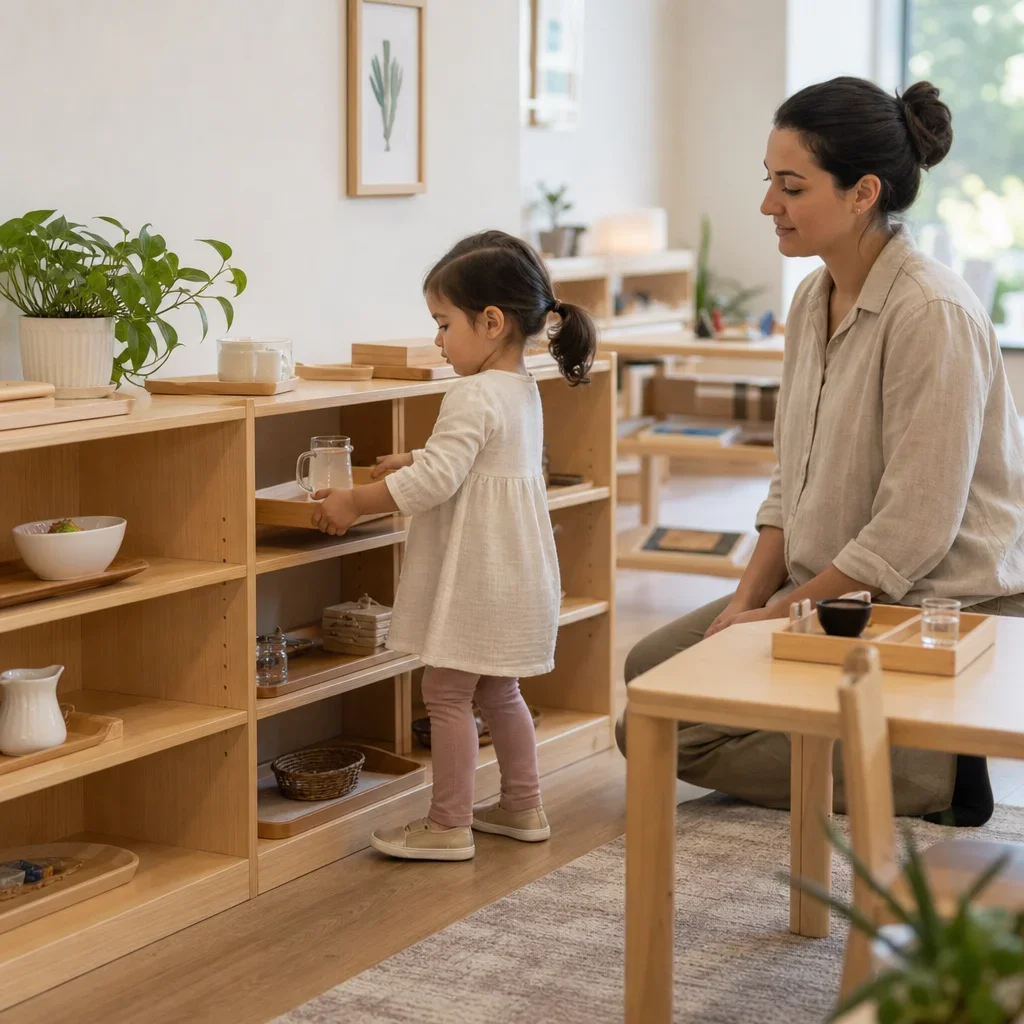
Montessori transitions work best when the environment does more of the teaching. A prepared environment means materials have a place, the routine follows an order, and children can participate in each step instead of being moved through the day passively.
Fewer unnecessary interruptions support a calmer flow. In Montessori transitions, adults aim to protect concentration when possible and make the needed shifts clear, simple, and consistent when a group routine must happen.
Practical life supports transitions because the child has a job to do. Carrying a cup, putting work back, wiping a table, choosing indoor shoes, or placing a bib in the laundry gives the body a concrete next step.
The goal is gradual internalization of routine, not instant obedience. We support, model, and repeat until the child can do more of the sequence with less adult prompting.
The most effective tools for pre casa daily transitions
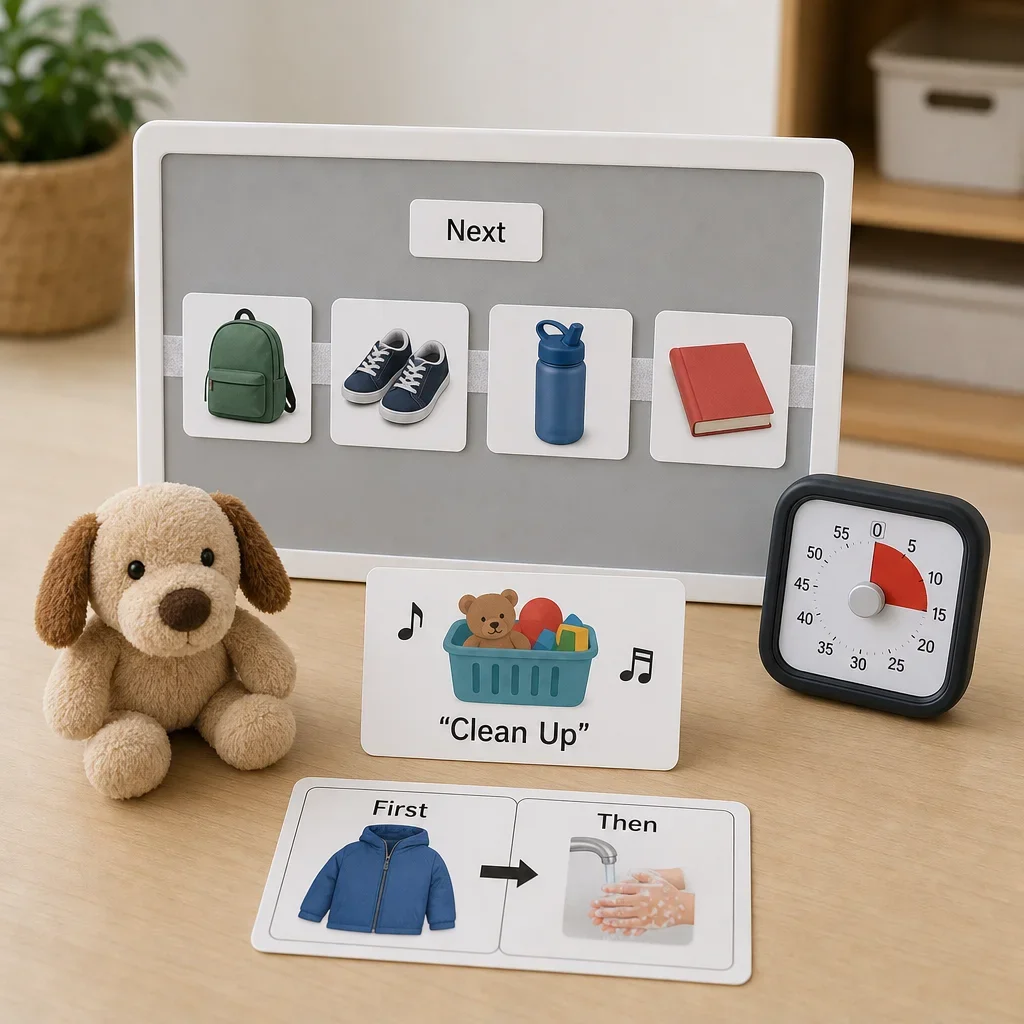
The best transition tools are simple, repeated, and easy to recognize. A visual schedule for toddlers, a short warning, first-then language, a clean-up song, a familiar ritual, or one transition object often works better than long explanations.
A visual schedule shows the order of events with pictures or simple photos. For a pre casa routine, that might be coat, cubby, wash hands, snack, and work time shown left to right.
A visual timer can help when a child needs to see that an activity is ending. The exact warning window is not one fixed rule for all toddlers, but a short, concrete preview usually works better than repeated reminders spread too far apart.
First-then language reduces negotiation because it names the sequence plainly. “First we put the work back, then we wash hands for snack” is clearer than “Come on, it’s time, hurry up, I already told you.”
Rituals help because they stay the same even when feelings change. One short goodbye phrase, one clean-up rhyme, or one handwashing routine gives the child a familiar bridge into the next step.
It is usually best to start with 1 or 2 supports, not 6 new ones at once . When adults change every part of the routine together, the child has more to learn, not less.
Step-by-step help for the hardest daily transitions
Morning and getting out the door
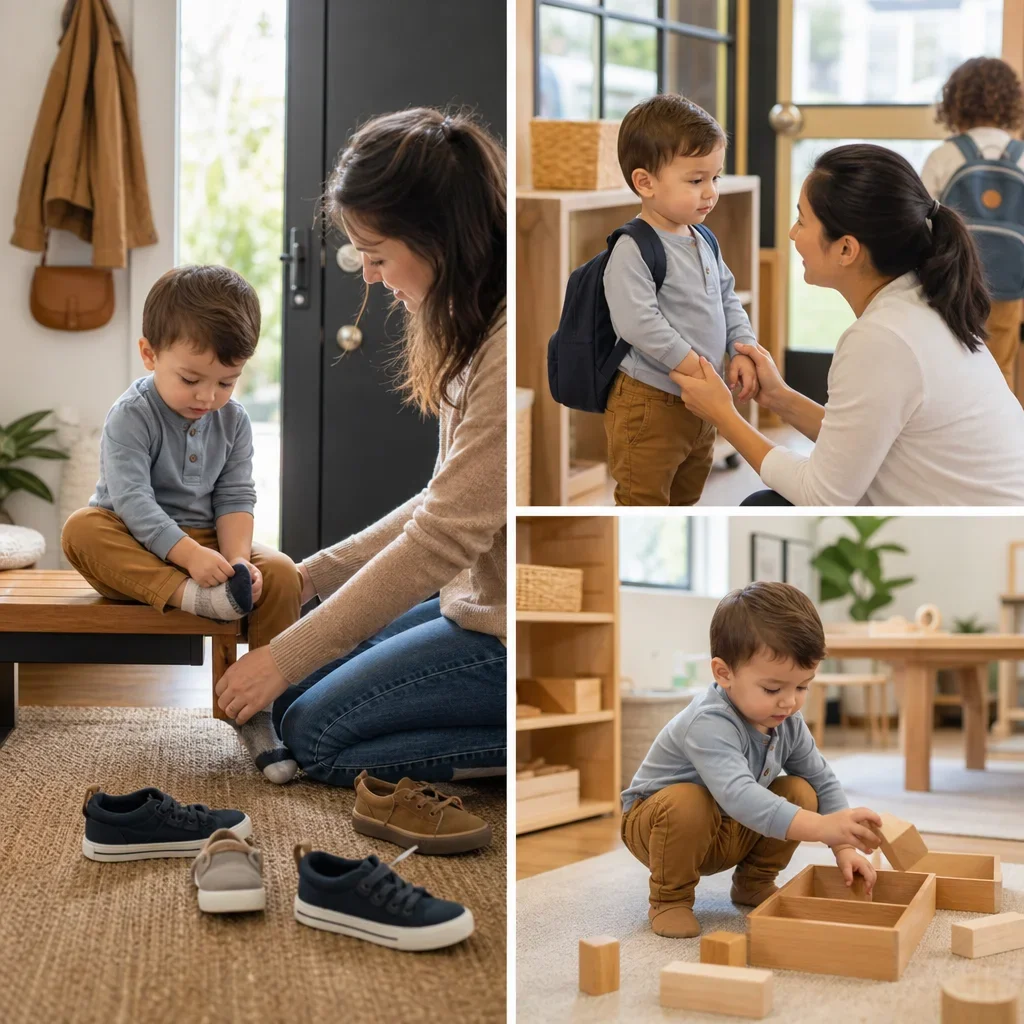
Mornings go more smoothly when the sequence is visible before the rush starts. Clothes set out the night before, shoes by the door, and a short morning routine daycare checklist reduce the number of decisions a toddler must make early in the day.
Buffer time helps because toddlers do not move at adult speed. If your morning is usually tight, adding even a small departure cushion is often more effective than repeating “hurry up” through the whole routine.
A simple sequence works best: wake, wash, dress, eat, shoes, car. If a child resists one step, return to the same order rather than creating a new one every morning.
Daycare drop-off
Drop-off is easier when the goodbye is calm, brief, and predictable. A consistent arrival routine daycare pattern might be enter, hang bag, one hug, one phrase, and handoff to the educator.
Lingering often increases distress because the child has to repeat the separation several times. If tears come, it is still usually kinder to complete the goodbye clearly than to restart it over and over.
The adult script should stay short and confident. “I will come back after rest time. Your teacher will help you with your hands” gives a concrete next point without inviting a long debate.
Clean-up
Clean-up transitions are easier when the child knows what comes next. A clean-up transition preschool cue such as “Blocks back, then lunch” gives the child both an ending and a destination.
Matching the task to the child’s size matters. A basket they can carry, a shelf they can reach, and one clear job support success better than a general command to clean the whole room.
Songs and movement can help here because the body is already active. A tidy-up rhyme, carrying game, or “find the matching spot” job makes the shift from play more concrete.
Snack and mealtime
Meal transitions improve when the body has a clear preparation sequence. Wash hands, sit, place bib, and wait for food in the same order each time reduces uncertainty.
Participation supports cooperation. Carrying a placemat, bringing a cup, or putting a napkin at the table turns mealtime into a practical life transition instead of a sudden stop.
Diapering or toileting
Diapering and toileting transitions go better when they are predictable and respectful. Naming the steps, moving slowly, and inviting one small job such as pulling pants down or carrying a diaper helps the child stay involved.
Toileting readiness is individual and should not be treated as one fixed checklist. If you want to know how it is handled in a specific program, the best next step is to contact the centre and ask about that age group.
Nap, bedtime, and wake-up
Sleep-related transitions improve when the lead-in stays steady. A bedtime routine toddler pattern such as bath, pyjamas, books, lights low, and bed gives the child a repeated path into rest without too much language.
Wake-up transitions are often smoother with time to reorient. Soft light, water, a cuddle, or one simple first step is usually more effective than moving a drowsy child straight into demands.
Pick-up and going home
Going home can be hard because children are tired and reconnecting emotionally at the same time. A short pick-up ritual, one snack plan, and a calm transition to the car can reduce the after-school crash many families feel.
Transition activities and scripts parents can use right away
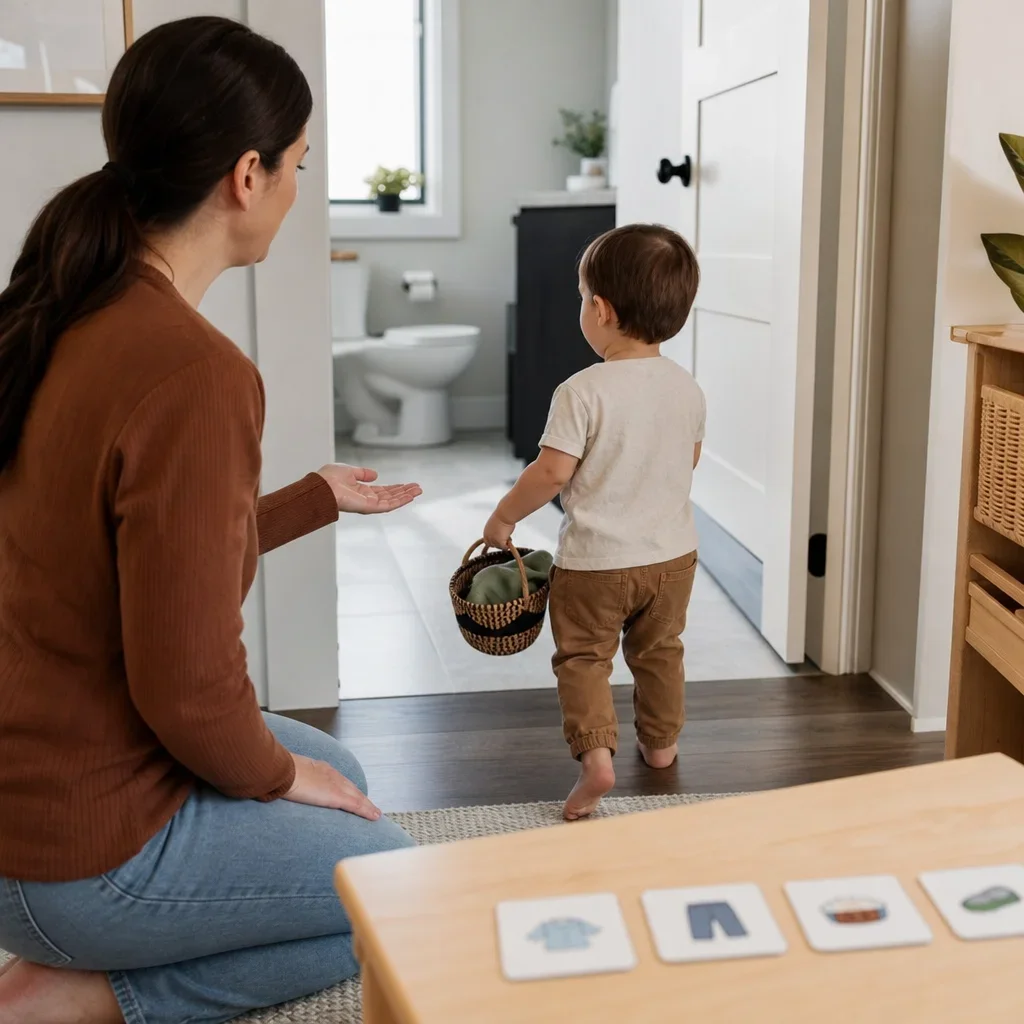
Good transition activities for preschoolers and toddlers use movement, matching, carrying, or music. A carry-the-basket job, animal walk to the sink, picture-card routine, or choosing between 2 books can shift attention without a power struggle.
Use movement when the child is revved up and stuck. “Can you stomp to the bathroom like an elephant?” often works better than another verbal reminder.
Use stillness when the child is overloaded. Sitting together for one short song, one deep breath, or one picture cue can lower the demand before the next step.
Short scripts help because they do not invite extra negotiation. “It is hard to stop. First shoes, then car.” is clearer than a long explanation.
A clean-up script should name both the task and the next positive event. “Two books on the shelf, then we choose our snack spot” keeps the child moving toward something concrete.
A leaving-the-park script should stay respectful and firm. “You want more time. Today we are leaving now. You may walk or I will help your body.”
An entering-the-classroom script should point to the first action, not the whole morning. “Coat on hook. Then we wash hands.”
Home versus classroom: what works best in each setting
Home and classroom transitions use some of the same tools, but the demands are different. At home, one adult may coach one child closely; in a classroom, the routine and environment need to carry more of the process.
The overlap matters most: consistent language, visual cues, rituals, preparation, and realistic expectations. If home says one thing and school says another, the child has to learn 2 systems instead of 1.
Educators in a Montessori classroom rely more on environmental cues because the group must keep moving. Parents at home often have more flexibility to pause, reconnect, and slow the sequence down.
Ask the daycare what wording they use for transitions and what the pre casa routine looks like. Mirroring that language at home can make a licensed Montessori daycare Vaughan family experience feel more coherent from morning to evening.
| Setting | What helps most | What usually makes it harder |
|---|---|---|
| Home | One-to-one coaching, visual routine, extra buffer time | Last-minute changes, too much talking, rushing |
| Classroom | Predictable order, clear cues, child-sized setup, group rituals | Long waiting, unclear expectations, repeated adult redirection |
Age-by-age guidance: infant, pre-casa, and casa transition expectations
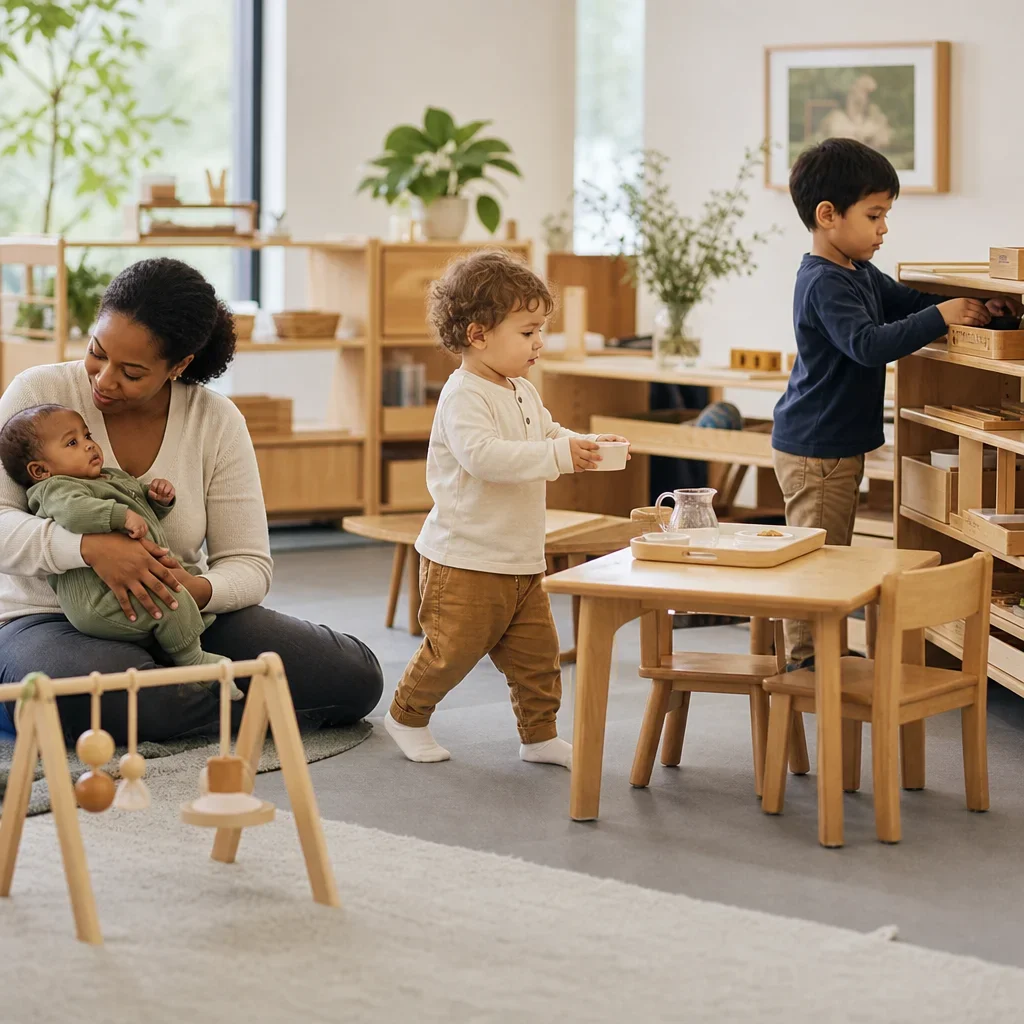
Infants usually need more co-regulation and sensory predictability during transitions. In our Infant program, children are about 6–18 months at a 1:3 ratio , so care can stay closely supervised and responsive.
Pre-Casa children usually benefit from repetition, one-step directions, and practical-life participation. Our Pre-Casa program is about 18–30 months at a 1:5 ratio , which supports closer guidance during handwashing, meals, clean-up, and separation.
Casa children can often manage longer sequences and more independence within a multi-age classroom. Our Casa program serves about 30 months to 6 years at a 1:8 ratio , with Montessori work that supports putting materials away, following routines, and moving through the classroom with less direct prompting.
A Montessori casa transition should be based on the whole child, not one isolated skill. Comfort with routine, growing independence, and the ability to participate in the classroom flow matter, but there is no single promise or shortcut.
Troubleshooting difficult transitions: refusal, tantrums, aggression, and regression
Refusal to stop playing usually means the ending came too fast or the next step feels less rewarding. A warning, a first-then cue, and one clear clean-up job often work better than repeating the command louder.
Drop-off tears often increase after weekends, illness, travel, or schedule changes. That pattern does not always signal a larger problem; it often shows that the routine needs to be rebuilt with the same sequence for a few days.
Hitting, throwing, or kicking during transitions should be treated as a safety issue first. Stay close, block harm if needed, keep words short, and move the child through the transition with as little extra stimulation as possible.
Regression after a change in routine is common in early childhood transitions. A child may need more help with dressing, more clinginess at goodbye, or more resistance at bedtime after a break or a big family change.
After-daycare meltdowns often reflect accumulated fatigue, hunger, or overstimulation. A snack, a quieter car ride, and fewer demands right at pickup can help the child reorganize before the evening routine begins.
A pattern that stays intense across settings is worth discussing with the educators who see the child daily. If families already work with a healthcare or developmental professional, it also helps to keep those strategies aligned.
Supporting children with sensory sensitivities, language delays, or developmental differences
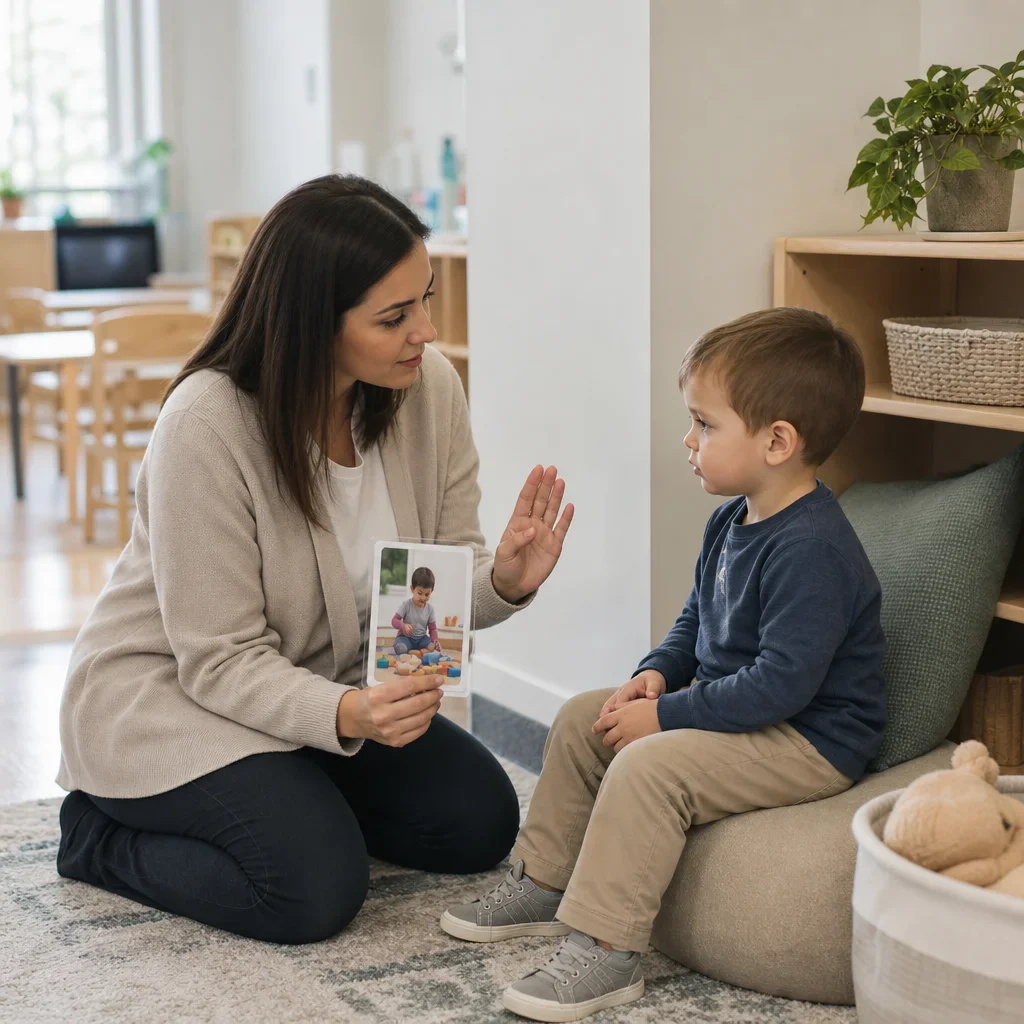
Some children need more concrete supports and less language during transitions. A photo cue, one-step direction, extra processing time, and movement before the transition can lower the demand.
Sensory needs can make ordinary routines feel much bigger. Loud rooms, wet hands, clothing textures, bright light, or crowded pickup areas can all affect how a child handles a shift.
Language differences can make verbal reminders less useful on their own. In those moments, visual schedule for toddlers tools, gestures, and showing the first step are often more effective than giving more words.
Support works best when home and school use the same few cues repeatedly. If your child already has outside support, share those strategies with the centre so the adults around the child can stay consistent.
Special situations: weekends, holidays, travel, illness recovery, and back-to-school reentry
Routine disruptions often lead to a temporary rough patch in transitions. After travel, holidays, or illness, children may need more preview, earlier evenings, and a simpler morning sequence for a few days.
Previewing the return helps because it turns a surprise into a sequence. A child can look at photos of school, pack shoes the night before, and hear the next-day order in simple language.
Reentry works better when the old routine comes back quickly. Using the same goodbye phrase, same bedtime order, and same school transition tips for toddlers after a break gives the child a familiar path back in.
A simple night-before checklist can reduce the first-day scramble. Set out clothes, pack comfort items if used, review the morning order, and keep the bedtime routine calm and predictable.
When a child may be ready for the next Montessori environment
Readiness for the next classroom is usually seen in growing independence within daily routines. A child may show more comfort with separation, more interest in self-care, and more ability to follow the classroom sequence with support.
A move into Casa should be discussed with educators who know the child in the current environment. Age matters for group placement, but readiness is broader than age alone.
Toileting may be one factor in a Montessori casa transition, but it should not be assumed as the only gate. If you want exact current expectations for your child’s age group, contact the centre to confirm the program process.
What not to do during daily transitions
Avoid surprise endings when a preview is possible. A child who is deeply engaged usually handles the transition better when the ending is named before it arrives.
Avoid giving too many warnings. If you say a transition is coming 5 times and do not act on it, the warning stops meaning anything.
Avoid bargaining through every routine. Constant negotiation teaches the child that the routine itself is optional.
Avoid shaming, threatening, or rushing language during hard moments. Firm and calm works better than “Why are you doing this again?” or “Big kids don’t cry.”
Avoid long waiting whenever you can. Young children often do worse standing in line or waiting with nothing to do than moving directly into the next concrete step.
Avoid relying on bribes as the main tool. A temporary reward may get movement once, but it does not teach the child the sequence or reduce confusion.
Printable checklist examples parents can use
A short checklist is easier for toddlers to follow than a long list. In most homes, 4-step or 5-step routines are easier to repeat consistently than 10-step ones .
Morning checklist example:
- Use the bathroom or diaper change
- Get dressed
- Eat breakfast
- Put on shoes
- Take bag to the door
Bedtime checklist example:
- Bath or wash up
- Pyjamas
- Two books
- Lights low
- Bed
School departure checklist example:
- Shoes on
- Coat on
- Bag ready
- Goodbye hug
- Into the car
These lists work best when paired with pictures, not only words. If a child cannot read yet, a photo or simple icon keeps the routine concrete.
How Cozy Time Montessori Academy supports smoother transitions
Licensed care supports smoother routines because the structure is defined, staffing is qualified, and the day follows a real program. Cozy Time Montessori Academy is a licensed childcare centre in Vaughan with a second location in Bolton, serving families across Vaughan, Maple, Woodbridge, Thornhill, Newmarket, and nearby GTA communities .
Our programs are organized by age and ratio, with Infant at 1:3, Pre-Casa at 1:5, and Casa at 1:8 . Those ratios matter because transitions like arrival, meals, diapering, toileting, and rest need supervision and responsive support, not just crowd control.
Our staff include ECEs, certified Montessori teachers, and assistants, all with First Aid/CPR certification and clean criminal record checks . That is one of the clearest differences between licensed Montessori care and unlicensed minding.
On-site meals, practical life work, and a consistent daily routine also help children understand what happens next. We do not promise that every transition will be easy, because every child settles at their own pace, but we do build the day in a way that supports order and participation.
If you are comparing a Pre-Casa program Vaughan option or a Montessori daycare Bolton family commute, the best next step is to visit and see the classroom. Bring your real questions about morning routine, drop-off, meals, rest, and how we support toddler transitions Montessori families deal with every day.
FAQ
What are pre casa daily transitions?
Pre casa daily transitions are the small shifts a young toddler makes through the day, such as arriving, separating from a parent, washing hands, eating, cleaning up, toileting or diapering, resting, and going home.
What are daily transitions in early childhood education?
They are movements from one activity, place, caregiver, or routine to another. In group care, they happen many times each day and shape how calm or stressful the day feels.
Why are transitions so hard for toddlers?
Toddlers are still learning self-regulation, flexibility, language, and time awareness. Stopping one activity and starting another often takes more support than adults expect.
What are some preschool transition ideas?
Useful transition activities for preschoolers include clean-up songs, picture cards, carrying jobs, animal walks, first-then language, and limited choices between 2 acceptable options .
How do Montessori routines help with transitions?
Montessori routines support transitions through order, repetition, child-sized materials, practical life participation, and consistent adult language. The child is guided through the sequence instead of being rushed through it.
How can I make daycare drop-off easier for my toddler?
Use the same short arrival routine each day, keep the goodbye brief, and hand off confidently to the educator. Long lingering goodbyes often make separation harder, not easier.
Should I use a visual schedule for my Pre-Casa child?
A visual schedule for toddlers can be very helpful, especially when language alone is not enough. Photos or simple icons often work better than a verbal list.
How long before a transition should I give a warning?
Use a short and concrete warning window rather than many repeated reminders. The exact timing depends on the child and the activity, so it helps to observe what your child can actually use.
What if my child cries or tantrums during transitions?
Stay calm, keep the language short, and move back to a predictable sequence. If the pattern is strong across settings or changes suddenly and persists, talk with the educators and, when needed, with your child’s existing professionals.
How do I know if my child is ready for Casa?
Readiness is considered across the whole routine, not one single skill. Growing independence, comfort with separation, and participation in classroom routines all matter, and the centre can explain the process for your child’s age group.
If you want to see how a licensed Montessori daycare in Vaughan or Bolton handles real daily routines, book a tour and ask to walk through the transition points that matter most to your family.