
What should junior toddler social development look like between about 12 and 36 months? It usually includes attachment, big feelings, early communication, imitation, and growing interest in other people.
What junior toddler social development means
Junior toddler social development describes how a child connects with caregivers, expresses needs, notices other people, and begins learning social rules. For this guide, we use the term for children about 12 to 36 months. Social-emotional development in toddlers includes both relationships and feelings because toddlers use trusted adults to help them manage emotions they cannot yet regulate alone.
Healthy emotional development in toddlers aged 1 to 3 years includes seeking comfort, protesting separation, copying familiar routines, showing preferences, and reacting strongly to frustration. These behaviours can look intense. They are also part of learning how feelings, communication, and relationships work together.
Development is not a straight line. Temperament, language, family routines, previous childcare experience, sleep, and stress can all shape how a toddler approaches people and new situations.
Junior toddler social milestones by age
Social development milestones from birth through age 3 build gradually. A child does not need to display every skill on a particular day. The useful question is whether social connection, communication, play, and emotional expression are growing over time.
| Age range | Social and emotional behaviours parents may see | Everyday example |
|---|---|---|
| Birth to about 6 months | Social smiling, calming with familiar caregivers, and increased attention to faces and voices. | Your baby smiles back during a familiar song or settles more easily with a parent. |
| About 6 to 12 months | Recognition of familiar adults, stranger wariness, attachment behaviours, and stronger reactions to separation. | Your baby reaches for a parent when a new person approaches. |
| 12 to 18 months | Seeking familiar adults, copying actions, showing objects, early back-and-forth games, and frustration when communication is difficult. | Your child brings you a toy, copies wiping a table, or wants you to repeat a game. |
| 18 to 24 months | Greater independence, parallel play, possessiveness around toys, simple pretend play, and early concern when another person is upset. | Your child feeds a doll, watches another child play nearby, or says “mine.” |
| 24 to 36 months | More interest in peers, short turn-taking moments, expanding pretend play, naming simple feelings, and early cooperative moments. | Your child helps build a block tower, pretends to cook, or waits briefly with support. |
At 12 to 18 months, toddler social milestones usually centre on secure relationships and imitation. A child may look back to a familiar adult before exploring, bring an item to share attention, or copy an everyday action such as brushing hair.
At 18 to 24 months, parallel play becomes common. Parallel play means children play beside one another without truly coordinating a shared game. A toddler may line up cars beside another child who is lining up cars, then protect their own car when the other child reaches over.
At 24 to 36 months, toddlers may begin short cooperative moments. They can still grab toys, resist waiting, or leave a group activity quickly. Sharing and taking turns are emerging skills during the toddler years, not skills adults should expect children to master.
What is normal at this age: clinginess, tantrums, and parallel play
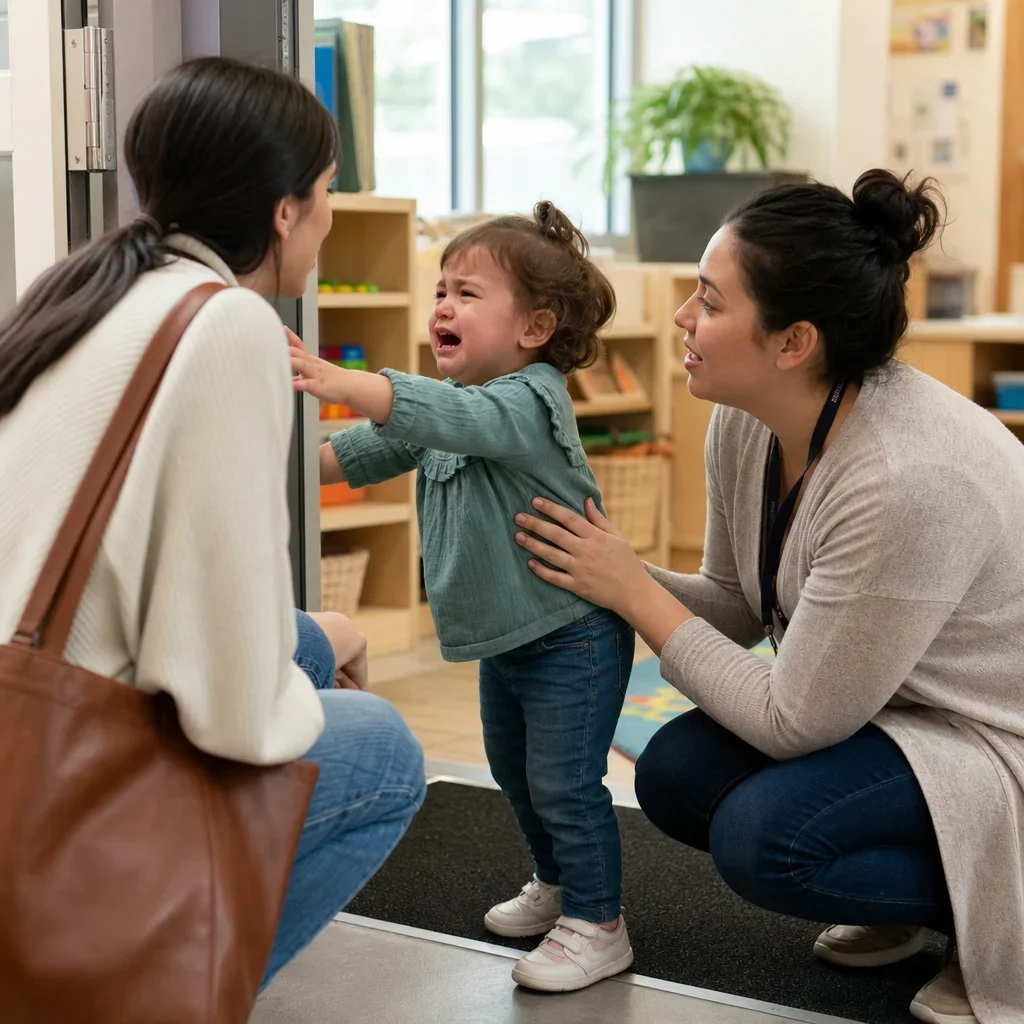
Clinginess, separation anxiety, tantrums, hitting, biting, and toy grabbing can happen when a toddler has strong feelings but limited language and self-regulation. Self-regulation means gradually learning to pause, recover, and manage feelings with adult support.
Separation anxiety can appear when a child is strongly attached to a familiar caregiver. A toddler may cry at drop-off, reach for a parent, or need a predictable goodbye routine. This does not automatically mean a child is unable to enjoy care after the parent leaves.
Tantrums are often a sign that a toddler is overwhelmed, frustrated, tired, disappointed, or unable to communicate a need. Adults can hold a calm limit while helping the child feel safe. The goal is not to remove every feeling. The goal is to supervise, name the feeling, and guide the next safe action.
| Common behaviour | Why it may happen | Helpful adult response |
|---|---|---|
| Grabbing a toy | The child wants the item and cannot yet wait easily. | Block the grab calmly and offer a short turn-taking plan. |
| Hitting or biting | Frustration, excitement, crowding, or limited communication may be involved. | Stay close, stop the behaviour, protect the other child, and offer a safer action. |
| Crying at separation | The child is adjusting to a transition or seeking a familiar caregiver. | Use a brief goodbye, name the feeling, and allow a trusted adult to support the transition. |
| Playing alone near peers | The child is practising parallel play. | Keep peer opportunities available without forcing group play. |
| Saying “no” frequently | The child is testing independence and control. | Offer two acceptable choices and keep the limit clear. |
A pattern deserves closer attention when it is intense, persistent, worsening, or appears across home, care, relatives, and play settings. One difficult week, one tantrum, or one shy response does not define a child.
Shy temperament or a concern?
A slow-to-warm-up temperament means a toddler may watch quietly, stay close to a familiar adult, and need time before joining new people or activities. A shy toddler can still show interest in others through looking, smiling, imitation, bringing an object, or engaging once the setting feels familiar.
Temperament is not a problem to fix. Some children enter a room quickly. Others observe first. Both approaches can be healthy when the child is building connection in ways that fit their personality.
| May reflect temperament | Worth discussing with a professional |
|---|---|
| Watches unfamiliar people before joining. | Shows very limited interest in people across familiar settings. |
| Seeks comfort from a trusted adult. | Rarely seeks comfort or connection from familiar caregivers. |
| Joins play after time to settle. | Shows little back-and-forth interaction or imitation over time. |
| Uses gestures, sounds, words, or actions to share interest. | Has lost social, communication, or play skills previously used. |
| Avoids large groups but engages one-to-one. | Has persistent difficulty connecting across settings and relationships. |
Social communication concerns should be discussed as patterns, not labels. Parents should not self-diagnose from eye contact, shyness, speech differences, or one isolated behaviour alone.
How daycare and Montessori support toddler social development
Daycare social development is strongest when toddlers have responsive adults, predictable routines, and age-appropriate expectations. Children need adults who observe what happened before a conflict, support communication, and supervise closely instead of simply demanding that toddlers “share.”
At Cozy Time Montessori Academy, our licensed Montessori-based programs serve children from 6 months to 6 years. We offer Infant, Pre-Casa, and Casa programs with stated ratios of 1:3, 1:5, and 1:8. Ratios matter because they affect how closely adults can observe transitions, meals, play, and emotional cues.
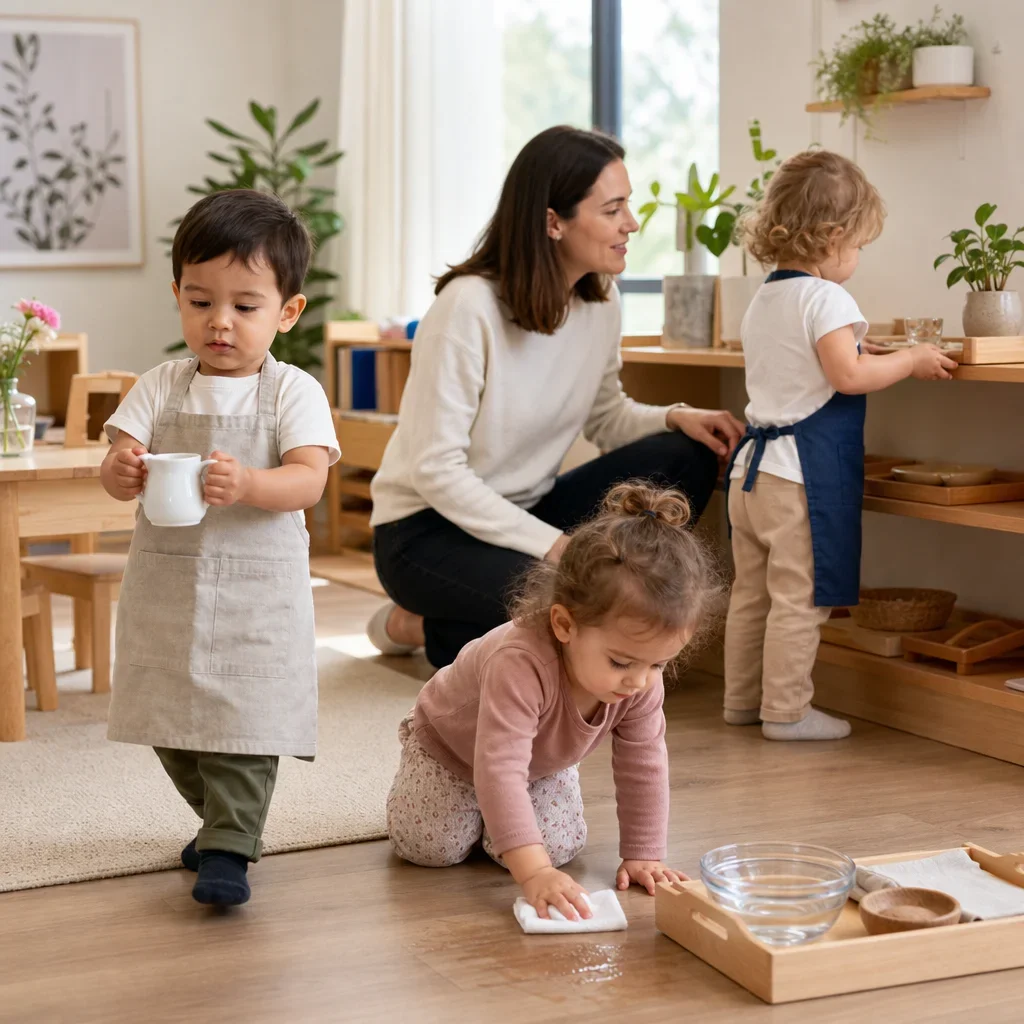
A Montessori toddler environment supports independence through practical life activities. Practical life means real, child-sized tasks such as carrying a cup, wiping a spill, putting work away, or helping prepare a space. These activities give educators natural moments to model waiting, care for others, and respectful problem-solving.
In a quality Pre-Casa setting, social learning happens throughout the day. It happens at drop-off, while waiting for handwashing, during snack, when observing another child’s work, and when an educator helps resolve a toy conflict. Social growth does not require constant group games.
Our educators include Early Childhood Educators, credentialed Montessori teachers, and assistants. Team members are First Aid/CPR certified and have clean criminal record checks. An ECE observes development, supports routines, guides behaviour respectfully, and communicates with families about what they see in the classroom.
Parents comparing licensed Montessori care with informal minding should ask about staff qualifications, supervision, ratios, curriculum, meals, and daily routines. Licensed care has accountability structures. Montessori care should also show a real prepared environment and adults who understand toddler development, not simply Montessori materials on a shelf.
The best next step is to visit and see the classroom. Families can ask how educators handle separation, biting, meal transitions, toy conflicts, and children who need extra time to settle.
How much peer interaction toddlers need
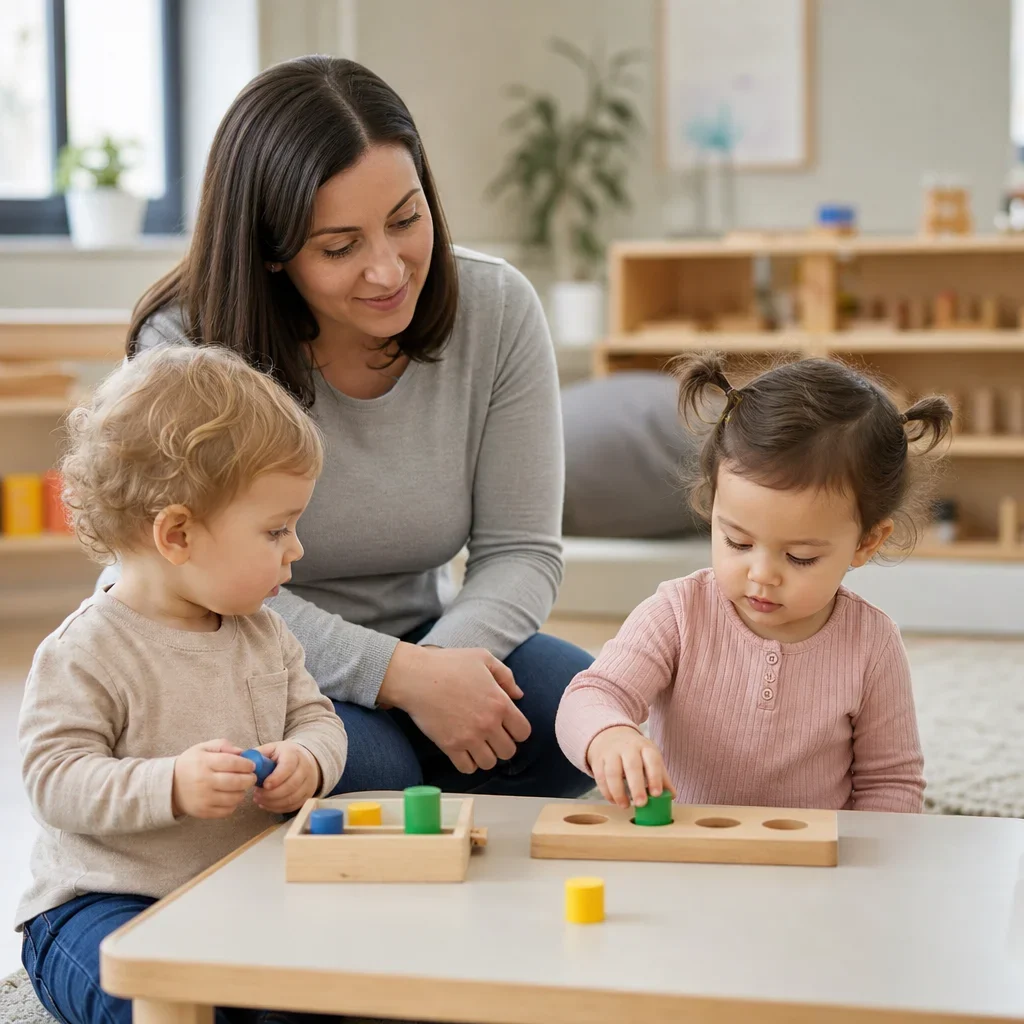
Toddlers benefit from repeated opportunities to be near peers, but they do not need constant structured group play. Responsive relationships with trusted adults remain central because adults help toddlers understand feelings, language, limits, and social routines.
Only children can develop social skills through family life, playgrounds, relatives, library programs, childcare, and short play opportunities. Children with siblings also need adult guidance because siblings do not automatically teach waiting, gentle touch, or conflict repair.
Short, repeated peer experiences are usually more useful than forcing long playdates. A toddler may watch first, play beside another child, copy an action, then move away. That sequence is still social learning.
Junior toddler social development activities at home
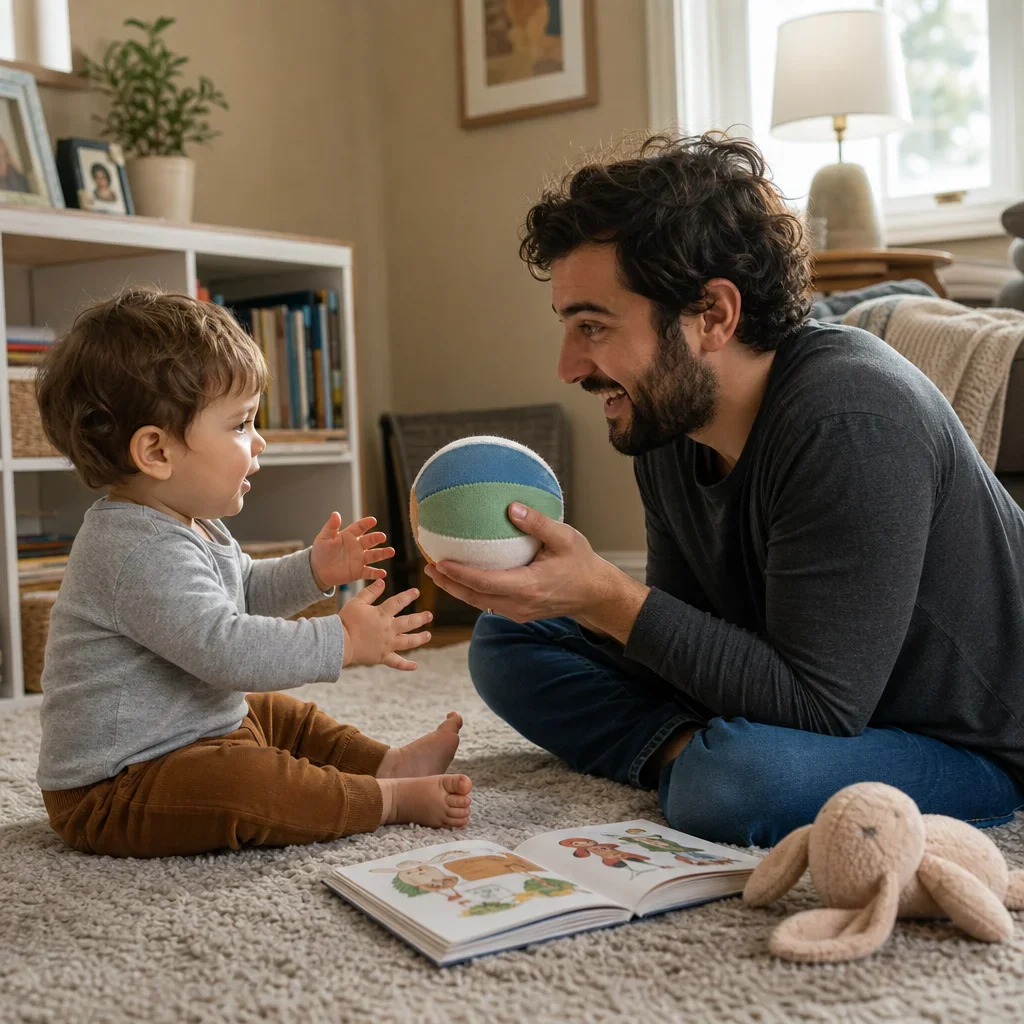
Junior toddler social development activities work best when they are simple, repeated, and connected to daily life. The aim is to create back-and-forth interaction, not to test a child or push a milestone.
- Roll a ball back and forth. This supports waiting, shared attention, and early turn-taking.
- Copy each other’s actions. Clap, tap knees, make animal sounds, or stack blocks. This supports imitation and connection.
- Name feelings in the moment. Say, “You are disappointed the banana broke,” to connect a feeling with language.
- Use dolls or stuffed animals for pretend play. Feed a doll, tuck it into bed, or help it find a shoe. Pretend play supports perspective-taking and everyday routines.
- Invite small helping jobs. Let your child carry a napkin, place socks in a basket, or wipe a small spill. This supports participation and practical life.
- Read picture books slowly. Point to faces and say, “He looks sad. His toy is gone.” This supports emotional vocabulary.
- Practise short turn-taking games. Take turns adding a block or putting ingredients into a bowl. Keep the waiting expectation brief and supported.
A simple 7-day home plan can build regular social-emotional practice without over-scheduling.
| Day | Small activity | Social-emotional focus |
|---|---|---|
| Day 1 | Roll a ball together. | Back-and-forth interaction. |
| Day 2 | Name feelings during a routine. | Emotional vocabulary. |
| Day 3 | Let your child help with laundry. | Participation and confidence. |
| Day 4 | Read an emotions book. | Noticing facial expressions. |
| Day 5 | Pretend to feed a doll or stuffed animal. | Pretend play and care. |
| Day 6 | Invite a short peer or sibling play opportunity. | Observation and parallel play. |
| Day 7 | Practise a goodbye routine with a familiar adult. | Separation and predictability. |
Supportive scripts for tantrums, biting, toy conflicts, and separation
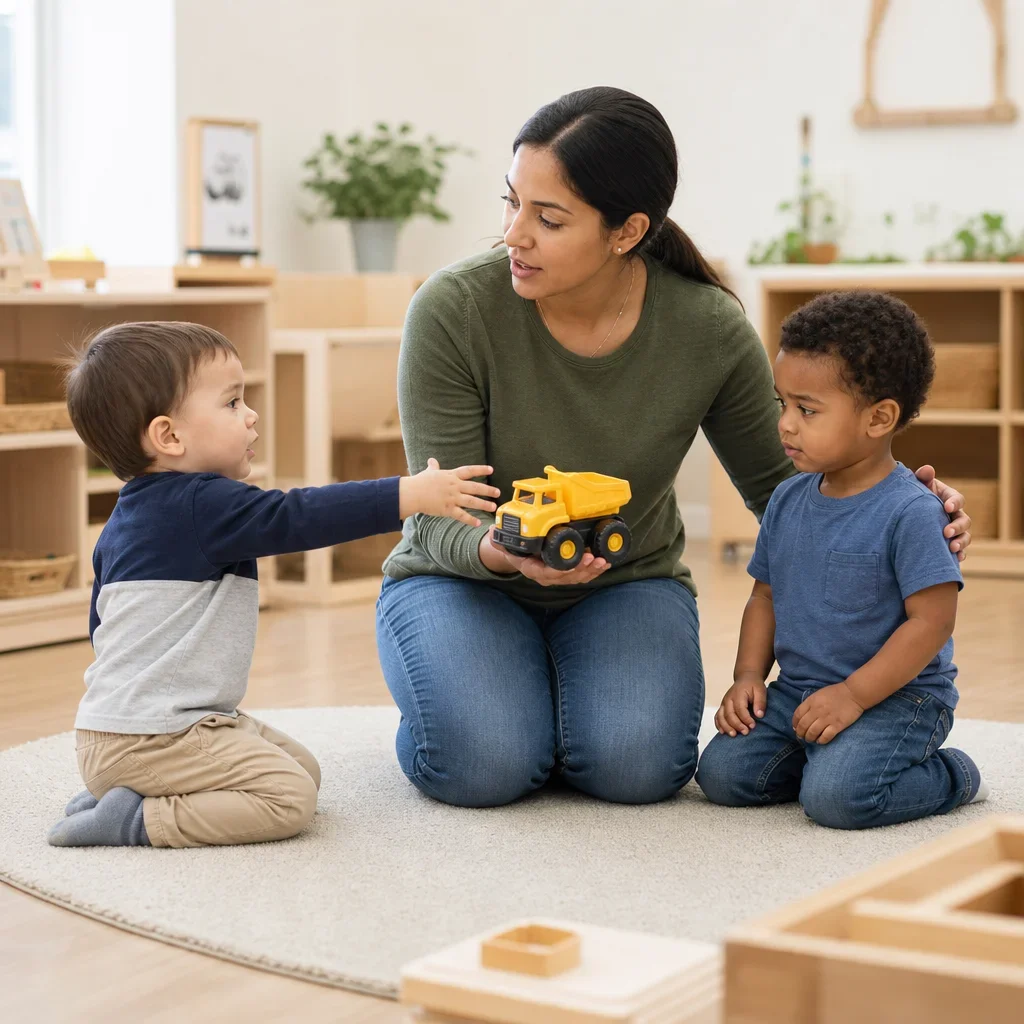
Toddlers need calm words and clear actions during conflict. Adults should use fewer words when a child is highly upset, stay nearby, and repeat the limit without shame.
For a tantrum, say: “You are upset. I am here. I will help your body stay safe.” Stay close, lower your voice, and wait before expecting problem-solving.
For hitting or biting, say: “I will not let you hit. Hitting hurts.” Block the behaviour, move children apart if needed, and offer a safer action such as squeezing a cushion, stomping feet, or asking for help.
For a toy conflict, say: “You both want the truck. It is not your turn yet.” Hold the boundary, offer another item if appropriate, and help the child wait with support.
For separation, say: “You do not want me to go. Your teacher will stay with you. I will come back after your day.” Keep the goodbye warm and brief. Repeated returns help make the routine predictable.
Do stay calm, consistent, and physically close enough to supervise. Do not force an apology while a toddler is still overwhelmed. Repair can come later through a gentle action, helping restore a toy, or practising a safer phrase.
Common mistakes that can unintentionally slow social-emotional growth
Over-rescuing can limit practice when adults step in before a child has a chance to gesture, try a word, or attempt a small problem. Support is still needed. The difference is allowing a short pause before solving everything for the child.
Expecting adult-level sharing or self-control can create unnecessary conflict. Toddlers need teaching, modelling, and repeated practice. They are not being difficult simply because they struggle to wait.
Shame-heavy language can make hard moments bigger. Labels such as “bad,” “mean,” or “babyish” do not explain what a child can do differently next time. Clear limits and respectful redirection teach more useful information.
Too many rushed transitions can increase frustration. A predictable sequence such as snack, wash hands, shoes, then outside gives toddlers cues about what comes next.
Using screens for every upset can replace chances to practise co-regulation. Co-regulation means an adult helps a child settle through presence, routine, words, and safe boundaries before the child can manage those skills independently.
Comparing toddlers too closely can also create pressure. Children may be different in language, confidence with groups, separation responses, and temperament while still benefiting from patient support.
Sleep, stress, language, and neurodivergence
Sleep disruption, family stress, major routine changes, and communication challenges can affect toddler social development. A child who is tired, hungry, overwhelmed, or unable to express a need may show more frustration or withdrawal.
Speech and language delays can affect social interaction because communication becomes harder. A toddler may use gestures, pulling, crying, hitting, or avoidance when words do not come easily. These behaviours deserve support, not assumptions about intent.
Some children are neurodivergent and may communicate, play, connect, or regulate differently. Differences do not automatically mean a child has a disorder. Persistent concerns should be discussed with the child’s family doctor, pediatrician, or another qualified professional who can consider the full picture.
Culture and family expectations also shape social behaviour. Some children are encouraged to greet adults directly. Others are taught to observe quietly first. A useful assessment considers whether the child is connecting and communicating within their own family and community context.
Red flags by age: when to speak with a professional
A concern is more meaningful when it appears across settings, continues over time, or involves loss of skills. Track what you see at home, in childcare, with relatives, and during play before drawing conclusions.
Around 12 to 18 months
Discuss concerns if a child rarely seeks connection with familiar caregivers, shows very little imitation, or does not use gestures, sounds, objects, or actions to share needs and interests over time. Bring specific examples rather than relying on a general feeling that something seems different.
Around 18 to 24 months
Discuss concerns if a child shows very limited back-and-forth interaction, little interest in people across familiar settings, or persistent difficulty using any communication method to connect. A professional can consider language, hearing, development, routine changes, and other relevant factors.
Around 24 to 36 months
Discuss concerns if a child has very limited pretend play, very limited engagement with familiar adults or peers, or loses social, communication, or play skills previously used. Loss of skills should be raised promptly with a qualified health professional.
One sign alone does not confirm a developmental condition. The purpose of noticing concerns is to understand the child’s needs earlier and seek appropriate guidance, not to label a toddler.
What to do if you are concerned
For mild concerns without loss of skills, observe patterns for about 2 to 4 weeks. Note what happens before the behaviour, how your child communicates, what helps, which settings are easier, and whether sleep, illness, travel, or a routine change may be involved.
Write down specific examples. “Cried at a new playgroup” is less useful than “watched for 20 minutes, held my hand, then copied another child stacking blocks.” Specific observations help caregivers and professionals understand the pattern.
Speak with caregivers or daycare educators about what they observe. Ask how your child handles drop-off, meals, peer play, transitions, comfort, language, and frustration. A trusted educator can share classroom observations, but cannot diagnose a child.
Bring your notes to your child’s family doctor or pediatrician. Ask whether developmental screening, speech-language support, hearing assessment, or another referral is appropriate. If there is a loss of skills or a major concern, contact a qualified professional promptly rather than waiting to observe.
What comes next from ages 3 to 5
Social and emotional development from 3 to 5 years usually includes longer pretend play, more cooperative moments, clearer language for feelings, and growing awareness of other children’s perspectives. Preschoolers still need adult support with waiting, conflict, disappointment, and transitions.
In a Casa classroom, children aged about 30 months to 6 years learn in a multi-age environment. A multi-age classroom includes children at different stages, allowing younger children to observe routines and older children to model them. Adults still supervise and guide interactions based on each child’s age and needs.
Frequently asked questions
Junior toddler social development in plain language
Junior toddler social development is the process of learning relationships, communication, play, feelings, and early social routines between about 12 and 36 months. It includes attachment to caregivers, parallel play, imitation, early empathy, frustration, and growing independence.
Parallel play in toddlers
Parallel play is normal for toddlers, especially around 18 to 24 months. Children may play beside each other, copy one another, and still resist sharing the same materials.
Sharing and taking turns
Sharing and turn-taking begin as supported skills during the toddler years. Adults can model short turns, use simple language, and avoid expecting a child to give up a preferred item immediately.
Helping a toddler develop social skills
Parents can support toddler social development through responsive conversation, imitation games, pretend play, simple helping tasks, short peer experiences, and calm guidance during conflict. Repetition matters more than elaborate activities.
Daycare and toddler social development
Daycare can provide regular peer observation, predictable routines, and responsive adult guidance. Quality matters because toddlers need close supervision, consistent caregivers, and adults who understand that social skills are still emerging.
Shyness and possible delay
A shy toddler may watch first and still show connection through smiling, imitation, comfort-seeking, or engagement once settled. Persistent difficulty connecting across familiar settings, especially with loss of skills, is worth discussing with a qualified professional.
Speech delay and social development
Speech and language delays can make social interaction harder because a child may struggle to express needs or join play. A child can still communicate socially through gestures, eye gaze, sounds, actions, and shared attention.
Daily peer contact for toddlers
Toddlers do not need to be with other children every day to develop socially. They benefit from responsive adults and repeated chances to observe and interact with peers in ways that match their comfort level.
Social and emotional skills for a 2-year-old
At about 24 months, children may show parallel play, simple pretend play, strong preferences, big feelings, early empathy, imitation, and brief turn-taking with adult support. Skills may appear unevenly from one routine to another.
Junior toddler social development is built through ordinary moments: being comforted, waiting briefly, watching another child, helping with a task, and trying again after frustration. If you are considering care in Vaughan or Bolton, contact the centre to ask about Pre-Casa placement and visit the classroom for your child’s age group.